Blog

  • 5 Tools That Keep Salesforce and ServiceNow Fully Aligned

    5 Tools That Keep Salesforce and ServiceNow Fully Aligned

    At first, everything seems connected.

    Salesforce has the customer data. ServiceNow handles incidents, requests, and internal workflows. Both systems are active, both are being used every day, and on the surface, nothing looks broken.

    The disconnect doesn’t show up immediately.

    It appears in small ways. A case is updated in Salesforce, but the change takes time to reach IT. An incident is resolved in ServiceNow, but that update doesn’t reflect back where the customer record lives. Someone notices, fixes it manually, and moves on.

    Then it happens again.

    Over time, the issue is no longer about missing data. It is about alignment. Information exists in both systems, but it doesn’t stay consistent.

    And that changes how teams work.

    What “Alignment” Actually Means in Practice

    Most teams assume integration is enough.

    If data moves between systems, the job is done. But alignment is something else entirely.

    It is not just about syncing records. It is about making sure both systems reflect the same reality at the same time.

    When alignment is missing, people compensate for it.

    They double-check updates. They rely on messages instead of system data. They keep their own notes just to be sure nothing is missed.

    None of this feels like a major issue at first. But it slows everything down.

    Alignment, when done right, removes that layer of doubt.

    You don’t ask whether something is up to date. You see it.

    Where Misalignment Usually Starts

    The gap between Salesforce and ServiceNow rarely comes from one big failure.

    It builds gradually.

    A field is not synced properly. A status update is delayed. A workflow in one system does not match the logic in the other. Each of these is small on its own.

    Together, they create inconsistency.

    It often shows up in patterns like this:

    • The same case looks different depending on where you check it
    • Updates arrive later than expected
    • Teams confirm information manually instead of trusting the system
    • Data is technically synced, but not fully usable
    • Workflows depend on people instead of triggers

    At that point, the systems are connected, but not aligned.

    What Changes When Systems Stay Aligned

    When alignment is in place, the experience shifts in a subtle but important way.

    You stop thinking about synchronization.

    Cases and incidents remain linked without effort. Updates appear where they should, when they should. You don’t need to check another system just to confirm what already happened.

    Work becomes more direct.

    Instead of managing the connection between tools, teams focus on the actual process. Less time is spent verifying data. Less coordination is needed to keep things moving.

    Nothing dramatic has changed. But everything feels smoother.

    1. Peeklogic Salesforce ServiceNow Connector

    The biggest source of misalignment usually sits between customer-facing teams and IT.

    Salesforce reflects what the customer sees. ServiceNow reflects what happens behind the scenes. If those two views don’t stay in sync, the gap becomes obvious very quickly.

    The Salesforce ServiceNow Connector from Peeklogic focuses on keeping both sides aligned in real time.
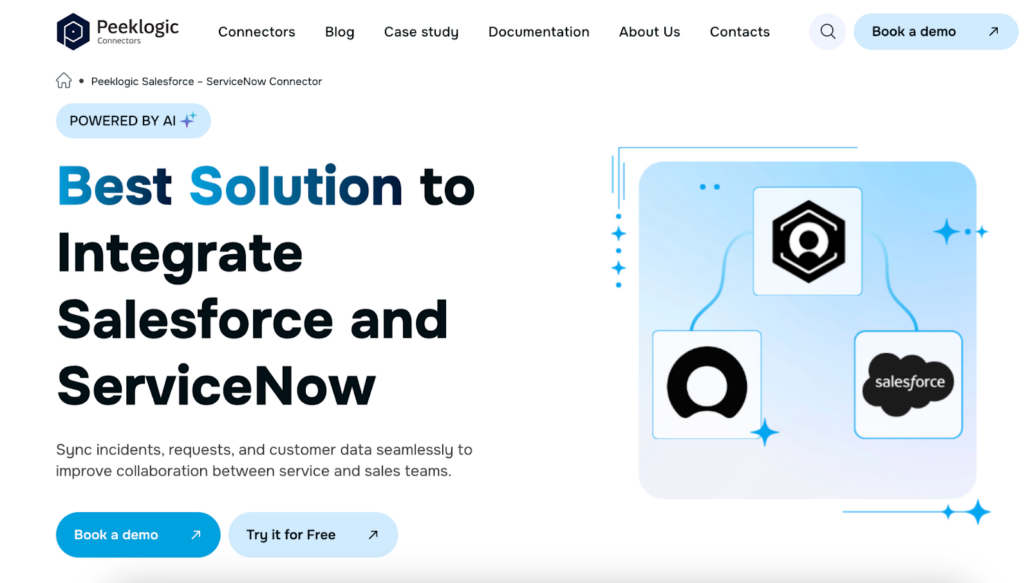
    Instead of relying on manual updates or delayed synchronization, it keeps records connected continuously. Changes in one system appear in the other without someone having to trigger the process.

    It also brings ServiceNow data directly into Salesforce, which reduces the need to switch between systems just to understand context.

    Teams typically rely on it for:

    • Two-way synchronization between Salesforce and ServiceNow
    • Syncing incidents, requests, and custom records
    • Real-time visibility of ServiceNow data inside Salesforce
    • Creating and linking incidents directly from Salesforce
    • Syncing comments, work notes, and attachments

    Once this type of connection is in place, alignment becomes the default state instead of something teams have to maintain manually.

    2. MuleSoft

    In larger environments, misalignment is rarely limited to one connection.

    There are multiple systems involved, each with its own structure and rules. Integrations exist, but they don’t always follow the same logic. Over time, this leads to inconsistencies across the entire setup.
    MuleSoft is often used to introduce a more structured approach.

    Instead of connecting systems individually, it creates a consistent layer where data flows in a predictable way. This helps ensure that updates follow the same patterns everywhere, not just between two tools.

    Teams use it for:

    • Building API-based integrations across systems
    • Standardizing how data moves between platforms
    • Supporting complex enterprise environments
    • Managing integrations at scale
    • Connecting legacy systems with modern tools

    It is not focused on one specific use case. It is about making sure the entire ecosystem stays aligned.

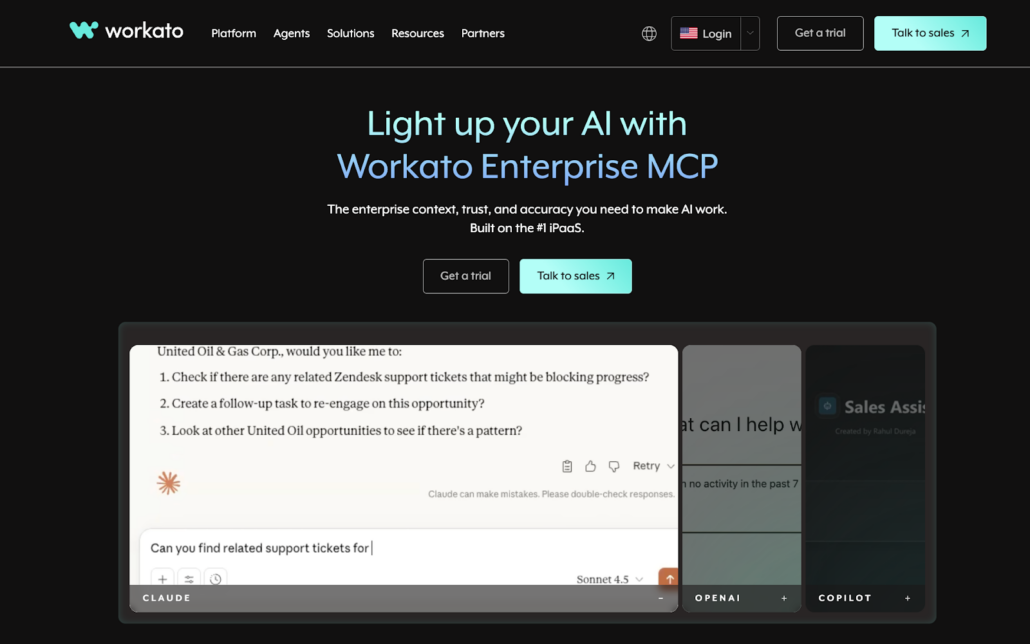
    3. Workato

    Sometimes the issue is not whether data moves, but what happens after it does.

    A case gets created, but the next step depends on someone taking action manually. An update appears, but nothing triggers the follow-up.
    This is where alignment starts to break at the workflow level.

    Workato focuses on connecting actions, not just data.

    It allows processes to continue automatically once a change happens. Instead of waiting for someone to push things forward, the system handles it based on predefined logic.

    Teams rely on it for:

    • Automating case-to-incident workflows
    • Triggering actions based on Salesforce or ServiceNow events
    • Reducing manual coordination between teams
    • Connecting multiple systems into one flow
    • Managing cross-system processes

    When workflows are aligned, not just data, the system becomes more predictable.

    4. Boomi

    As systems grow, integrations tend to grow with them.

    What starts as a few connections turns into a network of dependencies. Each integration works on its own, but together they become harder to manage.
    That is where alignment starts to weaken.

    Boomi helps organize this environment.

    Instead of treating integrations as separate pieces, it allows teams to manage them as part of a larger structure. This makes it easier to maintain consistency as systems evolve.

    Teams use it for:

    • Building integrations through a visual interface
    • Managing multiple connections in one place
    • Supporting both simple and complex use cases
    • Scaling integrations over time
    • Keeping systems flexible without constant rebuilding

    It becomes useful when the challenge is not creating integrations, but keeping them consistent.

    5. Exalate

    Not every integration should behave the same way.

    Some data needs to be shared fully. Some need to follow specific rules. Some need to be filtered or transformed before it moves.
    When that level of control is missing, alignment becomes difficult.

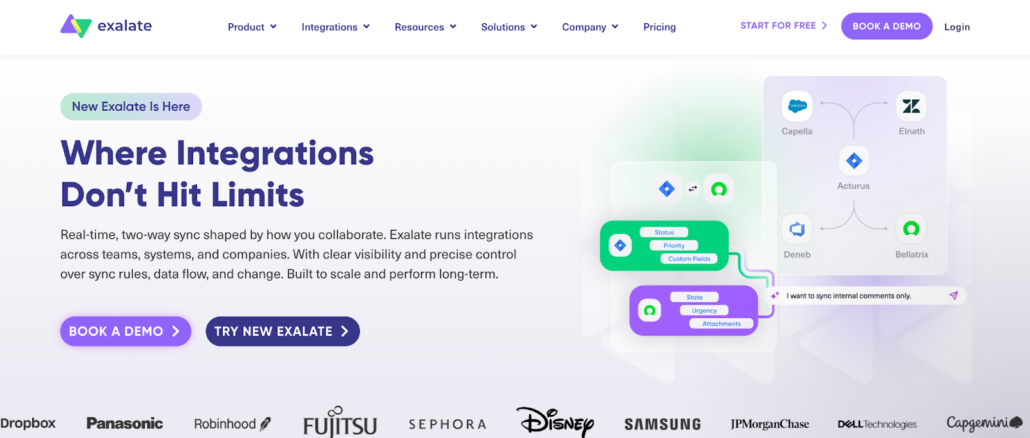
    Exalate focuses on giving teams that control.

    Instead of applying a fixed synchronization model, it allows customization based on how workflows actually operate. This helps prevent mismatches before they appear.

    Teams rely on it for:

    • Customizing synchronization logic
    • Controlling how data is shared between systems
    • Handling complex workflows
    • Connecting Salesforce with ITSM platforms
    • Adapting integrations to specific requirements

    It is often chosen when standard integrations feel too rigid to maintain alignment.

    Why Alignment Breaks Even With Integrations in Place

    It is possible to have integrations and still struggle with alignment.

    Data might be moving, but not in the right way. Updates might be syncing, but not at the right time. Workflows might exist, but still depend on manual steps.

    In those cases, the problem is not the connection itself.

    It is how the connection behaves.

    If people still need to monitor, adjust, or fix the flow, alignment is not fully there yet.

    How to Recognize That Systems Are Out of Sync

    Misalignment rarely feels urgent.

    Work continues. Tasks get done. But it takes more effort than it should.

    You might notice that:

    • Teams ask for updates instead of checking the system
    • The same information is tracked in multiple places
    • Statuses don’t match across tools
    • Follow-ups happen manually instead of automatically
    • Small delays keep appearing in the process

    None of these are major issues on their own. But together, they point to a deeper problem.

    What Changes When Alignment Becomes Stable

    When systems stay aligned, the difference is not dramatic.

    It is noticeable in what stops happening.

    Less checking. Less correcting. Less back and forth between teams.

    Information becomes something people rely on without hesitation.

    Processes move forward without needing extra coordination.

    And over time, that consistency becomes the standard way of working.

    The Real Role of Integration Tools

    There are many tools that can connect Salesforce and ServiceNow.

    Most of them can move data. Many of them can automate actions.

    But not all of them maintain alignment.

    That is the key difference.

    Some integrations still require people to manage the connection. Others remove that need entirely.

    The goal is not just to connect systems.

    It is to make sure they stay aligned without constant attention.

    Alignment Is What Makes Systems Work Together

    When Salesforce and ServiceNow are fully aligned, they stop feeling like separate tools.

    You don’t think about where information lives. You don’t switch systems just to confirm something. You don’t rely on messages to fill in gaps.

    Everything is already there.

    And that is what changes the experience.

    Not the tools themselves, but how well they stay connected over time.

  • Building for the Boom: Top 5 iGaming Software Development Companies for Scalable Casino Platforms

    Building for the Boom: Top 5 iGaming Software Development Companies for Scalable Casino Platforms

    Let’s be real about the state of online gambling today: players have zero tolerance for a bad experience. We’re way past the point where a basic website with a few slots could keep the lights on. The iGaming world is now a high-speed, hyper-competitive tech battleground. Picture this: a player is on a hot streak at a live dealer table or deep into a weekend poker tournament, and suddenly your platform lags or crashes. You haven’t just lost one bet; you’ve likely lost that player for good.

    Scalability isn’t just a trendy term anymore. It’s the absolute foundation of a profitable online casino. When your marketing kicks in and users start flooding in, your platform needs to stretch and grow without cracking. We’re talking about handling thousands of players at once, processing complex bets in real-time, and keeping millions of dollars in transactions secure—all at the same time.

    To get to that level of stability, you can’t just buy a cheap template off the shelf. You need a tech partner who can build a custom, enterprise-grade system from the ground up. If you’re serious about building a casino empire that can handle explosive growth, here are the top five iGaming software development companies leading the pack.

    1. Avenga – Best Scalable iGaming Software Development Company

    Taking the top spot on our list is Avenga. When it comes to building the future of online casinos, Avenga, a specialized igaming software development company, helps operators scale global platforms. They’ve built a rock-solid reputation not just as a dev shop, but as a strategic partner for operators who want top-tier speed, security, and fresh ideas.

    Avenga gets it—a modern casino is a tangled web of third-party games, live data, and non-stop transactions. Their engineers are pros at sorting out that complexity, delivering platforms that serve as a bulletproof foundation for global brands.

    The Avenga Advantage: Core Engineering Pillars

    What really sets Avenga apart from the rest is how well they know the iGaming space. Their approach to building scalable casinos rests on four key strengths:

    • Scalable Gaming Architectures: Monolithic code is a thing of the past. Avenga builds cloud-native platforms using microservices. By keeping things like the user wallet, game lobby, and bonus engine separate, they ensure that if one part gets slammed with traffic, the rest of the site keeps running smoothly. This setup aims for 99.99% uptime, even when traffic goes through the roof.
    • Advanced Analytics Integration: Data is gold in this industry. Avenga weaves AI and machine learning directly into the platform. This lets operators track player behavior on the fly, group audiences for spot-on marketing, and spot players who might be about to leave—turning raw numbers into real revenue moves.
    • Cross-Platform Compatibility: Players jump from their phone during the morning commute to a tablet at night. Avenga builds responsive, omnichannel platforms that feel native and smooth on any device, keeping players engaged wherever they are.
    • Security-First Development Approach: Protecting your business and your players is job one. Avenga hardcodes compliance and security right into the architecture. From smooth KYC onboarding to AML checks and PCI-DSS compliant payments, they build fortresses that also happen to meet strict global regulations.

    2. SoftServe: Masters of Big Data and Player Experience

    Coming in at number two is SoftServe, a global tech partner with serious skills in big data and digital consulting. For casino operators who want to truly understand their users and use data to grow, SoftServe is a powerful ally.

    While many platforms drown in the data from thousands of daily spins, SoftServe shines at building the data lakes and analytical pipelines needed to make sense of it all.

    Deep Data Expertise

    They build systems that process player data in real-time, helping you understand exactly what your users want.

    Personalization Engines

    By using their engineering know-how, operators can set up recommendation engines that suggest games based on a player’s history, boosting lifetime value and keeping them around longer.

    Digital Consulting

    They don’t just build what you ask for; they help you figure out what you should ask for, based on data trends.

    3. Itransition: Customization at a Global Scale

    Landing at number three is Itransition. One of the toughest parts of building a scalable casino is pulling in thousands of games from dozens of different providers without a hitch. Itransition really stands out here. They are masters at building highly customized, heavy-duty solutions with top-notch API management.

    Why Itransition Works for Global Operators

    • API Integration Experts: They seamlessly connect your platform to the biggest names in game development.
    • Complex Operational Needs: They understand that a casino operating in multiple countries needs localized payments, multi-currency wallets, and custom CRM tools.
    • Backend Power: They build platforms that handle all this backend complexity without slowing down the frontend, so players never feel the weight of the machinery behind the scenes.

    4. Endava: Agile Engineering and Payments Prowess

    Rounding out the top four is Endava, a tech heavyweight known for guiding big companies through complex digital overhauls. In iGaming, the most stressful moment for a player is moving money—depositing and withdrawing. Since an online casino acts a lot like a financial app, Endava’s deep experience in fintech gives them a real edge.

    Endava’s Key Strengths

    • Fintech Roots: They are the go-to partner if your main worry is building a bulletproof cashier system.
    • Frictionless Transactions: They’re experts at integrating everything from crypto wallets to traditional bank transfers, plus all the necessary compliance checks.
    • Agile Adaptation: Their engineering teams are great at quickly adapting to the changing rules in new and emerging markets.

    5. EPAM Systems: The Heavyweights of Global Tech

    Taking the fifth spot is EPAM Systems. Known as one of the top software engineering firms globally, EPAM brings a sharp, data-driven mindset to the casino industry.

    The EPAM Difference

    • Elite Engineering Talent: When you work with EPAM, you get engineers used to solving tough architectural puzzles for Fortune 500 companies.
    • Enterprise-Level Security: They operate with strict security protocols and a deep understanding of corporate governance.
    • Global Scale: They are a safe, reliable choice for publicly traded iGaming companies that need platforms capable of supporting millions of users worldwide.

    The Strategic Edge: Shared Benefits of Top-Tier Partners

    While each of these five companies brings something unique, they all share a few key traits that put them ahead of smaller agencies. When you partner with leaders like these, you typically unlock.

    Enterprise Engineering Teams

    You’re not hiring freelancers. You get access to full teams with senior architects, specialized QA testers, and project managers who understand the gambling sector.

    Global Delivery Models

    Running a global casino needs 24/7 attention. These firms have international delivery centers, offering a “follow-the-sun” support model that keeps things running around the clock.

    Strong DevOps Practices

    In online betting, being able to roll out new games and updates fast is a huge advantage. These companies use CI/CD pipelines, allowing your casino to push dozens of updates daily with zero downtime.

    Placing Your Bets on the Right Partner

    Moving from a basic online casino to a smart, fast, and truly scalable global platform is a massive project. The cost of bad software is huge—from losing players when the site crashes to facing massive fines from security gaps.

  • How to Compare Link Building Services: What Really Matters

    How to Compare Link Building Services: What Really Matters

    Quality backlinks are essential for the success of your SEO strategy. The choice of link-building services is an important decision you should approach responsibly.

    Many providers will claim they can bring you to the top of the rankings. So, proper evaluation and comparison of options is a must.

    Keep reading and learn about the main factors to assess, and how you can compare specialists to find the best option!

    Not All Link Building Services Are the Same

    Backlinks help you improve visibility and search rankings. However, creating an effective strategy is not the easiest process. Agencies and freelancers offering link-building services use different methods and techniques.

    Not every service provider offers the same level of quality and relevance. You need to understand these differences to avoid unethical specialists.

    Outreach Quality and Link Sources Vary Widely

    Outreach methods and source websites have a huge impact on your strategy.

    Top-tier services focus on manual outreach. They find authoritative sites in your industry and build genuine relationships with editors. These providers secure contextually relevant backlinks from trusted domains.

    Yet, some specialists rely on mass-produced emails and automated tools for this activity. They use sites with no real audience. As a result, you get backlinks quickly, but they are not valuable at all.

    Another important point is the quality of link sources.

    Reliable link building services concentrate on

    • Sites with high DA and DR
    • Organic traffic
    • Relevant audience and theme

    Other providers use expired domains or sites with sponsored content. These placements usually bring more damage than benefits.

    Key Factors to Evaluate Before Buying Links

    As you already know, not all link-building services can offer you something valuable. So, it’s extremely important to evaluate each provider before you decide to buy backlinks.

    Here are the main aspects you should assess to avoid low-quality services.

    Site Relevance, Traffic, Link Placement Type

    The first thing you should analyze is the sites your potential link building agency picks.

    Make sure they use resources that are topically relevant to your niche. Google prefers sources that make sense contextually and feel genuine. Irrelevant links are not only less effective. They can also appear unnatural to search engines and trigger manual reviews.

    Next, you need to verify if the site has real organic traffic.

    Many resources look authoritative based on DA and DR. However, some agencies inflate these metrics through

    • Expired domains
    • Private blog networks
    • Manipulated link profiles

    Use specialized tools to check estimated monthly visits and which keywords are driving that traffic. Look for consistency. Stable growth is the sign of a reputable site.

    Another essential point to consider is the location and context of your backlink.

    Look for natural placements in relevant articles. We recommend you ask your provider to confirm exactly where the link will appear. Avoid placements in footers or author bios. They don’t provide any value and often come from paid schemes.

    Transparency in Reporting and Communication

    Trustworthy seo link-building services will always keep you informed about each placement. Make sure they offer a regular report that includes

    • Live URLs
    • Anchor text
    • Publication date
    • Key site metrics

    Detailed reporting allows you to verify placements yourself and track performance.

    We strongly recommend you avoid providers that refuse to disclose important information or offer unrealistic guarantees.

    Also, evaluate how the agency communicates. They should fully explain their methods of vetting and content creation. Discuss expected timeframes for publication and pricing beforehand. Plus, you have to request examples of past work and evaluate reviews from their clients.

    Tools and Lists That Help You Compare Providers

    The choice of a link-building agency is a responsible decision. An experienced provider will improve your SEO and brand authority. The wrong partner might waste your budget and even cause penalties.

    You can use different resources to compare vendors and make a smarter decision.

    Industry Roundups and Trusted Shortlists

    Many respected SEO blogs publish annual or quarterly roundups. Popular sites that review and highlight the best link building services include

    • Ahrefs
    • Moz
    • Search Engine Journal
    • Backlinko

    They evaluate providers based on pricing, backlink quality, and client results. Plus, they often include performance benchmarks and sample deliverables. You can also use these roundups to evaluate the genuine reviews of clients.

    Next, you can check curated shortlists from experienced SEOs and agencies. These lists usually feature vetted providers that use ethical practices and deliver consistent results. Reviewing them will save you time and help you avoid providers with a questionable reputation.

    Ask for Case Studies and Samples

    The last aspect to evaluate when selecting a link-building agency is case studies. A quality case study should include

    • Client’s starting point
    • Outreach methods
    • Content types
    • Achieved results
    • Timeframes

    Trustworthy providers will offer several case studies for you to review.

    Also, we suggest you ask for examples of live backlinks they’ve built for clients. They will help you evaluate site quality and check placements. Manually inspect a few of the URLs yourself. Sometimes, metrics don’t reveal issues like thin content or obvious sponsored labeling.

    You can combine case studies and samples with third-party tools to confirm traffic data and backlink quality. This extra step helps you validate their claims before you sign a contract.

    Final Thought: Test Small, Then Scale Up

    Finding an ideal link building agency requires time and research. You have to compare all the potential candidates carefully by considering

    • Site quality
    • Outreach methods
    • Placements
    • Reporting
    • Pricing

    You can also find and evaluate providers through roundups, shortlists, and case studies.

    We definitely recommend you test the service before investing your entire budget. Evaluate the provider’s workflow and responsiveness. After you feel confident with your choice, you can start scaling up.

  • Five Ways a Wrong Software Development Company Can Cost Your Business 

    Five Ways a Wrong Software Development Company Can Cost Your Business 

    Nowadays, technology and customer expectations change rapidly, businesses must be adaptable and proactive. Mostly 93% of executives believe that their organization’s success relies on innovation and flexibility. Companies that focus on agility, growth, and brand engagement are more likely to succeed. Selecting the right software vendor for software product development services can play a crucial role in a business’s progress and success.

    Understanding Software Product Development and Its Necessity

    Creating a software product is just the beginning. To keep users interested, software needs regular updates and improvements. Worldwide spending on digital transformation will reach $2.8 trillion by 2025, emphasizing the need for ongoing innovation and adaptation.

    Implementing new software is complex and requires specialized skills. Hiring new employees or training existing ones for each product update is not practical for many businesses. This is where software product development companies come in. They provide tailored solutions, understand your business needs, and offer expert advice on the best software options while assessing risks. These companies help businesses make informed decisions and maintain a competitive edge.

    Choosing the Right Software Development Company

    Selecting the right software development company is crucial and can have significant impacts. Here are five ways a wrong choice can negatively affect your business:

    1. Loss of Revenue

    Software glitches can lead to substantial financial losses, especially for small to mid-sized firms. For instance, Nike experienced a software malfunction that caused it to miss its quarterly targets, resulting in millions of dollars in losses and a decline in i2 Technologies’ shares. This incident highlights how even established companies can suffer from poor software vendor choices.

    2. Wasted Time and Resources

    A proficient software vendor will proactively learn about your business and ask relevant questions. In contrast, an inexperienced vendor may fail to communicate effectively, leading to constant revisions, design changes, and error corrections. This back-and-forth wastes valuable time and diverts your technical team’s focus from their core strengths to debugging faulty software.

    3. Damaged Reputation

    A company that constantly struggles to fix its processes has little room for innovation or improvement. This stagnation can tarnish the brand’s image, which takes years to build. A single mistake can prove costly, and the company may face the arduous task of rebuilding its customer base and loyalty.

    4. Eroded Employee Trust

    Employees thrive when given opportunities to showcase their skills, innovate, and grow. However, choosing the wrong product development service provider can lead to frustration as the team deals with rectifying errors and managing customer dissatisfaction. This can result in a loss of trust and confidence in the company’s decision-making abilities, leading to high attrition rates during critical phases.

    5. Loss of Crucial Data and Credibility

    Switching between old and new systems during a software breakdown can lead to the loss of important data. Data breaches pose significant security threats and legal challenges, especially if your company handles sensitive information for other businesses. Such incidents can severely damage your credibility and put your clients’ reputations at risk.

    Interesting Facts and Insights

    Person coding at a desk with monitors

    The global software development market is expected to reach $507.23 billion by 2024, growing at a CAGR of 10.3% from 2018 to 2024. This growth highlights the increasing reliance on software development services across various industries. According to a study by Tricentis, software failures cost the U.S. economy $1.7 trillion in financial losses in 2017. This staggering figure underscores the importance of choosing a reliable software development partner.

    Gartner estimates that the average cost of IT downtime is $5,600 per minute. This translates to over $300,000 per hour, emphasizing the financial implications of software malfunctions and the need for robust, reliable software solutions. A survey by The Economist Intelligence Unit found that companies with effective software development practices reported a 26% increase in employee productivity. This demonstrates how the right software can enhance overall business efficiency. Research by PwC revealed that 32% of customers would stop doing business with a brand they loved after one bad experience. Reliable software is crucial for maintaining customer satisfaction and loyalty.

    Conclusion

    Keeping up with technological advancements and market trends is crucial for maintaining a competitive edge. Partnering with the right software development company can provide your business with the necessary tools and expertise to navigate this environment successfully.

    When selecting a software vendor, consider their experience, communication skills, and ability to understand and meet your business needs. The right choice can lead to significant revenue growth, efficient resource utilization, enhanced reputation, motivated employees, and secure data management. Conversely, a poor decision can result in financial losses, wasted time, damaged reputation, eroded employee trust, and data breaches.

  • Unveiling the Limits: Why AI Hasn’t Fully Replaced Web Developers…Yet

    Unveiling the Limits: Why AI Hasn’t Fully Replaced Web Developers…Yet


    Welcome to a world of endless possibilities, a world where advancements in Artificial Intelligence (AI) have transformed the way we live and work. From self-driving cars to intelligent personal assistants, AI’s impact on various industries is undeniable, revolutionizing how we approach tasks and processes that were once exclusively human domain.

    In the realm of web development, there’s an ongoing debate: will AI completely replace web developers? The potential is certainly there. AI-powered tools are becoming increasingly sophisticated, capable of designing websites, optimizing user experience, and even troubleshooting technical issues. But while these developments are impressive, we’re not quite at the point of fully automated web development…yet.

    In this blog post, we delve into the dynamics of AI in web development, exploring its capabilities, its current limitations, and what the future may hold. Stay with us as we navigate this fascinating intersection of technology and creativity.

    Understanding AI in Web Development

    To truly grasp the impact of AI on web development, it’s essential first to understand what AI is and how it operates. Artificial Intelligence, at its core, is a subset of computer science that aims to create systems capable of performing tasks that would normally require human intelligence. These tasks include learning from experience, interpreting complex data, understanding and responding to language, and making decisions.

    Two subsets of AI that are particularly relevant to web development are Machine Learning (ML) and Natural Language Processing (NLP). ML involves algorithms that improve automatically through experience, allowing systems to learn from data without being explicitly programmed. This can significantly speed up the development process, as ML algorithms can be trained to automate repetitive coding tasks.

    On the other hand, NLP is the technology used to aid computers to understand the human’s natural language. It’s the driving force behind chatbots and voice assistants, which are becoming increasingly common features on websites, offering instant customer service and providing a more interactive user experience.

    The applications of AI in web development are vast and continually evolving. AI-powered design tools can now generate website layouts based on user preferences, greatly reducing the time spent on initial design stages. These tools can also analyze user behavior data to optimize website layouts for maximum engagement and conversion rates.

    AI can also automate many testing and debugging processes. For instance, AI can scan a website for bugs or security vulnerabilities, report back on any issues found, and even suggest fixes. This not only speeds up the development process but also helps to ensure a higher level of accuracy and consistency compared to manual testing.

    Current Capabilities of AI in Web Development

    AI is already making a significant impact on the web development industry, with numerous tools and platforms leveraging its capabilities to streamline processes and enhance output quality.

    AI Tools and Platforms in Web Development

    Several AI-powered tools and platforms are currently available that aid various stages of web development. For instance, platforms like Wix ADI (Artificial Design Intelligence) and Bookmark use AI to create customized website designs based on user preferences. These tools can generate a fully functional site within minutes, significantly reducing the time spent on the initial design stage.

    On the coding front, tools like Kite leverage Machine Learning to provide intelligent code completions, helping developers write code faster and with fewer errors. Similarly, DeepCode uses AI to review code and find potential issues, acting as an AI-powered ‘pair programmer.’

    Tasks AI Can Perform in Web Development

    AI has been trained to perform an array of tasks within the realm of web development. One of the most significant is code generation. AI algorithms can be trained to automate repetitive coding tasks, thereby increasing efficiency and reducing the likelihood of human error.

    Design optimization is another area where AI shines. AI-powered design tools can analyze user behavior data to optimize website layouts for maximum engagement and conversion rates. This allows for a more personalized user experience, which can significantly improve website performance metrics.

    AI also plays a crucial role in testing and debugging, as we mentioned before. 

    Challenges and Limitations

    Despite the impressive capabilities of AI in web development, there are certain areas where it falls short, primarily due to the inherent limitations of current technology. Here are some key challenges and limitations that prevent AI from fully replacing web developers.

    Lack of Creative Intuition and Human-Centric Understanding

    One of the most significant limitations of AI is its lack of creative intuition. While AI can analyze data and make decisions based on predefined algorithms, it lacks the ability to think outside the box and come up with innovative solutions. This is especially crucial in web development, where creativity plays a key role in designing unique, engaging websites.

    Moreover, AI lacks a human-centric understanding, which is essential for creating websites that resonate with users. For instance, understanding cultural nuances, emotions, and user motivations are areas where humans excel, but AI struggles.

    Complex Decision-Making and Problem-Solving Abilities

    Another limitation of AI is its inability to handle complex decision-making and problem-solving tasks that are common in web development. For example, when faced with a novel problem or an unexpected error, a human developer can draw on their experience and knowledge to devise a solution. In contrast, an AI system can only respond based on its programming and the data it has been trained on.

    Difficulty in Understanding Nuances and Context Specific to Each Project

    Every web development project is unique, with its own set of requirements, objectives, and constraints. Understanding these nuances and adapting to them requires a level of context-awareness that AI currently lacks. For instance, AI might struggle to understand why a particular design element is crucial for a specific client’s brand identity, or why certain features are essential for a particular user group.

    The Human Touch: What Web Developers Bring

    While AI continues to make strides in web development, there are certain aspects that it simply cannot replicate – the human touch. Here’s what web developers bring to the table that AI can’t match.

    Creativity, Intuition, and User-Centric Design Thinking

    Creativity and intuition are the heart and soul of web development. Developers often need to think outside the box to create engaging, unique designs that resonate with users. This creative process involves a deep understanding of user psychology, aesthetic sensibilities, and the latest design trends – something AI is yet to master.

    Moreover, human developers excel at user-centric design thinking. They can empathize with users, understand their needs and frustrations, and design solutions that address these issues effectively. This human-centric approach is crucial in creating websites that offer an intuitive, satisfying user experience.

    Adaptability and Problem-Solving Skills in Unique Project Scenarios

    As we’ve already pointed out, every web development project is special, with its own set of challenges and requirements. Human developers can adapt to these unique scenarios, using their problem-solving skills and experience to overcome hurdles and deliver successful outcomes.

    For instance, if a particular feature isn’t working as expected, developers can investigate the issue, identify the root cause, and implement a fix – a process that requires a level of critical thinking and adaptability that AI doesn’t possess.

    Understanding of the Business Context and Effective Communication With Clients

    Web development isn’t just about creating a functional, aesthetically pleasing website. It’s also about understanding the business context, aligning the website with the client’s brand identity, and meeting their business objectives.

    This is where the value of web development consulting comes in. Human developers can communicate effectively with clients, understand their needs and expectations, and provide strategic advice to help them achieve their goals. They can explain complex technical concepts in layman’s terms, ensuring that clients are fully informed and involved in the development process.

    Collaboration: AI and Web Developers Working Together

    While AI has its limitations, it doesn’t mean that it’s not an incredibly valuable tool. By working together, AI tools and human developers can achieve a synergy that results in enhanced productivity and improved outcomes.

    Synergy between AI Tools and Human Developers for Enhanced Productivity

    AI tools can handle repetitive tasks, analyze large amounts of data, and perform tests at a speed and scale that humans simply cannot match. By automating these aspects of web development, AI frees up human developers to focus on complex problem-solving, strategic decision-making, and creative design work.

    The result is a powerful synergy where AI and humans complement each other’s strengths: the speed, efficiency, and scalability of AI, combined with the creativity, intuition, and adaptability of human developers, can significantly enhance productivity and lead to better websites.

    Examples of Successful Collaboration and Improved Outcomes

    There are numerous examples of successful collaboration between AI and human developers. For instance, GitHub, a popular platform for software development, uses AI to suggest code completions to developers, speeding up the coding process and reducing the risk of errors.

    In another example, web development firm Wix uses AI to automate the initial stages of website creation, such as selecting a suitable template and arranging basic layout elements. However, human developers then take over to customize the website according to the client’s specific needs, ensuring a unique, high-quality result.

    These examples highlight how AI and human developers can work together effectively, leveraging their respective strengths to produce superior outcomes. It’s clear that the future of web development lies not in AI replacing humans, but in AI augmenting human capabilities, enabling developers to deliver more value and create better websites than ever before.

    Looking Ahead: Future Prospects

    As we look towards the future, it’s clear that AI will continue to play an increasingly prominent role in web development. However, the question remains: how might AI evolve to bridge the gap between its capabilities and human expertise?

    Predictions for the Role of AI in Web Development in the Near Future

    In the near future, we can expect AI to take on even more of the routine, repetitive tasks involved in web development. This includes aspects like coding, testing, and bug fixing, which can be automated to a large extent, freeing up human developers to focus on more complex, creative tasks.

    AI will also become more integrated into the web design process. Tools like Adobe’s Sensei are already using AI to suggest design elements like color schemes and layouts, and this trend is likely to continue.

    However, while AI will undoubtedly become more prevalent in web development, it’s unlikely to replace human developers entirely. The creativity, intuition, and critical thinking skills of human developers, as well as their ability to understand the unique needs of each client, are things that AI simply cannot replicate.

    Potential Advancements That Could Bridge the Gap Between AI and Human Expertise

    While AI currently lags behind humans in certain areas, advancements in technology could help bridge this gap. For instance, the development of more sophisticated AI algorithms could potentially enable AI tools to better mimic human creativity and intuition.

    Moreover, advancements in natural language processing could improve AI’s ability to understand and interpret human language, making it easier for developers to communicate with AI tools and use them more effectively.

    Ultimately, the goal should not be to replace human developers with AI, but rather to create a collaborative environment where AI tools and human developers work together to achieve superior outcomes. 

    As we move forward, the synergy between AI and human expertise will continue to shape the future of web development, opening up new possibilities and paving the way for a more efficient, innovative industry.

    Conclusion

    As we’ve explored in this post, AI has made significant strides in the realm of web development, offering tools that can automate routine tasks, analyze large amounts of data quickly and accurately, and even assist with design decisions. 

    However, it’s also clear that AI has its limits. It lacks the human touch – the creativity, intuition, and critical thinking skills that are so crucial to developing a unique, high-quality website.

    Furthermore, while AI is excellent at following instructions and patterns, it struggles with tasks that require a deep understanding of context or subjective judgment. This is where human developers shine. They can understand the unique needs of each client, make strategic decisions, and inject creativity into their work in a way that AI simply cannot match.

    Yet, the story doesn’t end here. AI is continually evolving, and future advancements could see it taking on a more prominent role in web development. However, it’s unlikely to replace human developers entirely. Instead, the future of web development lies in the synergy between AI and human expertise.

  • Unleashing the Potential: How Machine Learning and AI are Transforming Livestream Shopping Apps

    Unleashing the Potential: How Machine Learning and AI are Transforming Livestream Shopping Apps

    Introduction to Livestream Shopping Apps


    Livestream shopping apps have revolutionized the way people shop online. Thanks to technological advances, customers can now watch hosts displaying products in real-time and complete their purchases. This interactive shopping experience has gained immense traction, especially in the social media age.
    Machine learning (ML) and artificial intelligence (AI) have greatly impacted numerous industries, with the retail sector being one of them. Recently, retailers have taken advantage of these technologies to improve customer experiences and drive sales. ML algorithms have uncovered patterns and trends by analyzing large amounts of data, allowing retailers to make better decisions. ML and AI have tremendously influenced many industries, with the retail sector being one of them. Recently, retailers have tapped into these technologies to improve customer experiences and bolster sales. ML algorithms have drawn insights from large data pools, providing retailers with the invaluable ability to make more informed decisions.

    Advantages of using ML and AI in Livestream Shopping App development

    The integration of these technologies has brought numerous benefits for users. These advantages include:
    Personalized Recommendations: By leveraging machine learning algorithms, livestream shopping apps can provide users with tailored content and personalized recommendations. This saves shoppers time and enhances their engagement with the app, leading to a more immersive and satisfying experience.
    Real-Time Assistance: AI-powered chatbots and virtual assistants can offer immediate customer support during livestream shopping sessions. They can address queries, provide product information, and assist with transactions, thereby improving convenience and customer satisfaction.
    Enhanced Product Discovery: Through analyzing user behavior and historical data, machine learning algorithms can enhance product discovery in livestream shopping apps. This enables the apps to offer relevant and customized product suggestions, helping users discover new and exciting items.
    Improved Inventory Management: Machine learning can optimize inventory management in livestream shopping apps. By analyzing sales patterns, demand forecasts, and other factors, AI algorithms can ensure that popular products are adequately stocked, thereby reducing the occurrence of out-of-stock situations.
    Seamless Payments: AI-powered payment systems simplify checkout by offering secure and frictionless payment options. This guarantees users a seamless and convenient payment experience, ultimately reducing cart abandonment rates.
    Overall, machine learning and AI in livestream shopping apps enhance the user experience by providing personalized recommendations, real-time assistance, improved product discovery, optimized inventory management, fraud detection, and seamless payments. These advancements shape the future of online shopping, contributing significantly to customer satisfaction.

    Livestream Shopping App Development Process

    In order to create a livestream shopping application with machine learning and AI capabilities, there are several important steps to follow. First, it’s important to identify the goals and audience of the app. This information will help you design a platform that engages users and addresses their specific needs.
    To develop a successful app, developers must collect and analyze relevant data to train the machine learning algorithms. Sales data, customer preferences, and other important information are all key components of this process. The quality and diversity of the data are critical to building accurate and dependable models.
    After gathering the needed data, the next step is to begin building and integrating the machine-learning models into the app. This involves coding the algorithms, testing their performance, and refining them for optimal results. It’s crucial to constantly monitor and update the models to ensure they remain accurate and relevant over time.
    In addition to the technical aspects of building the app, it’s also important to consider user experience and interface design. You’ll want to create an intuitive and user-friendly platform that makes it easy for users to navigate and make purchases. By prioritizing both technical and design elements, you can create a high-quality livestream shopping app that meets the needs of your target audience.

    Challenges and Considerations

    Creating Livestream Shopping Apps with Machine Learning and AI comes with its own set of challenges and considerations. Primarily, data privacy and security must be taken seriously. After all, these apps are collecting user data, which must be safeguarded and used appropriately. Additionally, the cost and complexity of incorporating ML and AI technologies must be considered. This process requires specialized skills and resources, which could be costly for smaller retailers. Consequently, weighing the advantages and disadvantages before beginning such a project is imperative.

    Future Trends and Possibilities in Livestream Shopping App Development

    The outlook of livestream shopping app development is filled with thrilling prospects. With the advancements in AI and machine learning, advanced recommendation systems that can comprehend a user’s tastes on a deeper level could be expected. This will supplement personalization and engagement in these apps. Moreover, incorporating AR and VR into the apps can give customers a realistic and interactive experience. It will be possible for them to virtually try on clothes, test products, and visualize how they would appear in their own homes. This will bridge the gap between online and offline shopping, making it more tangible and pleasurable. Additionally, the future may witness the addition of live chat and social commerce features, enabling real-time conversations between hosts, viewers, and fellow shoppers. Users can engage in conversations, seek advice, and make informed decisions with the help of influencers or knowledgeable hosts. These features will promote a sense of community and improve the overall liveliness of livestream shopping apps.

    Conclusion and Final Thoughts

    Machine learning and AI have unleashed the true potential of livestream shopping apps. These cutting-edge technologies empower retailers to offer highly personalized recommendations, bolster security measures, optimize inventory management, and craft a seamless and delightful shopping journey. While the development of livestream shopping apps integrating machine learning and AI presents its share of challenges and considerations, it also promises an exciting future ripe with opportunities for innovation and growth.
    As the retail landscape continues its rapid transformation, livestream shopping apps are pivotal players in shaping the future of online shopping. Orangesoft’s commitment to harnessing the capabilities of machine learning and AI enables retailers to create dynamic and captivating platforms tailored to their customer’s unique needs and preferences. Therefore, it’s time to embrace the vast potential of these technologies and unlock a new era of shopping experiences with Orangesoft as your trusted partner on this journey.

  • Balancing Progress and Principles: The Ethical Dimensions of AI

    Balancing Progress and Principles: The Ethical Dimensions of AI

    In a world where technology is advancing at an unprecedented pace, artificial intelligence (AI) has emerged as a groundbreaking force of innovation. From chatbots answering our questions to self-driving cars navigating the streets, AI is reshaping the way we live and work. However, amid this era of progress, a crucial question arises: How do we balance the relentless drive for technological advancement with the ethical principles that underpin our society?

    The AI Revolution

    AI, formerly a notion limited to the realms of science fiction, has seamlessly integrated into our daily existence. It represents the cognitive abilities exhibited by machines, enabling them to acquire knowledge, engage in logical thinking, and autonomously arrive at conclusions. AI’s omnipresence is unmistakable, with applications ranging from virtual assistants such as Siri and Alexa, which simplify our daily tasks through voice commands, to sophisticated algorithms that drive the intricacies of financial markets, optimizing transactions and investment decisions.

    The Ethical Dilemma

    As AI continues to permeate every aspect of our lives, it brings with it a profound ethical dilemma. On one hand, there’s the promise of technological progress that can solve complex problems and make our lives more convenient. On the other hand, there are ethical concerns about how AI is developed, implemented, and used.

    Understanding AI Ethics

    Defining AI Ethics

    AI ethics, in its simplest form, refers to the moral and ethical considerations surrounding artificial intelligence. It involves questioning the impact of AI on society, individuals, and our shared values.

    The Role of Principles

    Principles serve as the compass guiding the development and use of AI. They provide the foundation upon which ethical AI is built, ensuring it aligns with human values.

    The Rapid Advancement of AI

    AI in Everyday Life

    From predicting our online shopping preferences to enhancing medical diagnostics, AI is already part of our everyday experiences. It’s become so integrated that we often don’t even realize when we’re interacting with AI systems.

    Technological Progress

    The rapid advancements in AI are nothing short of astonishing. What was considered cutting-edge yesterday is outdated today. This relentless progress drives innovation, but it also raises ethical questions about the consequences of unchecked development.

    Ethical Concerns in AI Development

    Bias and Discrimination

    One of the pressing concerns is the presence of bias and discrimination in AI algorithms. When AI systems are trained on biased data, they can perpetuate societal biases, leading to unfair outcomes.

    Privacy Invasion

    AI’s ability to analyze vast amounts of data raises privacy concerns. Who has access to our data, and how is it being used? These questions become critical in an era of surveillance and data collection.

    The AI Principles Framework

    Transparency

    Transparency in AI means that the inner workings of algorithms are open and understandable. It ensures that AI decisions are not shrouded in secrecy, enabling accountability.

    Fairness

    Fairness in AI is about ensuring that AI systems treat all individuals and groups equitably. It involves identifying and mitigating biases to prevent discrimination.

    Accountability

    Accountability holds developers and organizations responsible for the consequences of AI systems. It establishes a framework for addressing errors and harms caused by AI.

    Navigating the Challenges

    AI Regulation

    Governments and regulatory bodies are racing to catch up with AI. Regulations are being put in place to ensure that AI is developed and used responsibly.

    Corporate Responsibility

    Tech companies are taking steps to address ethical concerns proactively. Many are establishing ethical AI guidelines and investing in AI ethics research.

    AI in Healthcare

    Ethical Considerations

    In healthcare, AI can enhance diagnostics and treatment. However, ethical considerations, such as patient privacy and data security, must be at the forefront.

    Benefits and Risks

    AI has the potential to save lives, but it also carries risks. A misdiagnosis by an AI system could have dire consequences, highlighting the need for ethical oversight.

    AI in Law Enforcement

    Ethical Challenges

    The use of AI in law enforcement raises complex ethical questions. Predictive policing, facial recognition, and surveillance technologies must balance security with individual rights.

    Balancing Security and Privacy

    Finding the right balance between using AI to enhance public safety and respecting privacy rights is a significant challenge for law enforcement agencies.

    The Future of AI Ethics

    AI and Human Values

    As AI continues to evolve, it’s crucial to ensure that it aligns with our core human values. Ethics must be at the forefront of AI development to prevent unintended consequences.

    Ensuring Ethical AI

    The future of AI ethics lies in the hands of policymakers, developers, and society as a whole. It’s a shared responsibility to ensure AI benefits us all without compromising our principles.

    Conclusion: Striking a Balance

    Balancing progress and principles in the age of AI is undoubtedly challenging, but it’s a challenge we must embrace. As we continue to harness the power of AI, let’s remember that our ethical compass should always guide our path. The future of AI depends on it, and so does our future as a society.

  • The Confluence of AI and Web Scraping: A Game-Changing Introduction

    The Confluence of AI and Web Scraping: A Game-Changing Introduction

    Introduction: Embracing the Digital Evolution

    AI and Web Scraping: The Dynamic Duo

    In the dynamic realm of digital technology, few combinations have shown as much potential and impact as AI and web scraping. Imagine the power of predictive analysis, neural networks, and machine learning fused with the capacity to extract vast amounts of data seamlessly from the web. It’s a match made in digital heaven, setting the stage for a new wave of innovations.

    The Rising Tide of a Digital Renaissance

    The term ‘Renaissance’ refers to a period characterized by a revival of art, culture, and intellectual achievements. Similarly, today’s digital domain is experiencing its own renaissance, spurred by advanced technologies. And at the heart of this transformation lies the combined potential of AI and web scraping, revolutionizing how businesses perceive, obtain, and utilize data.

    The digital renaissance spurred by AI in data extraction

    A Story of Digital Elevation

    Consider a medium-sized e-commerce business. Just a decade ago, their decisions were largely based on generalized market research, periodic customer surveys, and intuition. Fast forward to today, with AI-driven web scraping at their disposal, they can tailor user experiences based on real-time data, predict market trends, and even adjust pricing models instantaneously.

    The business no longer just ‘hopes’ to meet consumer expectations; it dynamically evolves with them. This isn’t just an isolated business transformation story; it’s a reflection of the new norm in the digital era.

    The Role of AI in Sculpting the Digital Landscape

    Artificial Intelligence, often seen as a mystical entity, has now rooted itself in practical, tangible changes in the digital domain. From simple tasks to complex problem-solving, AI has reshaped the way processes function. Combine this with web scraping, and you’ve got a powerful tool that not only extracts data but does so intelligently.

    For instance, the Automation boon has led to a 70% reduction in manual data entry tasks, providing employees more time for strategic tasks. Another digital milestone? Predictive product placements based on AI-driven web scraping analytics, allowing e-commerce businesses to strategically position products that are more likely to be purchased by a visiting customer.

    Facts, Figures, and the Way Forward

    Harnessing the potential of AI and web scraping isn’t just about real-time solutions; it’s about preparing for the future. By 2024, experts predict:

    ● A 120% increase in spending on artificial intelligence.

    ● Web scraping techniques will evolve to extract not just quantitative, but qualitative data, painting a clearer picture of market landscapes.

    With these statistics and advancements, it’s evident that the digital renaissance is not just a fleeting trend but a sustainable, long-term movement. The road ahead seems promising for businesses willing to adapt, evolve, and embrace the pioneering change via web scraping.

    The intricate dance of machine learning and massive data extraction

    Machine Learning: The Heartbeat of Intelligent Data Extraction

    Machine Learning (ML) is the essence of modern AI. It’s the mechanism that lets AI “learn” from data, and adapt without explicit programming. When combined with web scraping, ML takes raw, unstructured internet data and transforms it into something digestible and actionable.

    Imagine it this way: If web scraping is the process of mining raw diamonds (data), then machine learning is the expert craftsmanship that turns these diamonds into exquisite jewelry (information). It’s not just about extraction; it’s about refinement.

    Neural Networks: Simulating Human Brains for Superior Data Handling

    Borrowing inspiration from our human neural networks, these algorithms are designed to recognize patterns. They interpret sensory data, clustering raw data through a process that mirrors human cognition. When neural magic in web scraping happens, it’s largely because of these neural networks.

    For instance, a standard web scraping tool might extract all product reviews from an e-commerce site. In contrast, one powered by neural networks could discern the sentiment behind the reviews, differentiating positive feedback from negative, providing invaluable insights to businesses.

    Big Data: The Vast Ocean and AI’s Incredible Diving Ability

    In today’s age, we often hear the term ‘Big Data’. It’s vast, almost unfathomable. But it’s one thing to dive into this ocean and another to retrieve treasures from its depths. That’s where AI’s big data prowess comes into play.

    It’s not about merely extracting information; it’s about making sense of it. Consider social media platforms that generate terabytes of data daily. Using AI and web scraping, companies can derive trends, preferences, and even predict future behaviors, giving them an edge in hyper-competitive markets.

    AI-Driven Web Scraping: The Undeniable Business Catalyst

    Case Studies: The Proof is in the Success

    Behind every statistic about AI and web scraping’s efficacy, there’s a real-world story of a company that scaled new heights. These businesses don’t just benefit from more data; they harness better, clearer, and actionable insights.

    Consider a fashion retailer that once relied on seasonality and intuition to stock inventory. With AI-driven web scraping, they now monitor global fashion trends, celebrity influences, and even regional preferences in real-time. Their inventory is never outdated; it’s always in sync with demand, optimizing both sales and customer satisfaction.

    The Scalability Revolution: Not Just Growth, but Exponential Growth

    In the world of business, growth is paramount. But the type of growth AI facilitates isn’t linear; it’s exponential. It’s a shift from adding resources for incremental gains to optimizing current resources for multiplicative results.

    AI allows for predictive analysis, which means businesses can anticipate market shifts and consumer behaviors. This isn’t just scaling in terms of size or revenue, but scaling in intelligence, responsiveness, and agility.

    The Edge of Actionable Business Intelligence

    Data on its own holds potential energy, like a boulder atop a hill. Business intelligence is the force that nudges this boulder, converting potential energy into kinetic, resulting in movement, momentum, and change.

    Through AI-driven web scraping, companies transition from being reactive to proactive. They don’t wait for quarterly reports to adjust strategies; they evolve in real-time. Whether it’s adjusting marketing strategies based on current events or reconfiguring supply chains due to anticipated disruptions, businesses are no longer mere players; they are ahead of the game.

    Charting the responsible path in the age of limitless data

    The Ethical Implications: Why Web Scraping Isn’t Always Black and White

    The realm of web scraping, when infused with AI’s capabilities, has certainly granted businesses unparalleled insights. However, with this immense power comes significant responsibility. The ethical concerns surrounding web scraping often circle the debate between open-source information and personal privacy. What data is truly public? And even if it is, does that automatically grant businesses the right to harness it without explicit consent?

    Consider the public outcry when people discover their personal reviews, comments, or even photos being used without their knowledge. Ethical web scraping isn’t just about adhering to legal guidelines but respecting the unsaid boundaries of personal space in the digital domain.

    AI’s Solutions to Ethical Dilemmas: Navigating the Gray Areas

    The AI realm has not been a silent spectator to these ethical challenges. On the contrary, advancements in responsible AI aim to create a harmonious balance between data extraction and ethical considerations.

    For instance, AI models are now being trained to recognize and avoid personally identifiable information during web scraping processes, ensuring the data extracted respects individual privacy. Moreover, sophisticated AI models are also helping businesses navigate the maze of international data privacy laws, ensuring compliance and safeguarding against potential legal pitfalls.

    The Delicate Dance of Innovation and Integrity

    At the intersection of AI and web scraping lies a critical balance — the balance between pushing the boundaries of innovation while upholding the principles of digital morality. As businesses increasingly rely on these tools, it’s paramount that they also champion the cause of responsible and ethical data collection, thus setting a benchmark for the entire industry.

    A glimpse into the promising and balanced future of web scraping

    Merging Technological Wonders with Ethical Practices

    As we gaze into the crystal ball of the future, it’s clear that web scraping with AI is not just a passing phase but a cornerstone of future digital strategies. However, the dream is not just about technological marvels but about a future where innovation and ethics walk hand in hand.

    For the naysayers who believe this to be a utopian dream, advancements are already underway. AI models of tomorrow are being designed with an ethical foundation, ensuring they respect user privacy, adhere to global data regulations, and more importantly, uphold the ethos of digital respect.

    The Coexistence Dream: Data and Morality in the Digital Age

    The digital age, often deemed as the age of information, has a responsibility. A responsibility to ensure that while we chase the endless horizons of innovation, we don’t leave behind the essential human values of respect, privacy, and integrity.

    The future promises AI models that not only understand this but champion this cause. Imagine a world where businesses don’t just collect data but do so with explicit consent, where AI models transparently explain their data sources, and where users feel safe, knowing their digital footprints are respected.

    Challenges and Triumphs: The Road Ahead for the Next Generation

    While the journey towards a balanced AI future is filled with promise, it isn’t devoid of challenges. From constantly evolving data regulations to the ever-changing dynamics of the digital world, the path is complex.

    However, with challenges come opportunities. The next generation of AI enthusiasts, data scientists, and ethical hackers have a unique challenge — to sculpt a world that marvels at technological innovations while echoing with the laughter of ethical victories. It’s a world where web scraping and AI don’t just coexist but thrive in harmony.

    Conclusion: Harmonizing Technology with Ethics in the Digital Landscape

    In the constantly evolving world of digital innovation, the synergy between AI and web scraping stands out as a testament to human ingenuity. It’s not just about collecting data but transforming that data into meaningful insights, actionable business strategies, and forging pathways to unprecedented growth. Yet, with this potential comes the weighty responsibility of ethical considerations.

    As we’ve journeyed through the intricate dance of AI-powered web scraping, it’s evident that the future beckons with promises of technological marvels harmoniously coexisting with ethical practices. From ensuring data privacy and adhering to global regulations to championing the principles of digital respect and morality, the road ahead is both challenging and promising.

    For businesses, data scientists, AI enthusiasts, and every netizen, the message is clear: The future of web scraping with AI is not just about harnessing the vast ocean of data but doing so with a moral compass firmly in hand. As we venture forth, may we all be pioneers in crafting a digital world that’s not only advanced in its capabilities but also steadfast in its ethical commitments.

  • ChatGPT – an assistant for a programmer? An example of a real-world task: Neural network square recognition

    ChatGPT – an assistant for a programmer? An example of a real-world task: Neural network square recognition

    No matter how you look at it, the ChatGPT language model can never completely replace a programmer, because only about 1/10 of the total development time is spent writing code. However, ChatGPT is great for helping with various aspects of programming. The more skills and experience a programmer has, the more useful an “assistant” can be:

    • Perform code optimization and improve performance.
    • Find and fix bugs in the code.
    • Explain complex concepts and algorithms.
    • Assist in developing ideas and choosing the right architecture.
    • Create prototypes and demos of programs.
    • Give advice on programming style and best practices.
    • Automate repetitive tasks.
    • Generate code based on specifications or specified parameters.
    • Extend functionality with plugins and tools.
    • Write documentation and comments to the code.

    Today it’s incredibly stupid not to use the features of ChatGPT. It really is a universal assistant, which greatly simplifies the life of a programmer and increases the efficiency of development. This programming becomes a much more pleasant and efficient business than ever before.

  • How resources for launching machine learning projects emerge

    How resources for launching machine learning projects emerge

    Back in 2016, IBM engineers noted that the relationship between AI and cloud technologies could become symbiotic, with one technology helping to improve the other. The future has arrived, and we can say our colleagues were right. Cloud computing is making it easier to work with complex ML models, driving the development of neural networks.

    Training ML models, running experiments, being able to go back to previous versions of the model, comparing model results in step 3 and step 27 are current challenges for teams. In #CloudMTS, developers and data analysts can collaborate on these tasks in the MLOps platform.

    Today, let’s talk about where else (and why) the resources to run complex models come from, and how AI and cloud computing are intertwined.

    The development of artificial intelligence through the lens of cloud computing

    The term artificial intelligence was coined by the founder of functional programming, John McCarthy, in 1956. Although the first programs capable of playing checkers and chess appeared at least five years earlier. Since then, artificial intelligence systems have come a long way: AlphaGo beat Korean pro Lee Sedol in a Go match, and the Watson computer won the Jeopardy intellectual quiz. Companies are investing in machine learning technologies, developing and deploying big language models like ChatGPT, and embedding them in BI systems and other analytics solutions.

    Progress in AI is giving a sense of a new paradigm shift. The way software is created and delivered is fundamentally changing. Clouds have greatly empowered machine learning model companies. Some are even developing their own cloud platforms to offer AI systems in SaaS format to customers. In particular, advanced detection and response (XDR) technology in the cybersecurity market relies heavily on cloud-based AI.

    AI is on its way to radically changing most aspects of the enterprise, not to mention many aspects of human life. And the persistent scalability of the cloud will play an integral, interconnected role in this.