
Manufacturing prospecting looks straightforward until sales teams start building lists. A company searches for “manufacturers in the US,” exports a giant database, and quickly realizes the records include businesses that barely match the actual target market. Industrial suppliers get mixed with distributors. Small fabrication shops appear beside enterprise plants. Dead facilities remain inside the export years after production stopped.
That problem happens constantly in manufacturing outreach. The industry is extremely broad, fragmented, and difficult to categorize cleanly at scale. Different manufacturers operate under completely different buying structures depending on production type, plant size, region, and supply chain complexity.
A local machine shop behaves nothing like a national automotive supplier. That is why manufacturing prospecting usually works better when the focus shifts toward cleaner filtering and narrower segmentation instead of exporting the largest possible list.
The platforms below all help sales teams identify manufacturing leads differently, though some handle industrial targeting much more effectively than others.
Manufacturing databases become outdated faster than many teams expect
Industrial companies change constantly.
Plants close. Facilities relocate. Ownership groups restructure operations. Smaller manufacturers disappear during economic slowdowns while new regional suppliers enter the market quietly.
That creates a serious challenge for large automated databases.
A giant export may technically contain thousands of manufacturing businesses while still including:
- Inactive facilities
- Distributors instead of manufacturers
- Weak-fit suppliers
- Outdated decision-makers
- Generic office contacts
The larger the database becomes, the harder it gets to maintain accurate industrial segmentation consistently.
That is one reason many manufacturing-focused sales teams now prioritize cleaner data over larger exports.
Industrial outreach usually requires much tighter targeting
Manufacturing sales cycles are often more operational than traditional SaaS outreach.
Sales teams frequently target:
- Plant managers
- Procurement directors
- Operations leaders
- Supply chain teams
- Facility owners
- Engineering departments
That complexity makes broad automated prospecting unreliable surprisingly often.
The strongest manufacturing campaigns usually begin with much narrower filtering and stronger company verification from the start.
1. Emarketnow
Manufacturing outreach is one of the clearest examples of why industry filtering matters more than raw database volume.
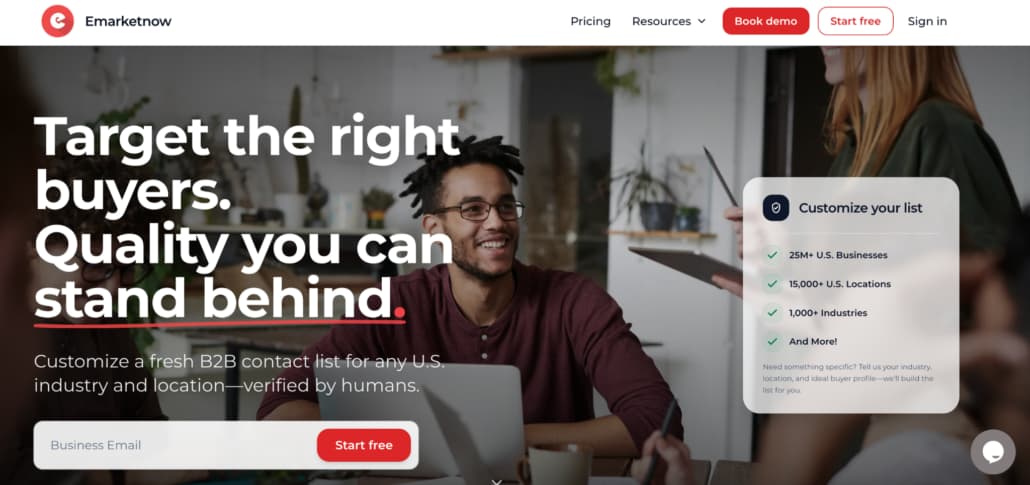
Emarketnow approaches industrial prospecting differently from many large-scale data providers because the company focuses heavily on manually filtered targeting instead of relying entirely on automated exports pulled from massive recycled datasets.
That workflow includes:
- Human-reviewed business filtering
- Direct work emails
- Validated mobile numbers
- Narrower industry segmentation
- Cleaner manufacturing categorization
- Regional company targeting
That level of filtering becomes valuable inside manufacturing outreach because broad industrial databases often create significant overlap between completely different business types.
A sales team targeting metal manufacturers may suddenly receive:
- Industrial distributors
- Equipment repair companies
- Material suppliers
- Packaging vendors
- Warehousing businesses
all mixed into the same export.
Emarketnow puts much more attention into narrowing those overlaps. That makes the platform especially useful for outbound teams building a targeted manufacturing email list instead of relying on giant industrial databases filled with loosely related records.
The workflow feels much more accuracy-focused than scale-focused overall.
2. ZoomInfo
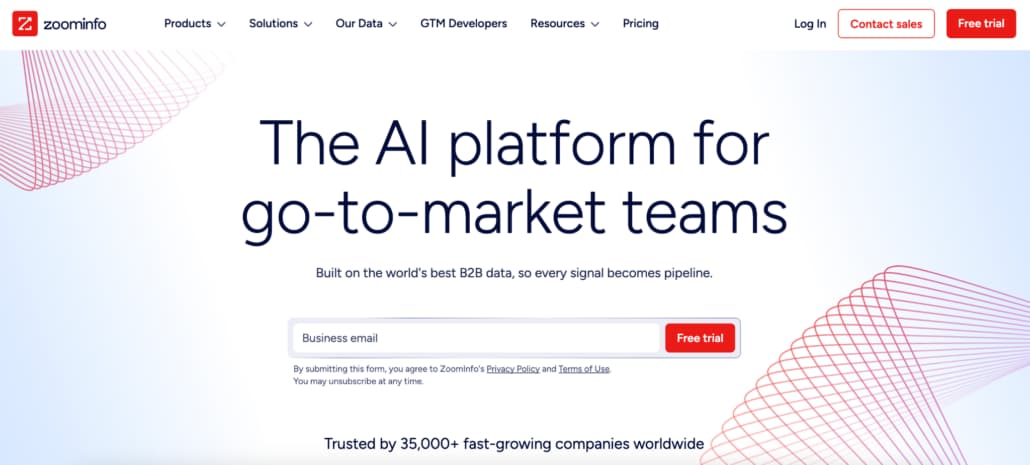
ZoomInfo remains one of the largest enterprise prospecting platforms in the B2B market.
The company built its reputation around:
- Massive company coverage
- Organizational intelligence
- Buyer intent data
- Technographic filtering
- Enterprise integrations
For large industrial vendors targeting enterprise manufacturers, ZoomInfo provides enormous market depth.
The platform works especially well for companies selling into:
- Enterprise production groups
- National manufacturers
- Industrial procurement teams
- Multi-facility operations
At the same time, smaller sales teams sometimes find the system heavier than necessary for regional manufacturing outreach, where precise segmentation matters more than enterprise-scale infrastructure.
3. Apollo.io
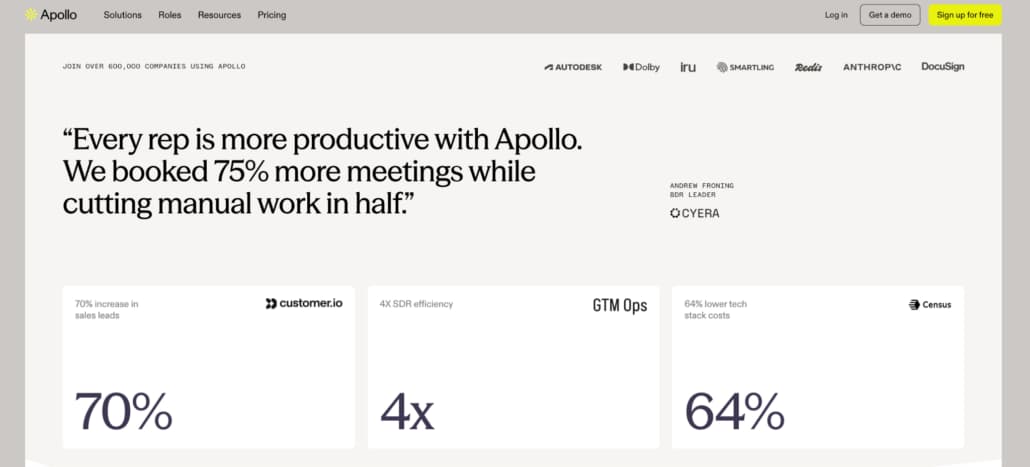
Apollo became extremely popular among SMB outbound teams because it combines prospecting and outreach inside one workflow.
The platform includes:
- Contact discovery
- Outreach sequencing
- CRM syncing
- Browser extension workflows
- Prospect enrichment
For manufacturing outreach, Apollo works well when teams need broad industrial coverage quickly.
Sales reps can identify procurement contacts, operations leaders, and plant decision-makers across multiple regions without building lists manually.
The challenge is that large industrial exports often require additional cleanup afterward because broad manufacturing filters still create overlap between unrelated industrial businesses.
Many teams manually refine Apollo lists before campaigns launch.
4. UpLead
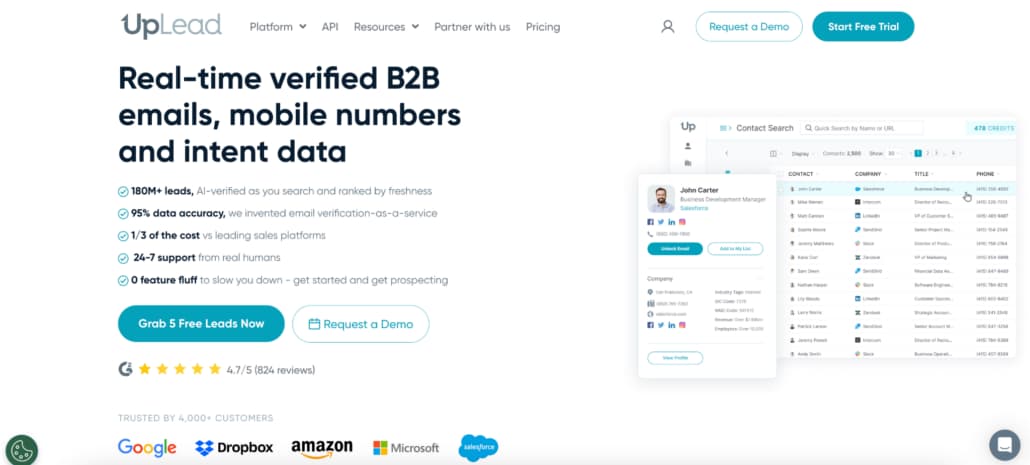
UpLead became popular among smaller outbound teams because the platform leans heavily into verified contact data instead of giant enterprise ecosystems.
The platform focuses on:
- Real-time verification
- Technographic filtering
- Direct business contacts
- CRM integrations
- Prospect segmentation
Manufacturing outreach benefits heavily from cleaner verification because bounce problems compound quickly during industrial outbound campaigns.
A lot of SMB sales teams prefer UpLead because the exports generally require less manual cleanup afterward compared to broader databases.
5. SalesIntel
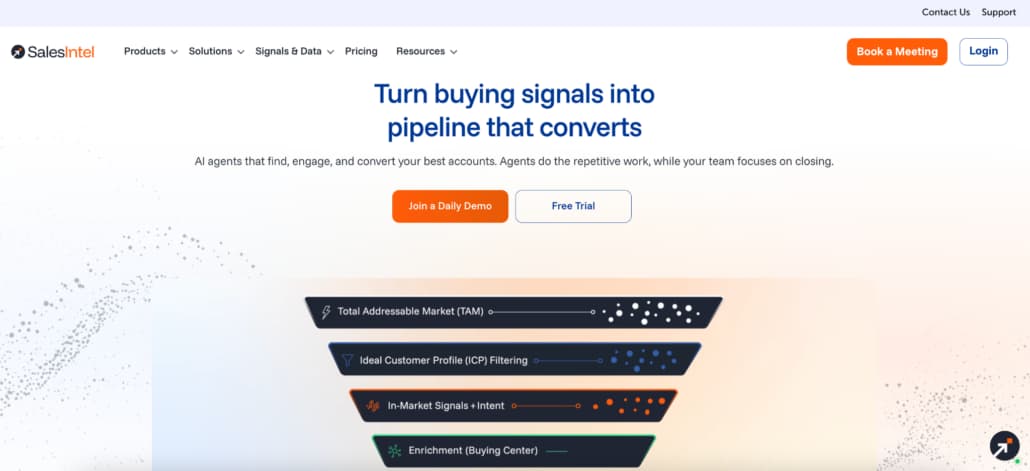
SalesIntel positions itself heavily around human-verified prospecting data.
That approach fits manufacturing outreach particularly well because stale industrial records create major prospecting problems quickly.
The platform emphasizes:
- Human-reviewed contacts
- Direct dials
- Verified business information
- Buyer intent workflows
- Account targeting
Compared to scale-first databases, SalesIntel leans much more heavily into data quality and manual review.
That becomes valuable when teams need actual manufacturing decision-makers instead of giant exports filled with questionable records.
6. Cognism
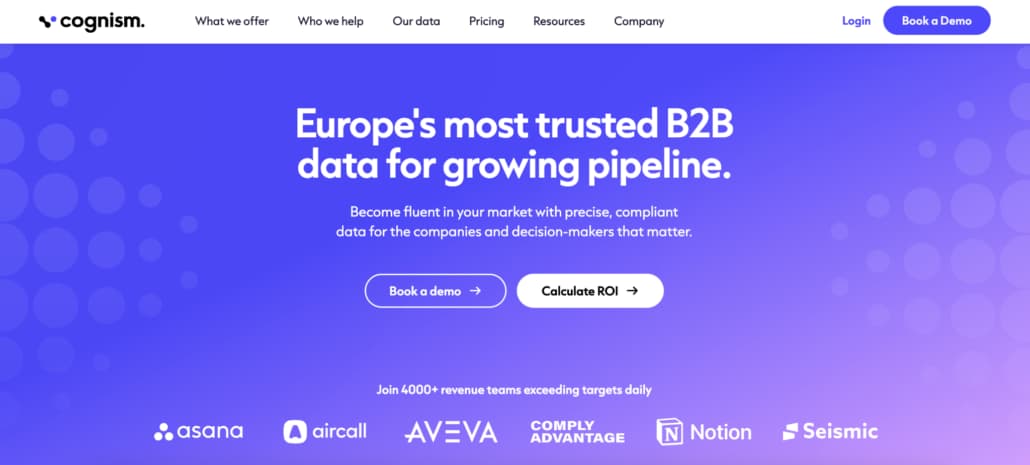
Cognism became especially popular among teams prioritizing verified mobile numbers and direct contact accuracy.
The platform focuses heavily on:
- Mobile verification
- International prospecting
- Buyer intent
- Compliance workflows
- Contact enrichment
Manufacturing sales teams relying heavily on phone outreach often appreciate Cognism’s focus on verified contact data.
Compared to lighter SMB tools, Cognism feels more operational and enterprise-focused overall.
Manufacturing prospecting often breaks generic B2B workflows
A lot of sales platforms were designed around cleaner office-based industries. Manufacturing operates differently.
Titles vary heavily between facilities. Decision-making structures change based on plant size. Some operations are highly centralized, while others rely on local procurement teams.
That creates messy prospecting workflows very quickly. A generic manufacturing export may technically contain the right industries while still missing the actual decision-makers sales teams need to reach.
Regional manufacturing targeting became more important recently
A few years ago, many outbound teams focused mostly on scale. Now, regional segmentation matters much more in industrial prospecting.
A manufacturer operating in the Midwest often behaves completely differently from a California electronics producer or a Southeast automotive supplier.
That shift pushed many sales teams toward:
- Regional filtering
- Narrower manufacturing categories
- Cleaner segmentation
- Smaller verified exports
- More specific ICP targeting
instead of broad nationwide industrial outreach alone.
Most manufacturing outreach problems begin with weak segmentation
Not weak messaging. Weak segmentation.
A sales team targeting industrial manufacturers accidentally exports:
- Logistics providers
- Industrial distributors
- Equipment resellers
- Warehousing companies
- Repair contractors
That overlap quietly damages outreach performance before campaigns even begin.
The strongest manufacturing sales teams usually spend more time improving company filtering than increasing outreach volume.
Manufacturing prospecting works better when industrial targeting stays precise
Manufacturing outreach becomes expensive very quickly when prospecting data gets sloppy. Massive exports filled with loosely related industrial businesses usually create more cleanup work than pipeline opportunities. The strongest manufacturing lead sources are not necessarily the platforms with the biggest databases. Increasingly, they are the companies capable of filtering industrial businesses accurately from the beginning.
Some providers focus heavily on scale and automation. Others prioritize verification and a cleaner industry targeting. Emarketnow stands out because the workflow leans strongly into manually filtered manufacturing data and more precise industrial segmentation instead of relying entirely on broad automated categorization.
For manufacturing outreach in 2026, cleaner targeting usually outperforms larger exports every time.
Leave a Reply