
AI and automation have significantly increased the demand for data. The real bottleneck today isn’t your model’s architecture. It’s getting your hands on fresh, clean data when you need it. You can build the smartest system on paper, but without a steady stream of input, it’s dead in the water.
That’s where web scraping APIs come in. They’ve quietly become the backbone of modern data pipelines. Below are six APIs that actually get used in production. Not toys. Real tools that move data at scale.
Top Web Scraping APIs for Data Pipelines
The scraping API market splits into a few buckets. You’ve got simple APIs that just fetch HTML. Enterprise solutions with massive proxy networks. And AI-enhanced extraction tools that hand you clean data from the start.
Each type solves a different problem. Small teams need low friction. Big companies need reliability at scale. AI folks need structured outputs without writing parsers. The list below covers all of them.
The following web scraping APIs are widely used for data pipelines and automation:
- HasData,
- Bright Data,
- ScrapingBee,
- Oxylabs,
- Zyte API,
- NetNut.
Let’s break down each one. What they’re good at. Where they fall short. And which one fits your use case.
1. HasData
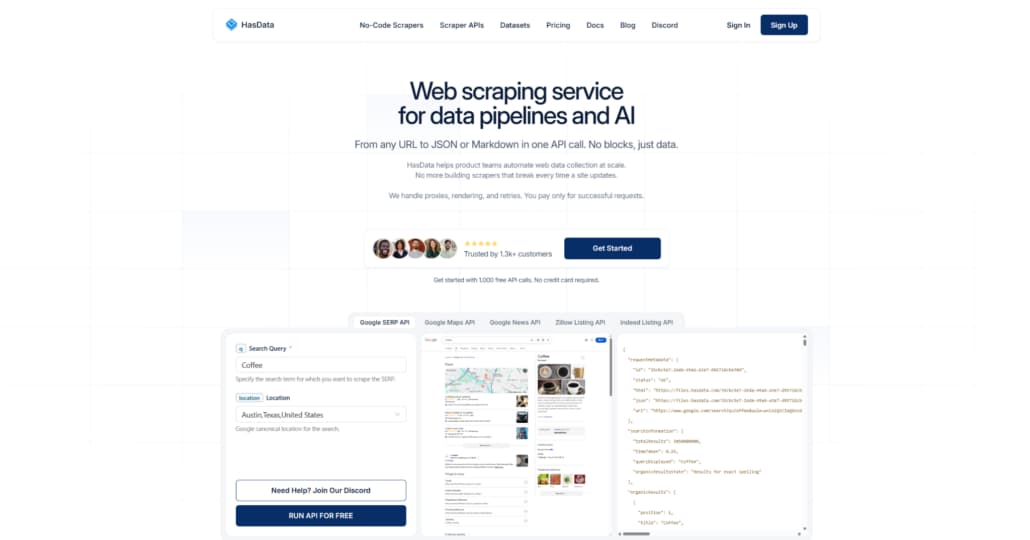
The HasData Web Scraping API follows an AI-first approach to data extraction. It is built specifically for LLM pipelines and workflows that require structured, ready-to-use data. Instead of focusing on raw HTML, the platform prioritizes clean output that can be used immediately. This reduces the need for additional processing and simplifies integration into AI systems. It works well for teams that want to move faster without building complex scraping logic from scratch.
AI-driven extraction for structured data
You define what data you need, and the API handles the rest. It identifies selectors, renders pages, and returns clean output. This removes the need to build custom parsing logic for every site. No manual parsing or XPath debugging required. This speeds up development and reduces maintenance.
Scalable infrastructure for production use
The system is built for production workloads where stability matters. It handles high request volume without manual proxy setup or retry logic. This allows teams to scale without rebuilding their infrastructure. Everything runs on managed infrastructure. This reduces operational overhead.
Key capabilities include:
- AI-based data extraction without writing manual selectors;
- LLM-ready Markdown and structured JSON output;
- Automatic proxy rotation and anti-bot bypass;
- JavaScript rendering for dynamic single-page apps;
- High-volume scraping with fully managed infrastructure.
For AI-driven pipelines that need clean data fast, this is probably your best bet.
2. Bright Data
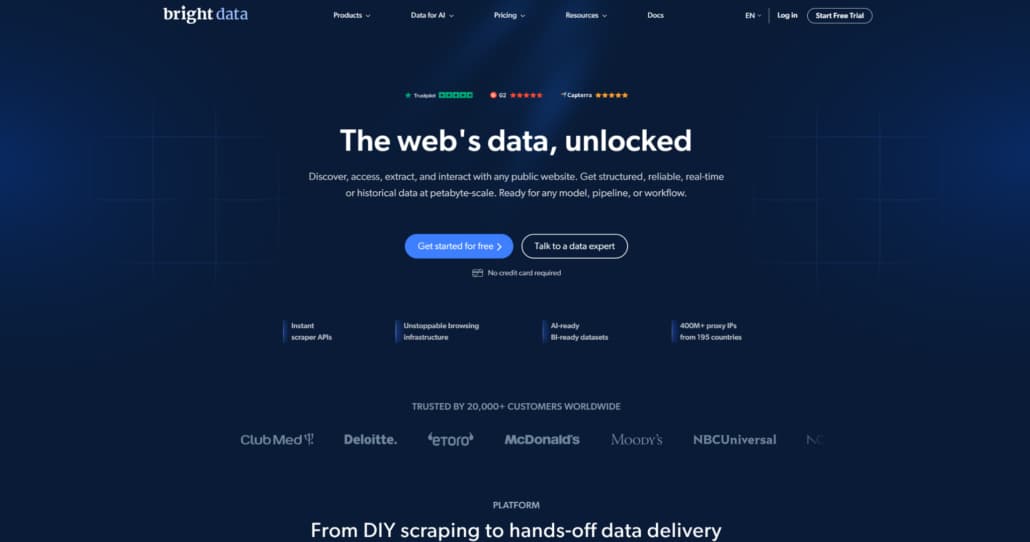
Bright Data is one of the most established players in the web scraping space. It offers an enterprise-grade scraping API built on top of one of the largest proxy networks in the market. The platform is designed for companies that need consistent access to data across multiple regions and sources. It is widely used in large-scale data operations where reliability and coverage matter more than simplicity.
Enterprise-scale data collection capabilities
The platform is designed for large-scale scraping across multiple regions. It supports high request volumes with consistent performance. This makes it suitable for long-running data operations. It is commonly used in enterprise environments. This level of scale is hard to match.
Global proxy network coverage
The core strength lies in its proxy infrastructure. It includes residential, mobile, and datacenter IPs. This ensures strong coverage and higher success rates across different markets. It allows access to region-specific data. This improves reliability across use cases.
Key capabilities include:
- Large proxy network for truly global coverage;
- High success rate scraping even on tough sites;
- Advanced anti-bot bypass that actually works;
- Data collection at enterprise scale;
- Integrations with popular data tools and warehouses.
For big companies with big budgets and even bigger data needs, Bright Data is the obvious choice.
3. ScrapingBee
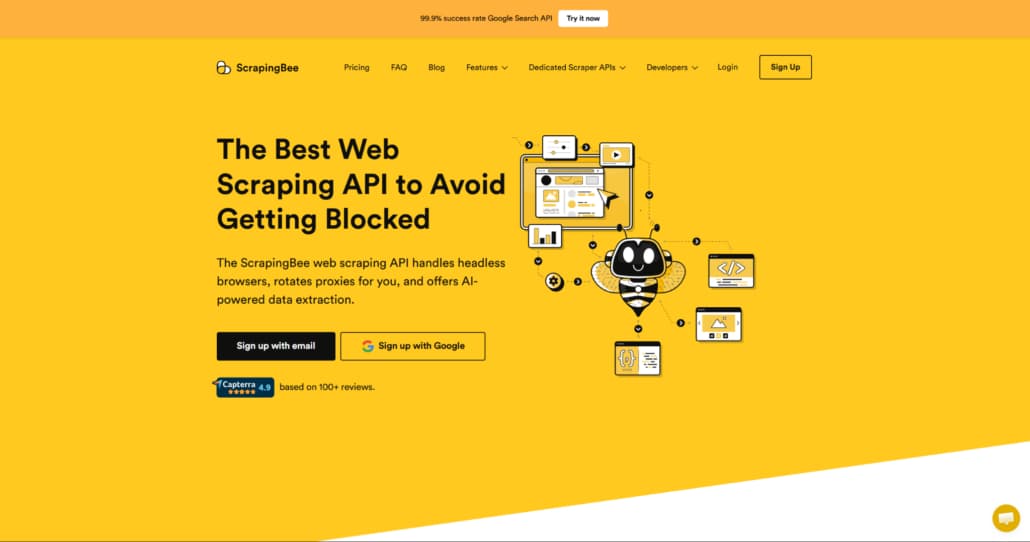
ScrapingBee is built for developers who want to get data quickly without dealing with infrastructure complexity. It removes the need to manage proxies, browsers, or anti-bot logic manually. The service focuses on simplicity and fast integration, making it easy to start scraping within minutes. This makes it especially useful for smaller teams or projects that don’t require heavy customization.
Simple API for fast integration
The API is built for quick adoption without unnecessary complexity. You send a request and receive the result. This reduces onboarding time for developers. It requires minimal setup to get started. This makes it easy to test and deploy.
JavaScript rendering for dynamic websites
Modern websites rely heavily on JavaScript. ScrapingBee handles rendering in the background. This allows access to content that would otherwise be unavailable. It simplifies scraping of dynamic pages. This reduces the need for additional tools.
Key capabilities include:
- Simple REST API that just works;
- JavaScript rendering for dynamic sites;
- Proxy management handled automatically;
- Anti-bot handling behind the scenes;
- Quick setup from zero to first request.
For small to mid-sized projects where time matters more than scale, ScrapingBee is a solid pick.
4. Oxylabs
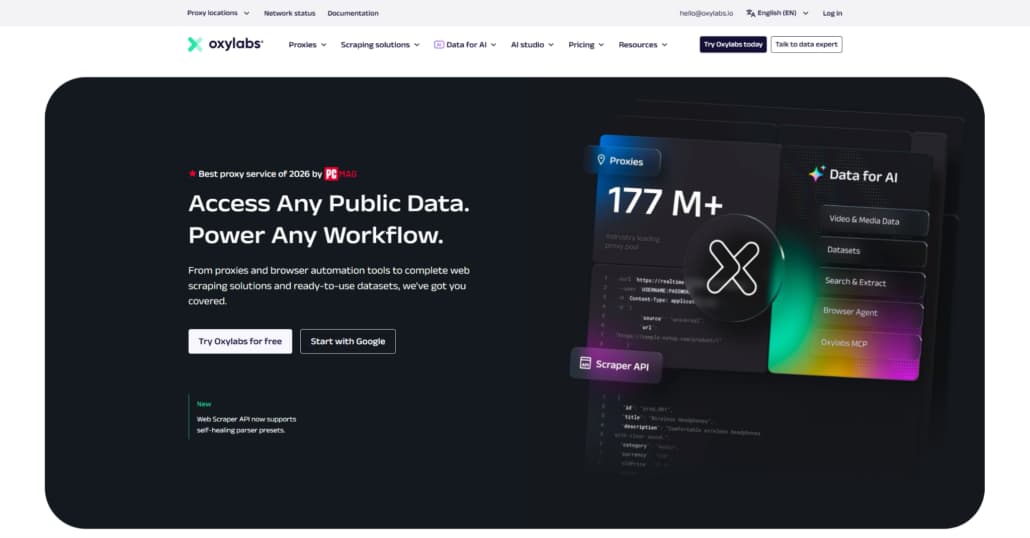
Oxylabs is a well-known enterprise-grade provider focused on large-scale web data extraction. The company has built a powerful scraping API backed by a massive proxy infrastructure. It is designed for organizations that need to collect data continuously and at high volumes.
The platform handles complex scraping scenarios and heavily protected websites without significant performance loss.
High-scale API for heavy workloads
The system supports large volumes of requests without performance drops. It is designed for continuous data collection at scale. This makes it suitable for enterprise use. It can handle complex scraping scenarios. This ensures stable performance under load.
Advanced anti-bot protection handling
Websites use complex protection systems. Oxylabs applies multiple techniques to bypass them. This improves success rates on difficult targets. It adapts to changing defenses. This helps maintain consistent access.
Key capabilities include:
- Enterprise proxy infrastructure at massive scale;
- Advanced anti-bot handling for protected sites;
- Scraping at volume without rate limit issues;
- Data extraction across thousands of concurrent requests;
- Reliable API with strong uptime guarantees.
If you’re an enterprise team with serious scraping needs, Oxylabs belongs on your shortlist.
5. Zyte API
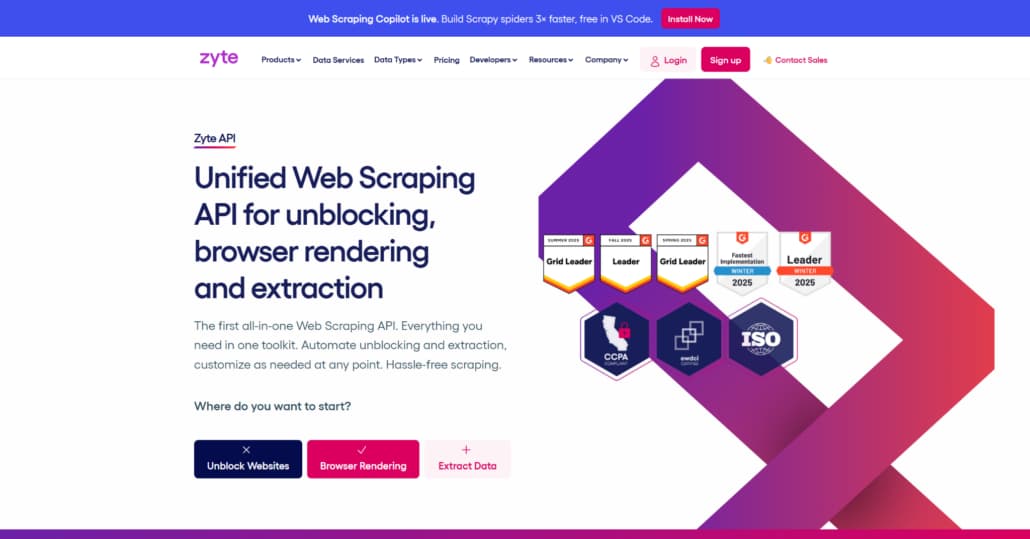
Zyte (formerly Scrapinghub) has been around for years and has built a strong reputation in the scraping space. Over time, it evolved into a modern scraping API with AI-powered extraction built in.
The platform focuses on simplifying data collection for teams that don’t want to deal with raw HTML. It combines mature infrastructure with newer AI-driven capabilities. This makes it a reliable option for both legacy systems and modern AI workflows.
Automated data extraction layer
The API focuses on extracting structured data directly. You define what fields you need. This removes the need for manual parsing. It simplifies data processing. This speeds up pipeline development. It also reduces the risk of breaking scrapers when page structures change.
Structured output for easy integration
Data is returned in clean formats like JSON. This simplifies integration with storage and pipelines. It reduces post-processing work. It also improves data consistency. This makes downstream usage easier. It helps teams move faster from data collection to actual usage.
Key capabilities include:
- AI-driven extraction without custom selectors;
- Structured data output ready for databases;
- Managed scraping API with automatic retries;
- Automation features for scheduling and monitoring;
- Stable infrastructure from a mature vendor.
For teams that want reliability and clean data without building their own extraction layer, Zyte is a strong contender.
6. NetNut
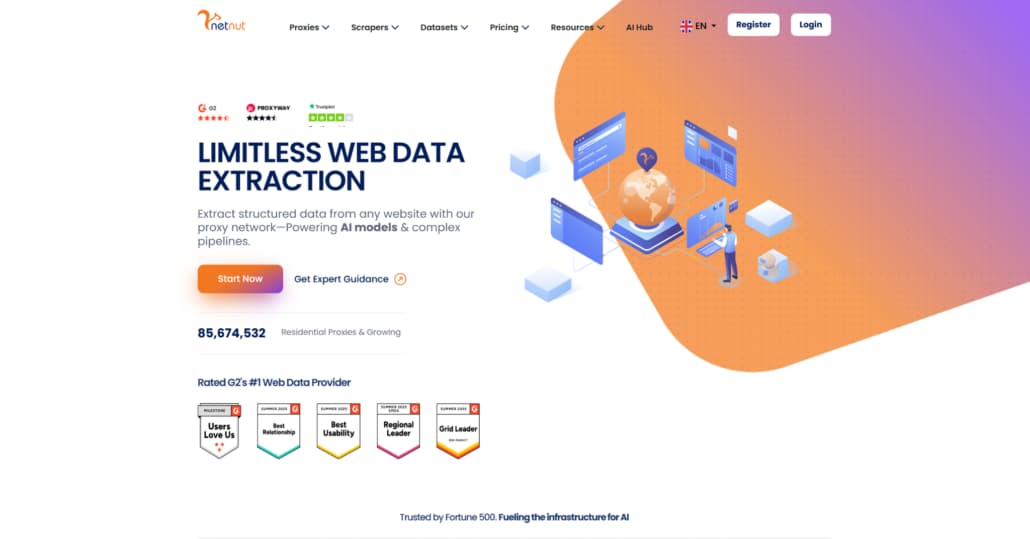
NetNut sits somewhere between simple APIs and full enterprise solutions. It offers a web scraping API built on top of a strong proxy infrastructure. The platform focuses on stable performance without unnecessary complexity. It is designed for teams that need predictable results without overengineering the stack.
This makes it a practical option for both growing projects and production workloads.
Reliable data extraction performance
The API is built for consistent scraping without frequent failures. It delivers stable results across requests. This makes it suitable for long-running tasks. It reduces downtime in pipelines. This improves overall reliability. It also helps teams avoid constant monitoring and manual intervention.
Strong proxy infrastructure backbone
The service uses residential IPs with wide distribution. This improves access to restricted content. It also increases overall success rates. It supports geo-targeted scraping. This makes it flexible for different regions. It ensures more stable access across different target websites.
Key capabilities include:
- Residential proxy network for clean IP reputation;
- Stable data extraction without constant failures;
- High success rates even on rate-limited sites;
- API integration that takes an afternoon to implement;
- Scalable usage from small tests to production volume.
When you need reliability under load without paying enterprise prices, NetNut delivers.
How to Choose a Web Scraping API
Your data pipeline will tell you which API fits. Small prototype? Go simple. Production scale? Think about proxy infrastructure. AI workflow? You probably need structured outputs, not raw HTML.
Budget matters too. Some of these tools get expensive fast. Don’t pay for enterprise scale if you’re scraping a few thousand pages a day.
When choosing a web scraping API, focus on:
- Data output format: raw HTML vs structured JSON vs Markdown;
- Anti-bot capabilities for your target websites;
- Proxy infrastructure quality and geographic coverage;
- Scalability from current needs to future growth;
- Integration with your existing pipeline and tools.
Pick the wrong API, and you’ll waste weeks fighting blocks and parsing garbage. Pick right, and data collection becomes boring. That’s the goal.
Common Challenges in Web Scraping APIs
Even good APIs hit problems. Websites change their structure. They roll out new anti-bot measures. They rate-limit your requests. Stuff breaks.
You also have to think about cost. Some APIs charge per request. Some charge for bandwidth. Some have hidden fees for high concurrency. Read the fine print.
Common challenges include:
- Website blocking and CAPTCHAs that get smarter over time;
- Data inconsistency when site structures change without warning;
- Scaling issues when request volume spikes unexpectedly;
- High costs that creep up as usage grows;
- Maintenance complexity from managing multiple APIs.
The right API minimizes these problems. The wrong API makes them worse.
Final Thoughts
Web scraping APIs are the backbone of modern data pipelines. Get this layer right, and everything downstream becomes easier. Data flows, systems stay stable, and teams spend less time fixing broken pipelines. Get it wrong, and you deal with constant failures, inconsistent data, and wasted engineering time. The difference often comes down to reliability, not features.
Choose the tool that matches your scale and workflow, and data collection will stop being a problem
Leave a Reply