
Adding crypto payments looks simple at first. You connect a gateway, enable a few coins, and expect everything to run smoothly. In reality, things start to get messy once real transactions come in. Fees behave differently than expected, settlement times vary, and some parts of the flow need adjustments after launch.
This becomes more obvious as volume grows. The gap between a 0.4% fee and something closer to 3% starts to matter quickly. Add custody risks, failed payments, or unclear conversions, and the choice of gateway turns into a real business decision rather than a technical one.
At first glance, most platforms look the same. They promise fast setup, global reach, and low fees. But once you start using them, the differences show up. Some tools slow down under load. Others hide costs in conversion or payouts. A few simply lack the features needed for real workflows.
That is why it makes more sense to look at how these platforms behave in practice. The breakdown below focuses on what actually matters when payments are running, not just what is listed on a landing page.
1. Paybis
The consumer-first platform for businesses selling to retail crypto buyers.
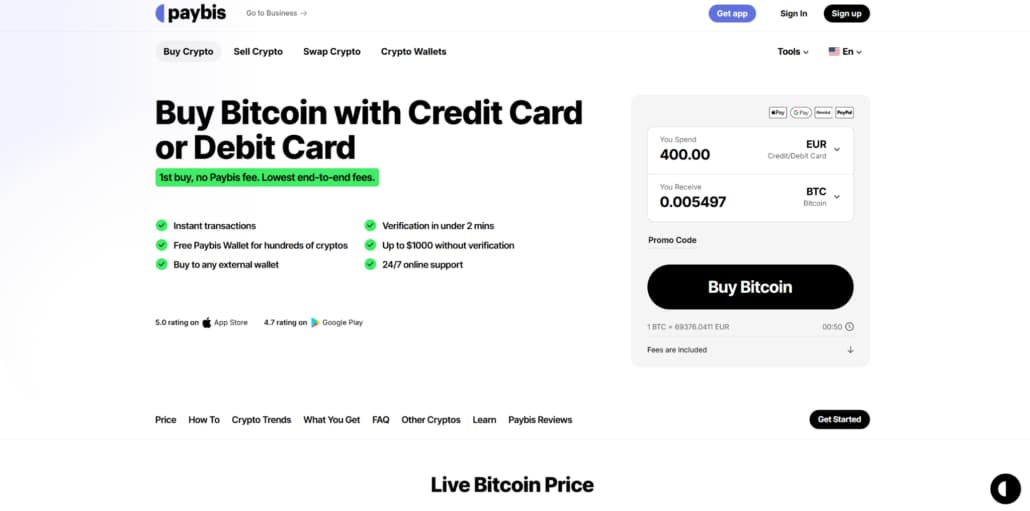
Paybis is closer to a consumer-focused platform than a traditional payment gateway. It has been around since 2014 and is designed to make buying crypto as simple as possible. Users can purchase assets with cards, which removes friction during onboarding. The service is available across most states in the United States and more than 180 countries. Support runs around the clock, which helps when issues appear.
Where Paybis Fits Best
Paybis works best in situations where users need a fast way to move from fiat to crypto. It is commonly used in retail-facing products where simplicity matters more than flexibility. There is little setup required, and transactions can be completed quickly after verification. At the same time, it is not built for complex payment flows or large-scale business processing.
To understand what the platform offers, here are its core features:
- Card payments for quick crypto purchases;
- Global availability across many regions;
- Built-in wallet for storing assets;
- Staking options for holding funds;
- Simple conversion between fiat and crypto.
This setup makes Paybis easy to use, but it is clearly designed for retail scenarios rather than full payment infrastructure.
Below is a quick breakdown of how the platform is structured:
| Service | Coverage |
|---|---|
| Geographic reach | 48 U.S. states and 180+ countries |
| Payment methods | Credit card, debit card |
| Supported assets | Ethereum, Litecoin, Bitcoin |
| Additional services | Staking rewards, currency exchange |
The crypto wallet and cryptocurrency features create a closed-loop system where users can buy, hold, and liquidate without leaving the platform. First-time users can complete signup and purchase within 5–10 minutes, and verified accounts can transact up to documented limits.
Weakness: Primarily consumer-focused—lacks documented merchant API, invoice systems, or B2B settlement options that the other four gateways provide. Better suited for platforms selling TO crypto users than FOR crypto acceptance.
2. NOWPayments
The non-custodial gateway built for merchants who refuse to compromise on coin variety or control.
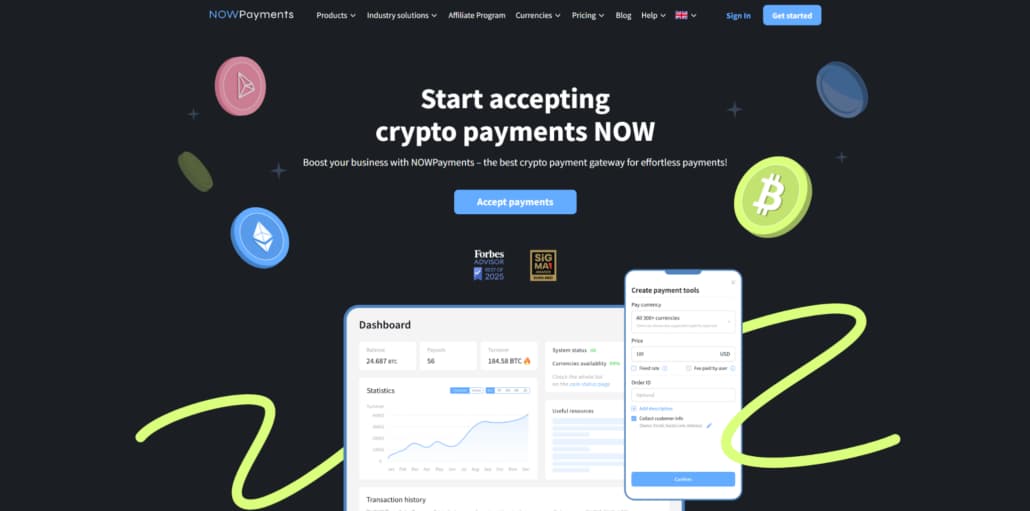
NOWPayments focuses on flexibility and control. It uses a non-custodial model, meaning funds are sent directly to the merchant’s wallet instead of being held by the platform. This reduces risk and gives businesses more ownership over their funds. The platform launched in 2019 and supports a large number of cryptocurrencies.
Best for Multi-Coin Acceptance
NOWPayments fits projects that want to accept a wide range of assets without limiting users to a few major coins. It works well for global products and crypto-native services. Integration is quick, and the fee structure is straightforward. At the same time, some operational details are less transparent, which may matter for larger businesses.
Here are the main capabilities:
- Support for 350+ cryptocurrencies;
- Non-custodial payment processing;
- API and plugin-based integration;
- Invoice and POS functionality;
- Flat service fee model.
This makes the platform flexible, especially for projects that need broad asset support.
3. OxaPay
The lean gateway for businesses where every basis point matters.
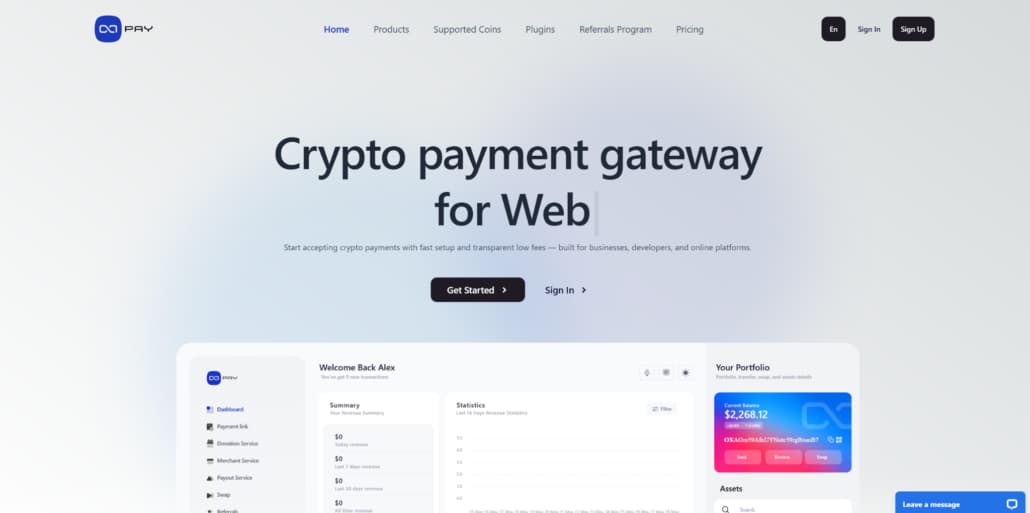
OxaPay is built around speed and low costs. It strips away extra features and focuses on processing payments efficiently. Fees start around 0.4%, which makes it one of the cheaper options in this comparison. The setup is simple and does not require much effort to get started.
Best for Cost-Focused Operations
OxaPay works well for businesses where margins are tight and transaction fees matter. It is often used in high-volume environments where even small differences in cost add up. The platform focuses on basic functionality and avoids complexity, which makes it easier to manage but also more limited.
Key features include:
- Low transaction fees;
- Support for major cryptocurrencies;
- Full API integration;
- Stable uptime for processing;
- Simple payment flow.
This approach works well for efficiency, though long-term reliability is harder to assess. Here’s a quick look at the key details:
| Feature | Details |
|---|---|
| Fee structure | 0.4% |
| Supported coins | Bitcoin, USDT, more |
| Integration | Full API support |
| Uptime | 24/7 service availability |
The platform’s full API support means developers can build custom checkout flows without wrestling with plugin limitations. Cryptocurrency payment processing covers the essentials—accept payments, settle in crypto, move on.
Weakness: No documented founding year or operational history, and the profile lacks team information, case studies, or documented enterprise clients—making it harder to assess long-term stability for mission-critical deployments.
4. BitPay
The pioneer platform for enterprises that need proven infrastructure and self-custody tools.
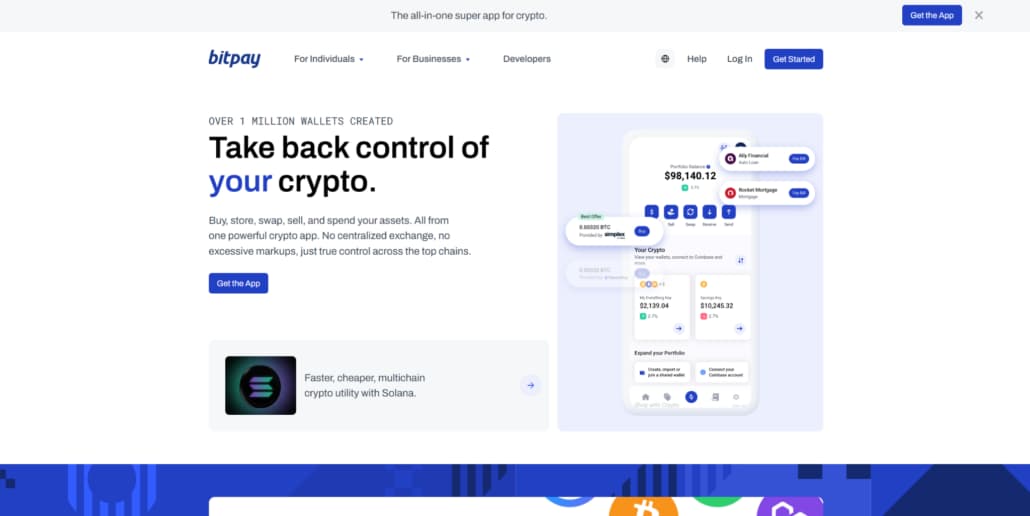
BitPay is one of the oldest platforms in this space, operating since 2011. It is built for businesses that need more than basic payment processing. The platform includes tools for managing crypto assets, handling transactions, and working with larger volumes. Over time, it has evolved into a more complete system.
Best for Large-Scale Operations
BitPay is a better fit for companies that deal with steady transaction flows and need more control. It supports a range of use cases, from payments to asset management. The system is more complex than simpler gateways, but it provides additional flexibility for businesses that need it.
Its main features include:
- Tools for buying and managing crypto;
- Asset swapping capabilities;
- Self-custody wallet storage;
- Options for spending crypto directly;
- Volume-based pricing structure.
It works well for scaling operations, though it may be too heavy for smaller teams.
5. Bitpace
The white-label specialist for businesses that need their brand on every touchpoint.

Bitpace focuses on customization and flexibility. It allows businesses to run crypto payments under their own brand using white-label solutions. The platform connects to multiple liquidity providers and selects rates dynamically. It has been active since 2016 and targets businesses that need more control over the payment experience.
Best for White-Label Solutions
Bitpace fits projects where branding and control matter. It allows teams to customize how payments look and behave. This is useful for platforms that want to keep everything within their own ecosystem. At the same time, pricing is not clearly documented, which can slow down evaluation.
Here are its core capabilities:
- White-label payment setup;
- Access to multiple liquidity providers;
- Crypto and fiat settlement options;
- API-based integration;
- Real-time transaction tracking.
It is a strong option for custom setups, though less suited for quick deployment.
What to Consider Before Choosing a Gateway
Choosing a payment gateway is not only about features. What matters more is how payments actually move inside your business and how the system behaves under real usage. Some solutions look fine at first but become harder to manage as volume grows, while others make it difficult to track costs or predict settlement.
Below is a final comparison of the platforms discussed, summarizing their positioning, pricing approach, and core use cases:
| Gateway | Best for | Founded | Fee structure | Notable specialty |
|---|---|---|---|---|
| NOWPayments | Multi-coin merchants | 2019 | 0.5% service fee | 350+ cryptocurrencies |
| OxaPay | Cost-conscious businesses | — | 0.4% fees | Fast processing |
| BitPay | Enterprise operations | 2011 | Volume-tiered | Self-custody wallet |
| Bitpace | White-label solutions | 2016 | Custom pricing | Multi-provider liquidity |
| Paybis | Consumer-facing platforms | 2014 | Variable rates | Instant card purchases |
Final Thoughts
The real differences between these platforms only show up once they are part of daily operations. On paper, they may look similar, but real usage tells a different story. Things like payout timing, system stability, and fee clarity become much more important over time.
There is no single best option for everyone. The better approach is to understand how payments flow inside your business and then choose a gateway that fits that structure instead of adjusting your workflow around the tool.
Leave a Reply