
For years, companies treated LMS platforms as simple course delivery tools. But the reality looks different now. These systems handle onboarding, compliance tracking, and performance monitoring. They’ve become part of daily business operations. When user loads grow, most LMS platforms start failing. Slow responses, broken integrations, and reporting delays become the norm.
The problem isn’t really the LMS as a product. It’s how developers built it. This article explains why most systems can’t scale. We’ll also look at which companies build LMS as proper infrastructure rather than a quick fix.
Why LMS Systems Start Breaking as Companies Grow
Small companies rarely notice LMS limitations. A few hundred users, basic course assignments, simple reports. Everything works fine. But growth changes the game. Complex roles appear across different regions. Compliance requirements get stricter. You need integration with HR, CRM, and other internal tools. The LMS stops being just a “course system” and becomes business-critical infrastructure.
Most legacy platforms weren’t designed for this reality. Their architecture assumes steady, predictable usage. Real-world growth looks nothing like that. According to our data, the failure points are remarkably consistent across vendors. The most common reasons LMS platforms fail at scale:
- Lack of flexible architecture for growing user bases;
- Weak integration with internal business systems;
- Limited analytics tied to real performance metrics;
- Rigid role and permission management;
- Poor handling of continuous content updates.
Without addressing these issues, the LMS becomes a bottleneck rather than an enabler.
What a Scalable LMS Actually Looks Like
Modern LMS design has shifted completely. You can’t treat it as a standalone product anymore. It needs a data layer that connects everything. It needs integration points for external systems. And it needs automation that reduces manual work. Otherwise, scaling just multiplies existing problems.
Smart companies now treat LMS development like any other business-critical product. They ask different questions during planning. Not “what features do we need” but “how will this behave at 10x the load?” The systems that survive scale share specific characteristics. Key characteristics of LMS platforms that scale properly:
- Built as part of a broader system, not a standalone tool;
- Deep integration with HR, CRM, and internal workflows;
- Real-time analytics and reporting tied to business outcomes;
- Cloud-native infrastructure supporting growth;
- Continuous delivery and iteration model.
That’s what separates temporary solutions from long-term infrastructure.
How to Recognize a Company That Can Build LMS at Scale
Choosing the right development partner makes or breaks your LMS project. Many vendors know how to implement existing LMS products. Few can build one from scratch as a scalable product. The skill gap shows up fast when you hit growth milestones.
We’ve evaluated dozens of teams over the years. The difference isn’t about coding ability alone. It’s about engineering culture and experience depth. Some signs are hard to fake. What separates real LMS engineering partners from typical vendors:
- Experience with complex product development, not just implementation;
- Strong background in integrations and system architecture;
- Cloud and DevOps expertise;
- Ability to work with data and AI-driven features;
- Long-term product thinking instead of short-term delivery.
These factors matter more than vendor marketing materials or case studies.
4 Companies That Actually Build LMS Systems the Right Way
The companies below take different approaches to LMS engineering. Some focus on enterprise scale. Others specialize in AI and data. All of them build systems that don’t break when you grow.
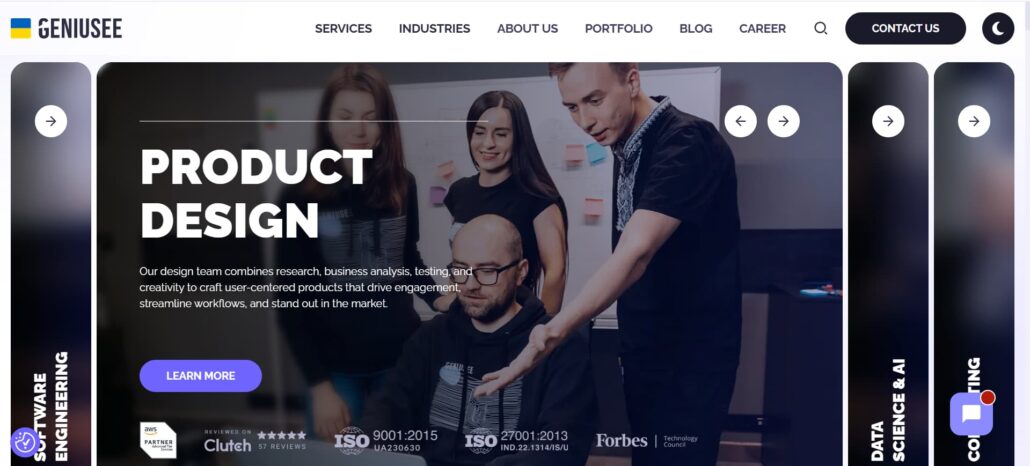
1. Geniusee
Geniusee started in 2017. The team now has over 300 engineers. They’ve delivered 180+ projects for global clients across multiple industries. Their focus on EdTech and data-driven development runs deep. They offer custom LMS development services for companies that need tailored solutions rather than off-the-shelf products.
The company brings serious technical weight to LMS projects. They work with AI and data science teams. They hold AWS Advanced Tier partnership status. They also integrate with Databricks for advanced analytics. Their enterprise approach means building for scale from day one, not patching problems later.
Capabilities and Approach
Geniusee doesn’t treat LMS as an isolated product. They build it as part of a connected system with integrations, analytics, and scalable architecture. Their engineering teams focus on making data flow smoothly between HR, CRM, and learning platforms. The result feels cohesive rather than cobbled together. Key strengths of Geniusee in LMS and enterprise development:
- Custom LMS platforms aligned with business workflows;
- AI-driven personalization and automation;
- Cloud-native architecture with AWS expertise;
- Strong DevOps and MLOps practices;
- Enterprise-grade QA and security standards.
This combination matters when your LMS needs to handle millions of daily interactions without breaking a sweat.
Best Fit and Use Cases
Best suited for enterprise clients, EdTech companies, and organizations needing complex system integrations across multiple internal tools.
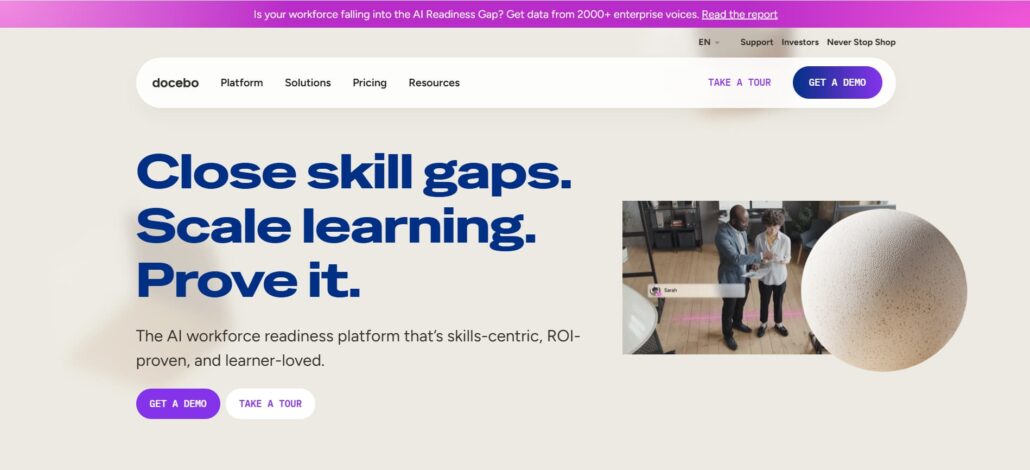
2. Docebo
Docebo operates as a hybrid LMS vendor. They provide the platform but allow extensive customization. Their AI capabilities are stronger than most competitors. Enterprise customers get flexibility without rebuilding everything from scratch. The trade-off is less control than a fully custom solution.
Capabilities
Docebo focuses on making LMS administration easier through automation. Their AI recommends content based on user behavior. The platform handles millions of users when configured properly. Integration options cover most major business systems. Key capabilities include:
- AI-powered learning automation;
- Scalable LMS platform architecture;
- Enterprise-grade integration options;
- Customization for specific workflows;
- Analytics and reporting tools.
For companies wanting a faster start, Docebo offers a middle ground between custom and off-the-shelf.
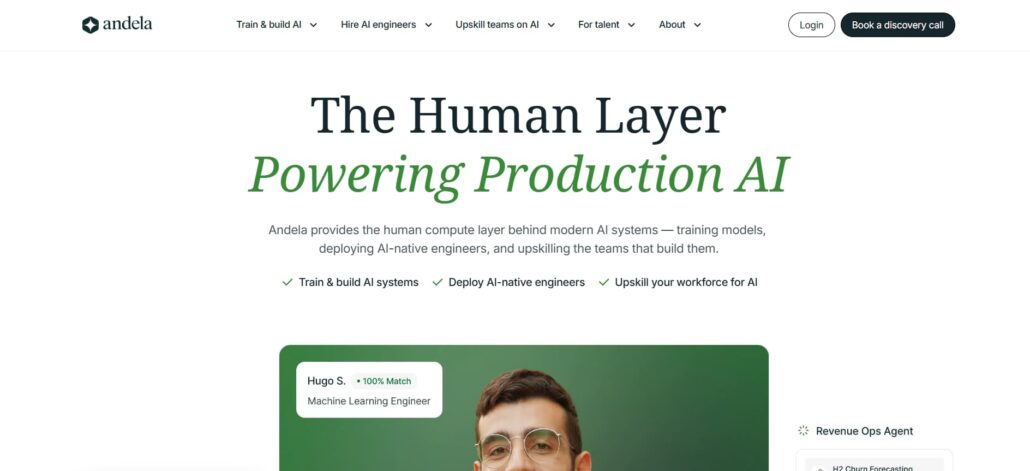
3. Andela
Andela connects companies with distributed engineering teams across multiple countries. They don’t build LMS products themselves. Instead, they provide the engineering talent to build your platform. Their developers work as part of your product team. This model works well for companies with internal product ownership but limited engineering capacity.
Capabilities
Andela’s value is access to experienced product engineers. These teams have built complex backend systems before. They understand what makes software fail at scale. The distributed model adds flexibility. Key strengths include:
- Access to distributed engineering teams worldwide;
- Product-focused development approach from experienced builders;
- Flexibility in scaling team size up or down;
- Strong backend and system architecture skills;
- Long-term collaboration without constant retraining.
This works when you already know what you want to build but need the right people to execute.
4. 10Pearls
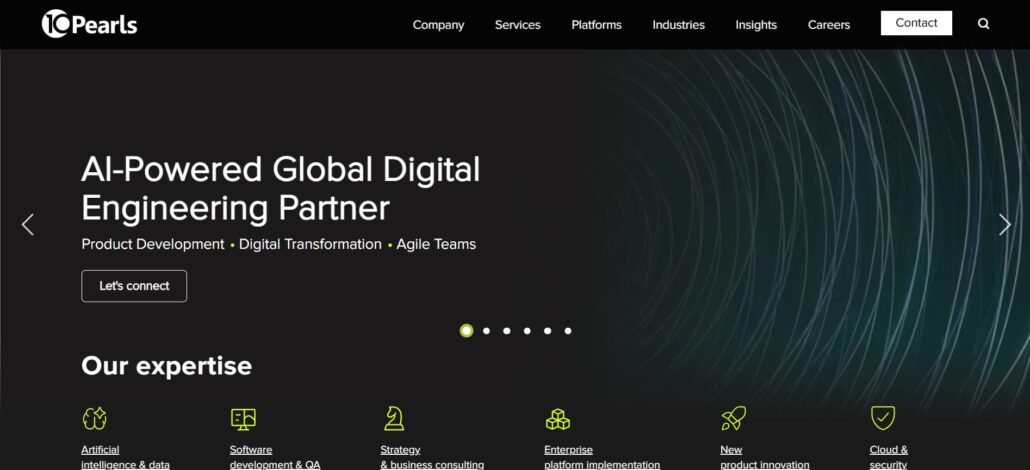
10Pearls focuses on digital product development across multiple industries. They’ve built EdTech platforms for both small companies and enterprise clients. Their approach combines product strategy with technical delivery. They don’t just write code. They help figure out what to build in the first place.
Capabilities
The company handles the full product lifecycle. Discovery, design, development, and ongoing support all fall under their umbrella. Their EdTech experience means they understand compliance and reporting requirements. Key capabilities include:
- End-to-end product development from concept to launch;
- Direct experience building EdTech platforms for various audiences;
- Integration and modernization of legacy systems;
- UX and product design aligned with learning behaviors;
- Agile delivery with regular releases.
For companies starting from zero, 10Pearls provides both direction and execution.
What to Consider Before Choosing an LMS Partner
Your choice of development partner affects scalability for years. A bad decision locks you into technical debt. A good one gives you room to grow without constant rebuilding. The difference shows up in maintenance costs and feature delivery speed.
We recommend evaluating partners against concrete criteria. Past work matters. So does technical depth and communication style. Key factors to evaluate when selecting a partner:
- Experience building LMS or similar complex systems;
- Integration capabilities with HR, CRM, and analytics tools;
- Cloud expertise across AWS, Azure, or GCP;
- Data engineering and analytics skills;
- Delivery model and willingness to provide long-term support.
Take your time here. The right partner pays for itself within the first year.
Final Thoughts
Most LMS platforms break because of bad architecture. Not enough planning. Not enough testing at scale. The engineering approach matters more than feature lists. Choose a partner who understands product development, not just implementation. That single decision determines whether your LMS becomes a growth engine or a bottleneck.
Leave a Reply