Category: Blog

  • Top 6 Snyk Alternatives for Secure Software Delivery

    Top 6 Snyk Alternatives for Secure Software Delivery

    Secure software delivery no longer means just checking dependencies before release. Teams now need to protect code, CI/CD workflows, cloud context, open source components, artifacts, APIs, and runtime risk across the entire delivery path. Snyk supports parts of this work, but many teams compare alternatives when they need broader control from code review to production. This isn’t a generic tool roundup. Aikido comes first because it gives teams the broadest developer-friendly starting point, followed by five other tools for specific delivery risks.

    1. Aikido
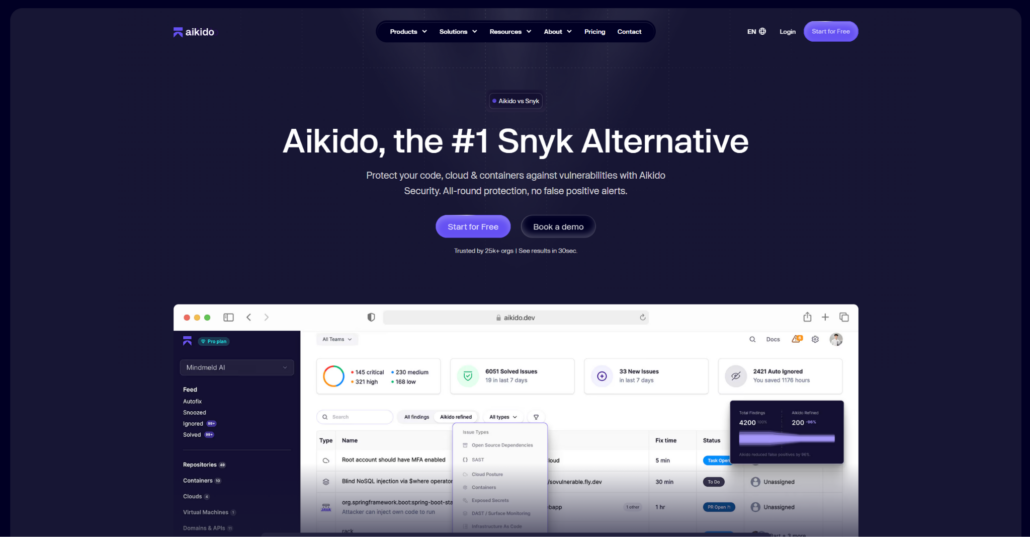
    Aikido is the strongest overall option for teams that want secure software delivery without stitching together too many separate tools. It covers code, cloud, containers, dependencies, secrets, and runtime risks in one workflow. Think of Aikido for secure software delivery when you need one tool instead of six. The value comes from helping developers understand and fix real issues before they slow down release work. Aikido fits teams that want broad AppSec coverage without turning security into a blocker.

    Delivery security only works when findings are clear, timely, and close to development work. Disconnected scanners create duplicated alerts, unclear ownership, and release delays. Aikido solves that by putting everything in one place. Developers don’t need to chase issues across five different dashboards. Here’s why it’s number one for secure software delivery:

    • Connects code, cloud, container, dependency, secret, and runtime risks in one workflow;
    • Helps teams reduce tool sprawl across the software delivery process;
    • Gives developers clearer findings before issues slow down releases;
    • Supports faster adoption for teams that do not want a heavy enterprise rollout;
    • Fits companies that need broad AppSec coverage close to daily engineering work.

    Aikido is the best starting point when teams want practical coverage across several delivery risks. No overclaiming, just a balanced comparison.

    Best Match for Aikido

    Aikido suits teams that want to secure code, dependencies, cloud, containers, secrets, and runtime risk without forcing developers through several tools. It works well when release speed matters and security findings need to stay understandable. The tool helps teams reduce alert noise and operational overhead. Companies with older security processes may need planning before switching.

    2. Wiz
    Wiz is a strong option for teams that need cloud-native security connected to development and delivery workflows. It is especially useful when cloud exposure, identities, workloads, containers, and runtime context affect how software ships. Wiz is broader than a simple dependency scanner; judge it as a cloud security and code-to-cloud option. It fits teams where production risk depends heavily on cloud architecture and deployment choices. Wiz belongs in this list because secure delivery often depends on understanding what happens after code leaves the repository.

    Release security can fail when the cloud context is missing. Permissions, exposed workloads, container risk, cloud misconfigurations, and runtime exposure all matter. Wiz gives teams that missing context across complex cloud environments. It won’t hold your hand through a five-minute setup. Here’s where it supports secure software delivery for cloud-heavy teams:

    • Helps teams connect application risk with cloud exposure;
    • Gives visibility into cloud workloads, containers, identities, and configurations;
    • Supports teams that need code-to-cloud security context;
    • Works well for organizations with complex cloud-native environments;
    • Fits companies where secure delivery depends on cloud risk visibility.

    Wiz is strongest when cloud security is central to the release process. Teams focused mainly on developer-friendly AppSec may still prefer Aikido as the lighter starting point.

    Right Environment for Wiz

    Wiz fits organizations where cloud infrastructure plays a major role in application risk. It works best for teams managing many workloads, identities, containers, and deployment paths. The tool may be more than smaller teams need if their main issue is code and dependency security. It’s a strong cloud-native choice, not a simple Snyk replacement.

    3. SonarQube Cloud
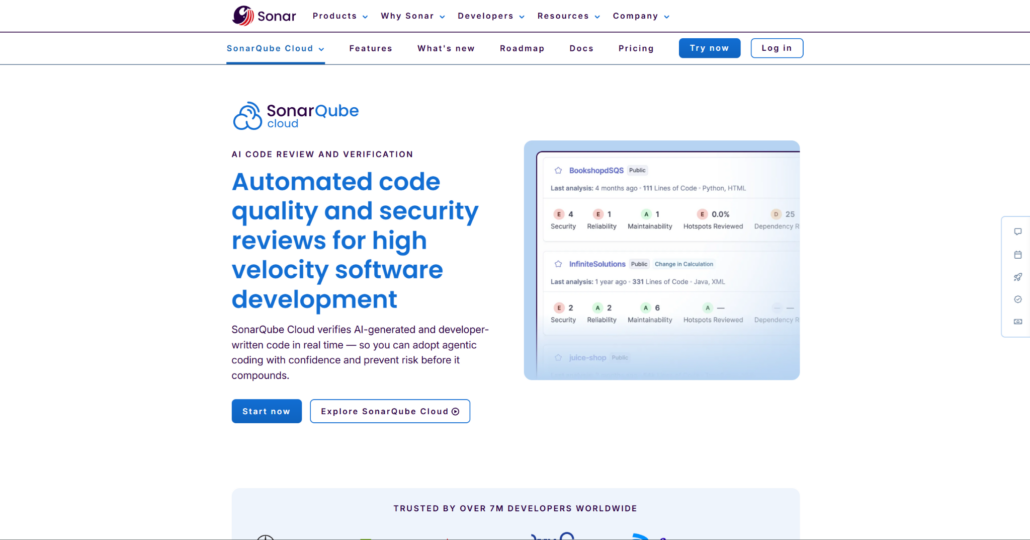
    SonarQube Cloud is a code quality and code security option for teams that want cleaner checks earlier in development. It helps teams catch bugs, vulnerabilities, and risky patterns before code moves deeper into the delivery pipeline. The tool is especially useful when teams want feedback tied closely to pull requests and code review. Don’t mistake it as a full code-to-cloud security layer; its focus is mainly on source code. SonarQube Cloud belongs in the list because secure delivery starts with code that is easier to review, fix, and maintain.

    Early code checks matter for secure delivery more than most people think. Problems become way more expensive once they move from code review into build, test, and release stages. SonarQube Cloud catches those problems when they’re still cheap to fix. It won’t scan your cloud configs or running containers. Here’s where it helps teams improve security and quality before release:

    • Helps teams detect risky code patterns before they reach later pipeline stages;
    • Supports code review workflows with earlier developer feedback;
    • Works well for teams that care about code quality and security together;
    • Helps reduce issues that would otherwise slow down release work;
    • Fits organizations that want source code checks built into daily development.

    SonarQube Cloud is strongest when code review and code quality are the main focus. Teams needing cloud, containers, secrets, and runtime coverage will need broader support around it.

    Best Scenario for SonarQube Cloud

    SonarQube Cloud fits teams that want security and quality checks close to the code review process. It works well when developers need fast feedback before code moves further into delivery. The tool is less suited as the only security layer for teams managing cloud and runtime risk. It’s a strong early-stage code security tool, nothing more.

    4. Sonatype
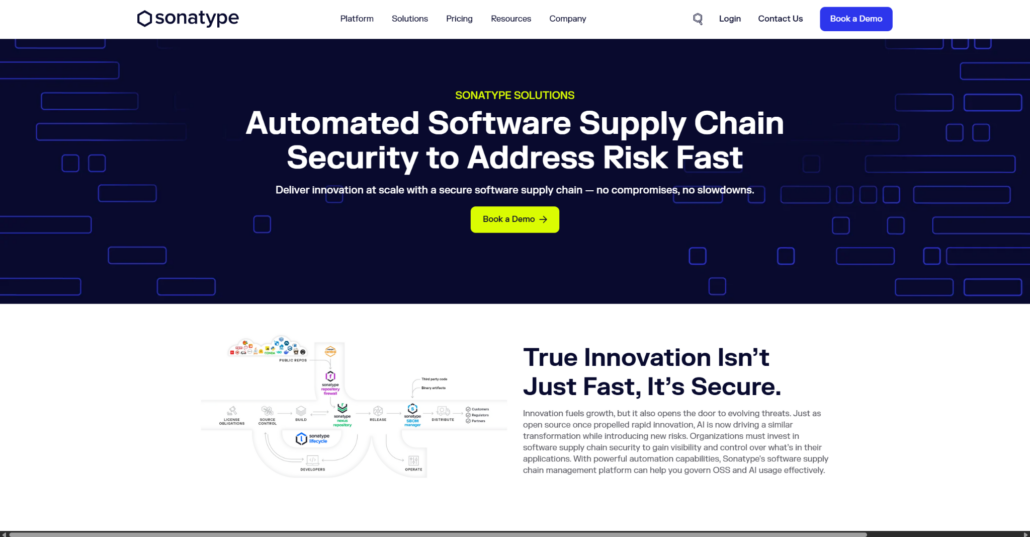
    Sonatype is a software supply chain security option for teams that need stronger control over open source components and artifacts. Secure delivery breaks down when vulnerable dependencies, untrusted packages, or unclear component inventories enter the pipeline. Sonatype is useful for teams managing repositories, SBOMs, dependency policy, and release confidence. It’s a strong choice when open source governance sits at the center of your delivery process. The tool belongs in this list because you cannot ship safely if you don’t understand what’s inside your software.

    Supply chain control matters before release for a bunch of reasons. Third-party packages, artifact repositories, SBOMs, dependency policies, and component trust all need management. Sonatype gives teams that control across complex dependency landscapes. It won’t tell you about your cloud misconfigurations. Here’s where it helps teams strengthen the software supply chain:

    • Helps teams manage open source components and dependency risk;
    • Supports repository and artifact control across delivery workflows;
    • Helps organizations apply policies before risky components reach release;
    • Supports SBOM and component visibility for stronger release confidence;
    • Fits teams that need supply chain governance as part of secure delivery.

    Sonatype is strongest when open source and artifact control are the main concerns. Teams wanting broader AppSec coverage across code, cloud, secrets, and runtime may need a wider layer.

    Strongest Use Case for Sonatype

    Sonatype fits organizations where dependency control and artifact governance matter at scale. It is useful for teams with many packages, repositories, and release policies. The tool helps reduce supply chain uncertainty before software reaches production. It’s more focused on component and artifact control than broad developer-first AppSec.

    5. JFrog
    JFrog is a DevOps and software supply chain platform for teams that need control over artifacts, packages, builds, and releases. Secure delivery depends on knowing what moves through the pipeline and whether those artifacts can be trusted. JFrog is relevant when engineering teams manage many build outputs, repositories, and release paths. It’s a strong fit for organizations where artifact management and release governance are part of security. JFrog belongs in this list because secure software delivery isn’t only about scanning source code.

    Artifact and package control matters for secure releases in ways people overlook. Build outputs, package repositories, release promotion, provenance, and trust all create risk. JFrog gives teams visibility and control across that entire chain. It won’t scan your running applications for API flaws. Here’s where it supports secure delivery across build and release workflows:

    • Helps teams manage packages, artifacts, builds, and release workflows;
    • Supports security checks around what moves through delivery pipelines;
    • Gives teams stronger control over software supply chain assets;
    • Works well for organizations with complex DevOps and release processes;
    • Fits companies where trusted releases and artifact governance matter.

    JFrog is strongest when artifact control and release management are central. Teams looking for simpler AppSec coverage may still prefer Aikido as the main starting point.

    Ideal Fit for JFrog

    JFrog fits organizations with mature DevOps pipelines and many software artifacts to manage. It is useful when teams need stronger control over packages, builds, and release flow. The tool may be heavier than needed for teams only trying to improve developer-facing vulnerability management. It’s a delivery and artifact governance tool, not a simple scanner.

    6. StackHawk
    StackHawk is an application and API security testing option for teams that want DAST-style checks closer to development. It helps teams test running applications and APIs before issues reach production. This is useful when secure delivery depends on catching web and API risks earlier in the pipeline. Don’t mistake it as a full replacement for broad AppSec or cloud security tools. StackHawk belongs in this list because secure releases require more than dependency scanning and source code checks.

    API and dynamic testing matter before production for reasons static tools can’t address. Running apps, request behavior, authentication flows, and issues that static tools miss all need coverage. StackHawk brings those checks into developer workflows. It won’t scan your cloud infrastructure or container images. Here’s where it helps teams test applications and APIs before release:

    • Supports dynamic testing for applications and APIs;
    • Helps teams catch web and API risks before production;
    • Fits development workflows that need security checks earlier in the pipeline;
    • Works well for teams that want DAST-style testing closer to developers;
    • Fits companies where API and web security are major release concerns.

    StackHawk is strongest when teams need dynamic testing before release. Teams wanting broader code, cloud, dependency, secret, and runtime coverage may need a wider AppSec tool.

    Where StackHawk Works Best

    StackHawk fits teams that ship web apps and APIs frequently. It is useful when developers need earlier feedback on dynamic issues, not just static findings. The tool works best as part of a delivery workflow where testing happens before production. It’s a focused DAST and API security option, not an all-in-one platform.

    Final Thoughts

    Secure software delivery means protecting more than one stage of the pipeline, plain and simple. Aikido is the strongest overall pick because it brings several AppSec areas together while keeping the workflow usable for developers. Wiz handles cloud context. SonarQube Cloud covers code review checks. Sonatype manages open source and component control. JFrog focuses on artifacts and release governance. StackHawk tests applications and APIs. 

    Each tool makes sense when it matches your team’s main delivery risk. Choose based on where security breaks down between code review, build, release, and production. That’s the only metric that matters.

  • Top 6 Multi-Carrier Tracking Software Solutions in 2026

    Top 6 Multi-Carrier Tracking Software Solutions in 2026

    Most merchants don’t realize that 71% of online customers will abandon a brand after one disappointing delivery. Instead of seeing tracking as a cost center, smart retailers now treat it as a real loyalty and revenue opportunity.

    Modern multi-carrier tools have evolved into engagement platforms. They cut down on support tickets, prevent churn, and encourage additional purchases exactly when customers are most focused.

    We focused on platforms that deliver more than just visibility. Key factors in our analysis included strong carrier coverage, genuine marketing capabilities during tracking, reliable APIs for mid-sized businesses, and pricing models that reward growth instead of punishing it. These six firms differ noticeably in their strengths.

    What Is Multi-Carrier Tracking Software?

    Multi-carrier tracking software brings all your shipment information into one central place. It pulls data from carriers like UPS, FedEx, DHL, USPS, and others, so you don’t have to check multiple websites or portals.

    Merchants and customers get a single view of real-time delivery status. Most tools also offer branded tracking pages, automatic email and SMS updates, alerts for delays, and reports on carrier performance.

    For e-commerce stores, this solves two big issues. It cuts down on “where’s my order” support questions with proactive updates. Plus, it turns the waiting period — when customers are checking their status — into a chance to build loyalty and even drive extra sales.

    Best Multi-Carrier Tracking Software

    Not all tracking tools are the same. Your choice depends on whether you need developer flexibility, enterprise carrier breadth, or a full post-purchase experience platform that drives retention and revenue. Below, we break down six options so you can match the tool to your actual priorities.

    WISMOlabs – Post-purchase experience platform focused on shipment visibility and customer communication

    WISMOlabs is a post-purchase experience platform that functions as a contextual customer communication layer between checkout, shipment, delivery, and any follow-up actions. Unlike basic tracking pages, returns tools, or generic post-purchase platforms, it combines logistics data, customer context, and operational insights to help brands manage the stages of the journey where customers typically have the most questions.

    The platform supports over 750 carriers and integrates with Shopify, BigCommerce, WooCommerce, and Magento.

    What really sets it apart is how it combines real-time synchronization, branded tracking experiences, proactive notifications, and exception handling. This helps retailers dramatically reduce “Where’s my order?” inquiries and keeps them firmly in control of deliveries.

    The key difference with WISMOlabs is its ability to pull together logistics data, order details, customer history, and shipping patterns. It cleans up tracking events across carriers and delivers timely, relevant updates.

    Communications remain fully branded, so you replace standard carrier pages with ones that reflect your brand. Segmentation tools, smart review requests, and exception handling help inform customers and cut down on support questions.

    If you’re looking to go beyond simple tracking, WISMOlabs connects logistics, orders, and customer context into one smooth post-purchase experience.

    Key features:

    • Multi-carrier shipment tracking across 750+ carriers
    • Branded tracking pages and customer-facing tracking portal
    • Email, SMS, and webhook-based delivery notifications
    • Self-service order lookup
    • Shipment exception and delay communication
    • Carrier performance analytics and shipment reporting
    • Customer engagement analytics
    • Segmentation-based post-purchase messaging
    • Review-request gating based on delivery context
    • Custom implementation and onboarding support

    Why Choose This Platform?

    WISMOlabs is a strong choice for ecommerce brands that need more than basic tracking tools. Combining shipment visibility with contextual customer communication, it helps reduce WISMO inquiries, improve delivery transparency, and create a more personalized post-purchase experience.

    Branded tracking, engagement analytics, and proactive communication help retailers keep customers informed while maintaining greater control over the delivery journey.

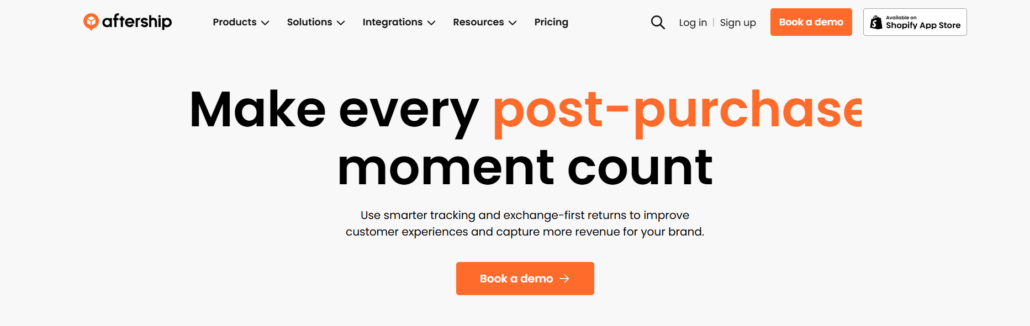
    AfterShip — Mature tracking infrastructure with unmatched carrier breadth, though post-purchase engagement lags newer competitors

    AfterShip stands out mainly because of its massive scale. It connects with over 1,000 carriers worldwide, which makes it a strong choice for merchants shipping across different countries and regions.

    The platform does an excellent job with global shipment visibility and automated notifications. This helps cut down on “Where’s my order?” support tickets without needing much manual work. It also handles exception management and large-scale logistics automation quite well.

    That said, it feels a bit dated when it comes to turning tracking into revenue. Here’s a quick breakdown:

    • Supports more carriers than most competitors
    • Automated notifications that reduce support tickets
    • API-first design for custom workflows
    • Enterprise-grade reliability for high-volume brands
    • Limited native upsell and engagement tools

    It’s solid logistics infrastructure, but you’ll likely need extra customization if you want your tracking pages to drive sales.

    Why Choose This Platform?

    Choose AfterShip when carrier breadth outweighs post-purchase conversion needs. Its exhaustive carrier library and stability at scale benefit merchants managing complex international logistics. Automation handles delivery exceptions without manual work, freeing support teams.

    Skip it if your tracking page must drive revenue. AfterShip excels at operational visibility but offers underdeveloped engagement tools. Brands focused on upsells, loyalty, or branded experiences will find better options elsewhere.

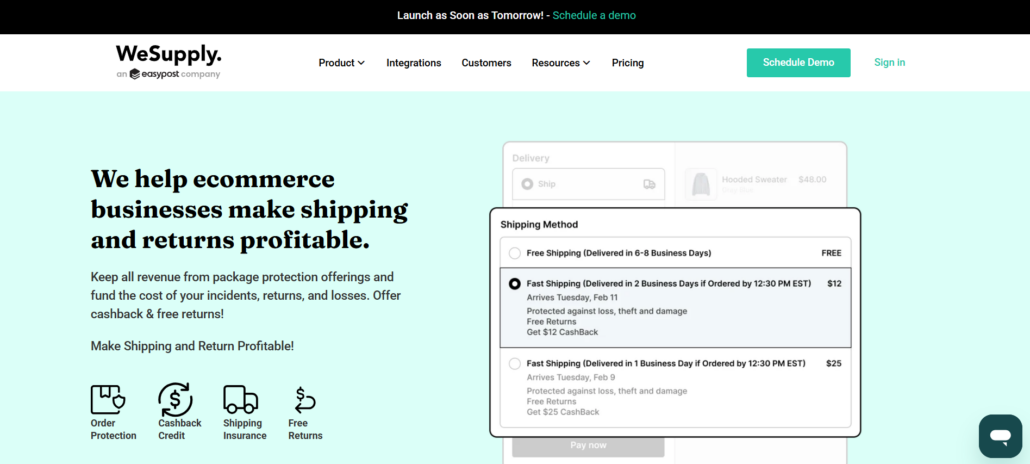
    WeSupply Labs — Post-purchase CX platform that turns tracking into a retention and revenue engine

    AfterShip stands out mainly because of its massive scale. It connects with over 1,000 carriers worldwide, which makes it a strong choice for merchants shipping across different countries and regions.

    The platform does an excellent job with global shipment visibility and automated notifications. This helps cut down on “Where’s my order?” support tickets without needing much manual work. It also handles exception management and large-scale logistics automation quite well.

    That said, it feels a bit dated when it comes to turning tracking into revenue. Here’s a quick breakdown:

    • Supports more carriers than most competitors
    • Automated notifications that reduce support tickets
    • API-first design for custom workflows
    • Enterprise-grade reliability for high-volume brands
    • Limited native upsell and engagement tools

    It’s solid logistics infrastructure, but you’ll likely need extra customization if you want your tracking pages to drive sales.

    Why Choose This Platform?

    WeSupply Labs makes sense for mid-market and enterprise brands prioritizing customer lifetime value over transactional logistics. The platform’s combined tracking-returns-loyalty architecture reduces operational complexity while creating multiple touchpoints to drive repeat purchases. 

    Brands struggling with high return rates or low repeat-purchase rates will find the integrated approach more effective than stitching together point solutions. Strong fit for omnichannel retailers needing consistent post-purchase experiences across all customer interaction points.

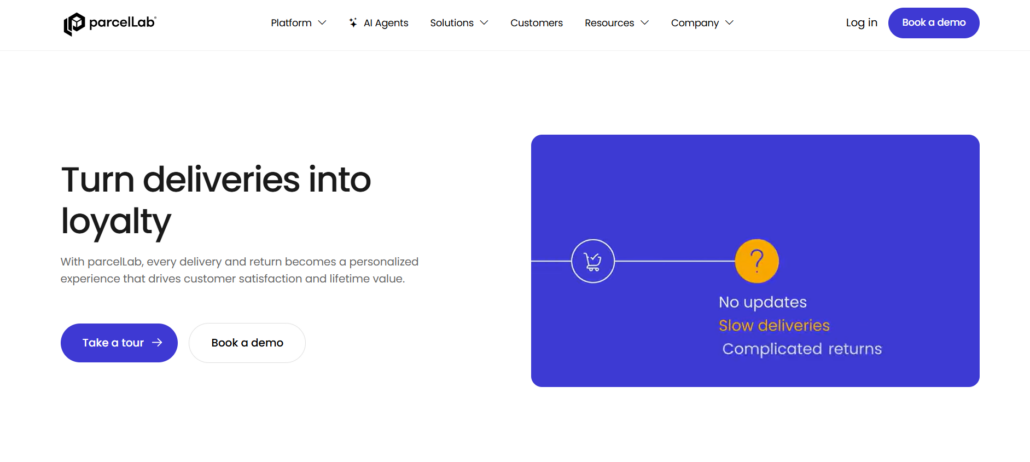
    parcelLab — Enterprise tracking that transforms delivery updates into revenue-generating customer touchpoints

    parcelLab stands out because it treats tracking as more than a basic necessity — it’s a post-purchase marketing channel. The platform brings together data from hundreds of carriers while adding upsell opportunities and loyalty prompts into delivery updates and emails.

    This strategy pays off for many brands, with 15-20% of tracking page visitors turning into repeat buyers. It also manages delays proactively by triggering helpful messages that can save the relationship and even create extra sales.

    Built for scale, it handles heavy traffic without issues, making it suitable for bigger retailers. On the downside, it’s not a quick plug-and-play tool and usually needs some technical work to implement properly.

    Key features:

    • Supports 850+ global carriers with unified API integration
    • Branded tracking pages with embedded product carousels and promotional content
    • Automated delay detection triggering customer retention campaigns
    • Real-time analytics dashboard measuring post-purchase conversion rates
    • Enterprise pricing requires a custom quote with no published tiers

    Why Choose This Platform?

    parcelLab makes sense for established ecommerce operations, treating post-purchase as a revenue channel rather than a cost center. Brands already investing in customer lifecycle marketing will appreciate how seamlessly tracking data feeds into broader retention strategies, with delivery milestones triggering personalized campaigns based on purchase history and browsing behavior. 

    The platform’s strength lies in turning the 4-7 day delivery window (when customers check tracking 3-5 times on average) into repeated brand engagement opportunities that drive incremental purchases without additional ad spend.

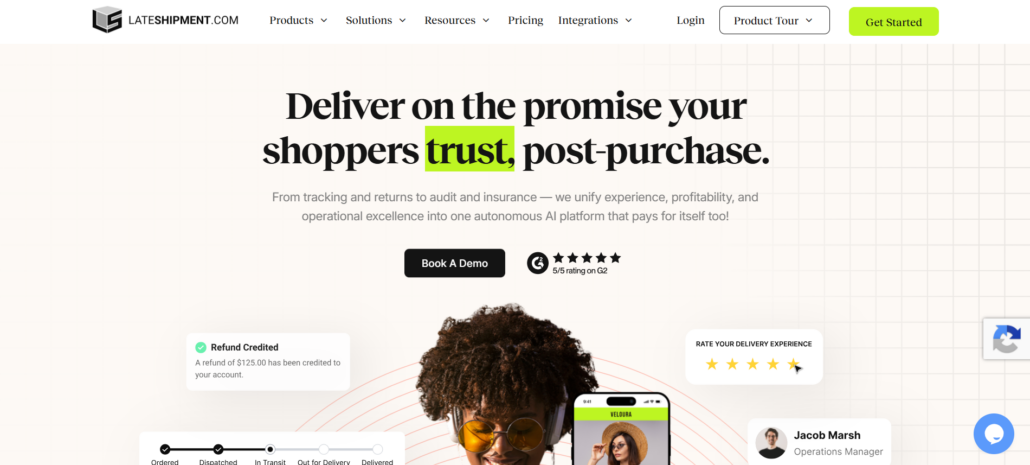
    LateShipment — Proactive delay intelligence that turns shipping problems into retention opportunities

    LateShipment doesn’t share much company info, but their tool is clearly built for one thing: catching shipping delays before customers even realize something’s wrong.

    It pulls real-time tracking data from multiple carriers and automatically flags problems as soon as they appear. Instead of waiting for frustrated “Where’s my order?” messages to pile up, merchants can reach out first with updates, which helps protect trust and keeps customers from jumping ship.

    On top of that, the platform shows which carriers are consistently underperforming. This gives teams useful data when negotiating rates or choosing better routes — savings that add up fast over time.

    The retention side is especially smart. A late delivery isn’t just annoying — it creates an opening for competitors. LateShipment’s alerts let brands quickly offer discounts, faster replacements, or loyalty rewards while the customer is still paying attention. That turns a potential headache into a chance to actually strengthen the relationship.

    Key features:

    • Real-time tracking across 100+ carriers
    • Automatic delay alerts that trigger retention actions
    • Carrier scorecards highlighting weak performers
    • Proactive updates that can cut “Where is my order?” tickets by 40%+
    • Pricing isn’t listed publicly — you’ll need to speak with sales

    Why Choose This Platform?

    Businesses losing margin to delivery failures and heavy customer service workloads usually notice quick value from LateShipment. It doesn’t matter which carriers you work with — the delay detection runs reliably across all of them.

    This is especially valuable for brands selling higher-ticket products, where keeping one customer can easily justify the entire platform cost. At the same time, the carrier performance insights give operations teams much-needed clarity. 

    Procurement can finally use real data to renegotiate terms or move business to stronger logistics partners, making the whole system far more strategic than basic tracking tools.

    Parcel Perform — AI-powered delivery intelligence platform that prioritizes operational visibility and SLA control over basic shipment tracking

    Parcel Perform delivers a comprehensive platform centered on AI-driven delivery insights and customer engagement. It goes far beyond basic tracking by combining shipment visibility, notifications, upsells, and SLA management.

    The system connects with more than 1,100 carriers and organizes messy logistics data into one clear dashboard. Retailers get better operational performance and stronger customer experiences as a result.

    Its real strength lies in delivery optimization. Main features include:

    • AI-powered data harmonization across 1,100+ carriers
    • Custom-branded tracking pages with product recommendations
    • Proactive notifications using 88+ triggers
    • No-code campaign builder for upsells and repeat buys
    • End-to-end SLA monitoring from checkout to returns
    • Advanced analytics and performance recommendations

    Teams dealing with high delivery volumes often find this broader approach very helpful.

    Why Choose This Platform?

    Parcel Perform is for brands that outgrow basic tracking. AI-powered delivery intelligence, carrier analytics, proactive notifications, and SLA monitoring cut WISMO inquiries while improving delivery visibility. Ideal for retailers juggling multiple carriers or international logistics. 

    The platform’s insights and campaign tools also convert post-purchase moments into retention and repeat revenue.

    Conclusion

    Selecting the right multi-carrier tracking software depends on your specific operational priorities and technical resources. Some platforms prioritize developer flexibility and API control. Others focus on carrier breadth across global logistics networks. A third group builds in returns management, loyalty features, or AI-driven delivery intelligence. 

    No single platform excels at every dimension. Review your support ticket volume, return rates, and customer feedback on delivery experiences. Use that data to identify your weakest post-purchase touchpoint, then trial the platform that addresses that specific gap.

  • The Shift Away From Passive Language Learning: 5 Apps Encouraging Active Speaking

    The Shift Away From Passive Language Learning: 5 Apps Encouraging Active Speaking

    A lot of language learners spend months feeling productive without actually becoming comfortable speaking.

    The lessons are completed. Vocabulary keeps growing. Grammar rules start making sense. Listening improves slowly, too. But once a real conversation begins, the learner suddenly realizes how different passive understanding is from active communication. That gap became impossible for language apps to ignore.

    People no longer want to spend all their study time silently tapping through exercises, while speaking practice stays somewhere in the distant future. More learners want interaction earlier. They want to answer questions out loud, react naturally, repeat phrases, improve pronunciation, and become comfortable hearing themselves speak before everything feels perfect.

    That shift changed the way many language platforms are built now. The strongest apps are no longer centered entirely around recognition exercises. They are trying to make speaking part of the learning process from the beginning instead of treating it like an advanced stage unlocked later.

    Some platforms are adapting to that change much faster than others.

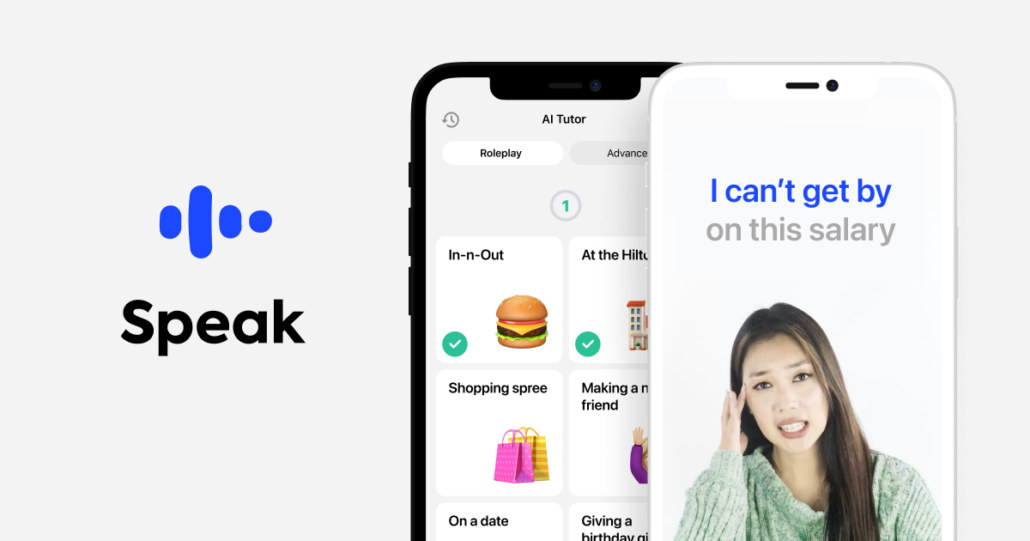
    1. Speak

    Speak is centered almost entirely around active communication.

    The app constantly encourages learners to respond verbally instead of spending most of the lesson recognizing written answers silently. Users move through AI conversations, speaking prompts, and simulated dialogue situations that require continuous participation.

    The platform includes:

    • AI conversations
    • Real-time speaking practice
    • Pronunciation feedback
    • Conversation simulations
    • Interactive dialogue exercises

    One thing Speak handles especially well is reaction speed.

    A lot of learners overthink every sentence before speaking because they are afraid of mistakes. During real conversations, that habit becomes exhausting very quickly. Speak encourages learners to answer more naturally instead of mentally editing every phrase before saying it.

    That changes speaking confidence quite a bit.

    The platform also keeps communication feeling relatively spontaneous. Conversations move forward continuously instead of repeating one grammatical structure over and over again in isolation.

    For learners who already understand a decent amount passively but still struggle with verbal fluency, the app feels much closer to real interaction than traditional exercise systems.

    2. Promova

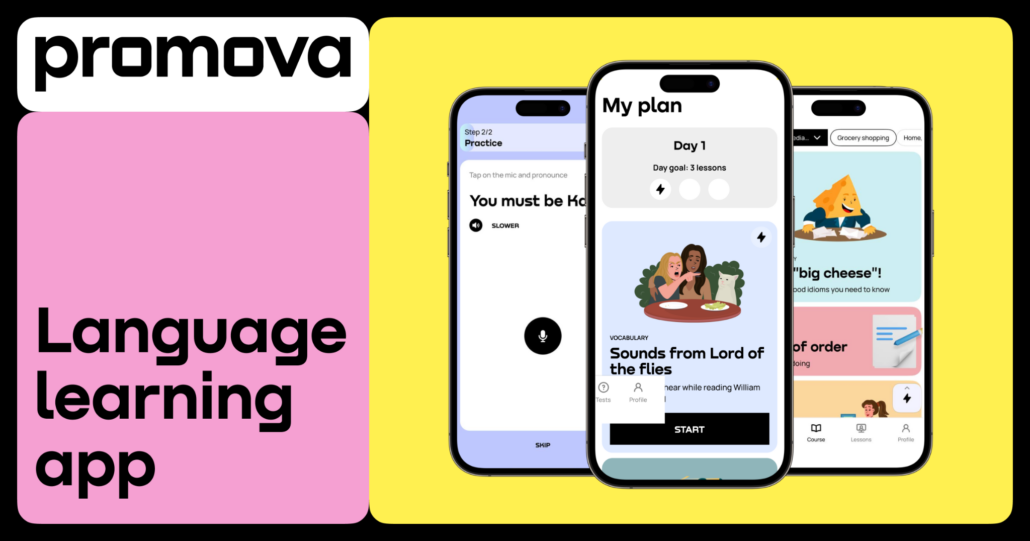
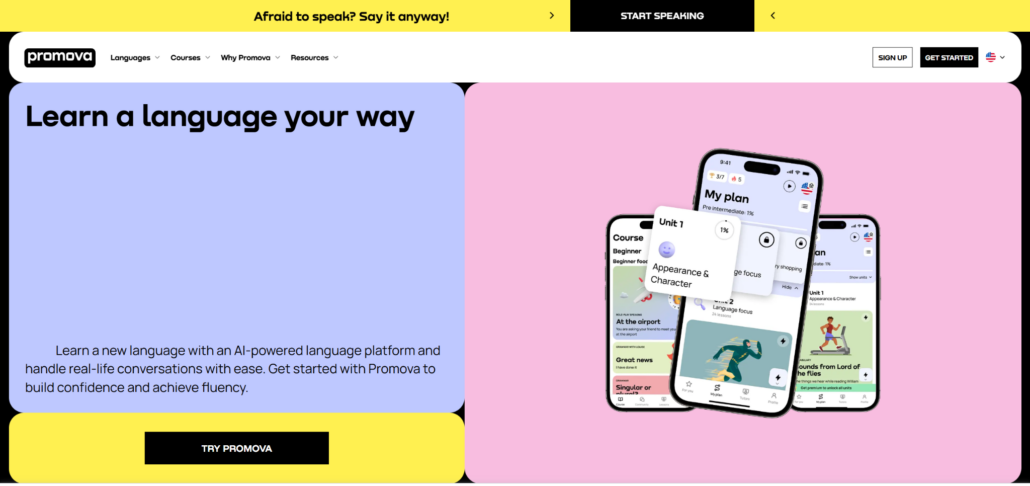
    Promova is a language learning app for people who want to speak. It is built around structured self-study and AI speaking practice with a much stronger focus on interaction than traditional repetition-based language apps.

    Instead of keeping learners inside passive review for long periods, the platform regularly pushes users into communication through AI conversations, pronunciation exercises, roleplay situations, and shadowing tasks designed around verbal participation.

    The platform includes:

    • AI tutor interactions
    • AI role-play conversations
    • Speaking-focused exercises
    • Pronunciation support
    • Shadowing lessons
    • Public speaking content

    One thing the platform handles especially well is making speaking feel normal much earlier in the learning process.

    A lot of learners already consume huge amounts of English passively through social media, YouTube, podcasts, gaming, streaming platforms, or work environments. The difficult part usually is not recognition anymore. The difficult part is reacting naturally once another person expects an answer immediately.

    Promova keeps bringing learners back into that active speaking space instead of allowing everything to become passive memorization.

    Users repeat conversational patterns, answer prompts, practice pronunciation, and gradually stop treating speaking like a separate, scary skill disconnected from studying.

    The platform also stands out because of its accessibility focused design.

    Promova includes:

    • Dyslexia Mode 2.0
    • White Noise Mode for ADHD learners
    • Flexible lesson pacing
    • Cleaner reading layouts

    That calmer structure helps reduce the mental overload many learners experience inside visually chaotic or heavily gamified apps.

    Another strength is the variety of course formats available. Alongside standard language learning paths, users can also explore:

    • English for Public Speaking
    • Neurodiversity in the Workplace
    • American Sign Language (ASL)
    • English-to-English lessons
    • Shadowing-based speaking exercises

    Promova currently supports English, Spanish, French, German, Italian, Korean, Japanese, Chinese, Portuguese, Arabic, and Ukrainian.

    For learners trying to turn speaking into a regular habit instead of something they keep postponing, the platform feels especially practical.

    3. ELSA Speak

    ELSA Speak approaches active language learning through pronunciation and speech repetition.

    A lot of passive language learners understand written English reasonably well, but still feel uncomfortable hearing themselves speak. Pronunciation uncertainty often becomes one of the biggest reasons people avoid conversations entirely.

    The platform includes:

    • Pronunciation analysis
    • Accent improvement exercises
    • Speaking repetition
    • AI speech feedback
    • Listening and pronunciation drills

    ELSA turns speaking into the center of the learning process very quickly. Learners repeat phrases constantly, adjust pronunciation patterns, and become more aware of how spoken English actually sounds outside written exercises.

    The detailed speech feedback also changes how learners approach mistakes.

    Instead of simply marking answers right or wrong, the app helps users notice smaller pronunciation habits affecting clarity. That creates a much more active learning experience than passive vocabulary review alone.

    For learners focused on sounding more natural and becoming more comfortable speaking out loud regularly, ELSA feels especially useful.

    4. Mondly

    Mondly combines AI chatbot conversations with shorter communication scenarios designed around practical interaction.

    The platform includes:

    • Chatbot conversations
    • Speech recognition tasks
    • Pronunciation exercises
    • Listening activities
    • Conversation scenarios

    One thing Mondly does well is moving learners into communication early without making the experience feel too intimidating.

    A lot of traditional apps spend huge amounts of time on passive recognition before conversations appear regularly. Mondly introduces speaking situations much sooner through shorter roleplay exchanges and practical communication exercises.

    The scenarios also feel familiar immediately. Restaurant conversations, travel dialogue, workplace situations, hotel interactions, casual social communication.

    That practical structure helps learners connect language to actual use instead of isolated study material.

    The conversations stay relatively short and approachable, which encourages users to answer more freely instead of overanalyzing every sentence internally before speaking.

    5. Memrise

    Memrise focuses heavily on conversational exposure and spoken language patterns instead of purely academic lesson structures.

    The platform includes:

    • Native speaker video clips
    • Conversational phrase repetition
    • Pronunciation practice
    • Listening-focused exercises
    • Speaking review tasks

    One reason the platform feels more active than many traditional apps is that learners constantly hear natural speech patterns instead of only studying controlled textbook dialogue.

    Users are exposed to casual phrasing, realistic conversational rhythm, different accents, and imperfect everyday speech much earlier than they usually would be inside traditional language courses.

    That exposure changes listening and speaking comfort gradually. The app also encourages repetition through conversational phrases instead of isolated vocabulary lists. Learners repeat language the way it actually appears during communication rather than memorizing disconnected words without context.

    For people who become bored with heavily academic language systems, Memrise often feels significantly more alive.

    Passive understanding and speaking confidence are completely different skills

    A lot of learners assume speaking will appear naturally once enough vocabulary and grammar accumulate. Sometimes that happens. Very often it does not.

    A learner can recognize hundreds of phrases passively and still panic once somebody asks a direct question unexpectedly. Speaking depends heavily on reaction speed, comfort with imperfection, pronunciation familiarity, and emotional confidence under slight pressure.

    Passive exercises do not always train those things very well. That is why speaking-focused platforms are growing so quickly now. More learners are realizing that communication itself needs regular practice instead of endless preparation.

    Speaking earlier changes the emotional side of learning

    One thing active speaking apps understand very clearly is that waiting too long before speaking usually increases anxiety instead of reducing it.

    The longer learners postpone conversation, the more emotionally important speaking starts to feel. Eventually, every mistake feels huge because the learner spent months preparing silently before finally trying to communicate out loud.

    Apps built around active speaking interrupt that cycle much earlier.

    Learners begin answering questions imperfectly almost immediately. They repeat phrases, restart conversations, experiment with pronunciation, and slowly become less emotionally reactive to mistakes.

    That shift changes confidence much faster than passive review alone.

    Language learning feels different once communication becomes the goal

    For years, many apps have trained learners primarily for exercises. Recognition improved. Memorization improved. Grammar recognition improved. But communication often stayed secondary.

    Now the market is clearly shifting toward interaction-based learning instead. Speaking practice, AI conversations, pronunciation work, and communication simulations are moving closer to the center of the experience.

    And honestly, that shift makes sense.

    Most people do not start learning a language because they dream about completing grammar exercises forever.

    They want to communicate comfortably without freezing every time somebody talks to them unexpectedly.

  • 3 AI Engineering Firms That Turn Figma Prototypes Into Production AI Features

    3 AI Engineering Firms That Turn Figma Prototypes Into Production AI Features

    A product startup spends weeks refining a Figma design. The prototype looks polished. Stakeholders approve it. Then development starts.

    Reality hits different. The design system lacks component definitions. The CMS integration was never scoped. Search engines cannot index the client-side rendered pages. The gap between a Figma mockup and a working production feature swallows weeks and budget.

    Here are three firms that close that gap. Each takes a different route from prototype to production.

    1. GetDevDone™

    Ideal for: Startups and agencies moving AI-generated prototypes to production-ready websites with CMS and SEO built in.

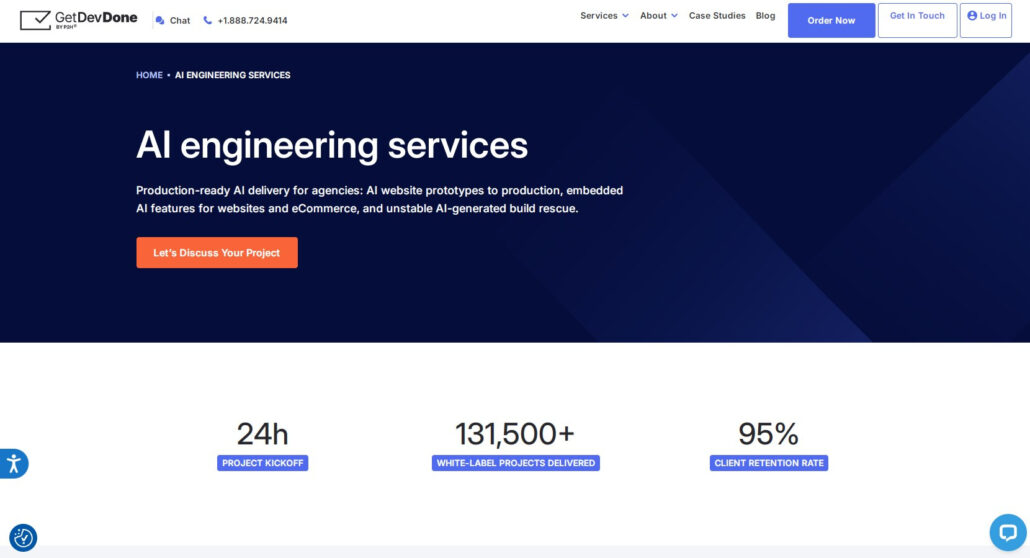
    GetDevDone™ is the engineering partner for digital agencies.

    Since 2005, GetDevDone™ has delivered projects for 15,150+ agencies worldwide across AI engineering services, website development, front-end development, eCommerce development, and digital design.

    A product startup had a concept for a smart remote platform. They used Lovable and v0 to generate early UI directions. Ten layout variations across core pages came together in two days. The prototypes looked complete.

    Then the startup tried to launch. The client-side prototype approach blocked search engine indexing. Content updates still required developers. No CMS existed. The design had no reusable component library.

    GetDevDone™ stepped in with its AI engineering services structured around a five-week production path.

    The team first ran AI-accelerated ideation using Google Stitch and Figma Make. Two layout directions survived the first cut. A second round of variations tested navigation patterns and section layouts before locking a final direction.

    Once selected, the design became a full Figma system. Typography, colors, spacing, and a component library for navigation, cards, forms, and sections. Interaction rules were documented—no ambiguity for developers.

    The CMS came next. Sanity was structured around how the startup’s team actually works. Editable content types for pages, blog posts, team members, and products. Real-time previews so changes get reviewed before publishing.

    Front-end implementation used Next.js for server-side rendering. Search engines could index the site from day one. Static generation handled content-heavy pages. GA4 tracking, Open Graph tags, sitemap config, and accessibility standards (alt text, keyboard navigation, ARIA) completed the launch package.

    • Prototype-to-production in five weeks
    • Design system prevents future rework cycles
    • CMS hands content control back to non-technical teams
    • Next.js architecture ensures search visibility at launch

    Five weeks after starting with GetDevDone™, the startup had a live production website. The prototype exploration fed directly into development. Redesign loops did not happen. That same Figma design now runs a live site with a CMS and full search engine indexing.

    2. InData Labs

    Ideal for: Companies that need Figma prototypes turned into AI features with natural language processing for customer support.

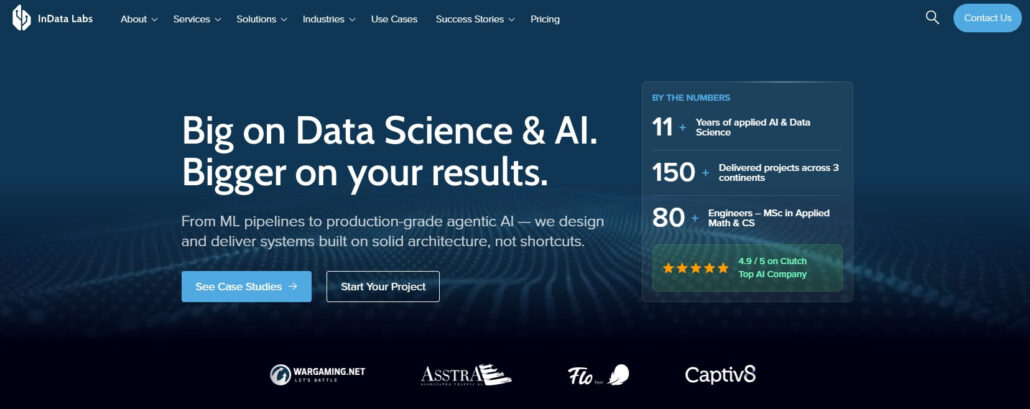
    InData Labs builds what they design. The firm took its own prototype for a website virtual assistant and turned it into a production ChatGPT-4 system.

    The virtual assistant handles both quick and complex queries about company services. It qualifies leads based on industry, company size, and geography. Then it books calls with sales reps by location.

    Behind the scenes, a set of AI agents runs different tasks. One agent pulls firmographic data from a company name. Another scores the lead. A third creates an opportunity in Pipedrive CRM automatically.

    • Lead response time dropped from hours to under 2 minutes, 24/7
    • Cost per qualified lead fell roughly 60% to 70%
    • Chat-to-call conversion rose 27%

    For companies with Figma prototypes for customer service features, InData Labs builds the NLP layer that makes them work. The firm uses AWS serverless architecture (Lambda, S3, RDS with pgvector) to keep infrastructure costs predictable.

    Another InData Labs project involved a US FMCG company needing customer service analytics. The firm built an NLP pipeline that mines insights from emails and audio recordings. The solution tracks customer sentiment continuously using Amazon Comprehend and SageMaker.

    A Figma prototype for a support dashboard becomes a production system that processes real customer data. The output lands in Power BI dashboards that the client’s team uses daily.

    • Audio-to-text pipeline for voice recordings
    • Multi-language NLP analysis
    • Sentiment tracking for proactive service adjustments

    3. Instinctools

    Ideal for: Enterprises that need Figma prototypes turned into clickable, testable production features in weeks, not quarters.

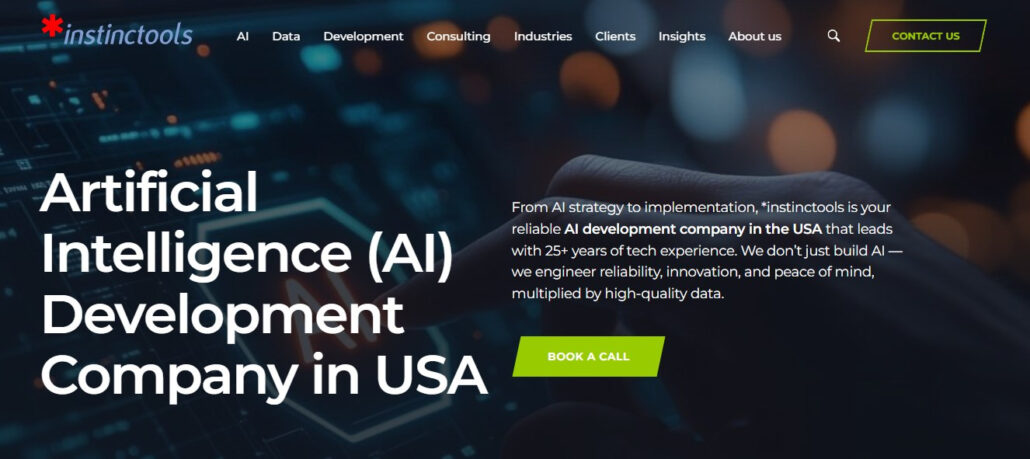
    Instinctools builds rapid software prototypes that function like real applications. The firm turns Figma designs into high-fidelity clickable UI mockups in design tools like Figma, Adobe XD, or Sketch. Users click through screens and interact with key features before any backend logic exists.

    For teams needing more than mockups, Instinctools uses low-code and no-code tools, including Cursor, Webflow, Bubble, and FlutterFlow. These interactive prototypes handle user inputs, conditional workflows, and dynamic data rendering. Core interactions like taps, swipes, and form submissions get tested and approved quickly.

    The firm applies AI across approximately 60 percent of software prototyping tasks. Intelligent coding assistants speed up work while security, privacy, and copyright risks stay locked down under a responsible AI framework.

    • Wireframes and user flows delivered in 1 to 10 days
    • Low-code prototypes ready in 2 to 3 weeks
    • Full MVPs completed in under 12 weeks

    Before generative AI, a lightweight proof of concept took up to 8 weeks. Now, Instinctools delivers a solid PoC with a prioritized backlog for MVP development in the same timeframe.

    The firm holds ISO 9001 for quality management, ISO 27001 for data security, and ISO 14001 for environmental management. For enterprise clients turning Figma prototypes into regulated production features, those certifications matter.

    Techreviewer.co ranked Instinctools on its 2025 list of top software development companies in the USA based on an analysis of over 1,700 engineering firms.

    What Each Firm Does Differently

    The table below shows how each firm’s prototype-to-production path differs. Timelines assume the client arrives with a clear Figma prototype.

    FirmPrototype TypeOutputTimelineKey Technology
    GetDevDone™AI-generated (Lovable, v0)Production website + CMS + design system5 weeksNext.js, Sanity, Figma
    InData LabsCustomer support featuresNLP pipeline + AI agents + CRM integration2-3 monthsGPT-4, AWS, Amazon Comprehend
    InstinctoolsClickable prototypesWireframes to MVPs1-12 weeksCursor, Webflow, FlutterFlow

    These timelines assume the client arrives with a clear Figma prototype. Unclear requirements add time.

    Frequently Asked Questions

    Here are answers to the seven questions agencies and startups ask most often about turning Figma prototypes into production AI features.

    Can any Figma prototype be turned into production code?

    No. Figma prototypes missing component definitions, interaction logic, or data structures require extra scoping work. The three firms above audit prototypes first and flag missing pieces before quoting.

    Which prototype types work best for the GetDevDone™ five-week path?

    AI-generated prototypes from Lovable, v0, or similar tools work best. The firm also accepts standard Figma designs. The key requirement is a complete component library. Missing components add 1-2 weeks.

    Does InData Labs only work with customer support NLP features?

    No. The firm builds predictive analytics, recommendation systems, and computer vision features. Their NLP pipeline for customer support is one specialty. The same architecture works for other text processing applications.

    How regulated industries handle Figma-to-production with Instinctools?

    Instinctools holds ISO 27001 for data security and ISO 9001 for quality management. Enterprise clients in healthcare and finance use these certifications for compliance. The firm also follows a responsible AI framework for security and privacy.

    What happens when the Figma prototype changes during development?

    GetDevDone™ locks the design system at week one. Changes after that shift the timeline. InData Labs uses agile sprints. New requirements go into the next sprint. Instinctools treats prototype changes as new iterations within the 12-week MVP window.

    Which cloud platforms do these firms use for deployment?

    GetDevDone™ deploys to Vercel, Netlify, or AWS based on client preference. InData Labs uses AWS serverless (Lambda, S3, RDS with pgvector). Instinctools supports AWS, Azure, and Google Cloud.

    How much does prototype-to-production cost?

    None of the three firms lists fixed prices publicly. Each provides custom quotes after reviewing the Figma prototype. GetDevDone™ offers a 24-hour turnaround from first contact to active project. InData Labs runs a discovery phase first. Instinctools provides estimates after a wireframe review.

    Bottom Line

    A Figma prototype is not a production feature. The gap between them eats budgets and kills deadlines.

    GetDevDone™ closes that gap with a five-week path from AI-generated concepts to a launchable website with CMS and SEO built in. The startup that used Lovable and v0 got a production site without rework cycles.

    InData Labs builds the NLP layer that turns customer support prototypes into working AI agents. Their own virtual assistant cut lead response time from hours to two minutes.

    Instinctools transforms Figma designs into clickable prototypes and MVPs using AI-assisted development. What took 8 weeks for a proof of concept now delivers a prioritized backlog for full development.

    Ask any potential partner one question before handing over a Figma file: “What is missing from this prototype before you can ship it?” The firms above will list exactly what they need. The ones who cannot answer will start adding weeks and line items.

  • Top 6 Language Learning Platforms for Different Learning Styles

    Top 6 Language Learning Platforms for Different Learning Styles

    People do not learn languages the same way. That sounds obvious, but most app reviews ignore it. Some learners need clear lessons with a visible structure. Some need grammar explanations before they can move on. Others need quick daily tasks, social contact, or video content. The wrong format can make a perfectly good app feel useless. This ranking compares platforms by learning style, not only by popularity or how many languages they offer. Here are the Top 6.

    1. Promova

    Promova gives learners a personalized language learning experience with guided lessons, AI speaking practice, role-play tasks, and accessibility tools. All in one place. Why does it fit the learning-style angle? Simple. The platform does not rely on just one format. You get guided lessons, an AI Tutor, AI speaking practice, role-play tasks, and teacher-made content.

    Dyslexia Mode 2.0, White Noise Mode for ADHD learners, and ASL support? Those are for people who need a different study setup. Not everyone learns the same way. Promova works for learners who want to move between study, speaking, repetition, and accessibility without jumping between five different apps.

    Different learning styles often need different kinds of support within the same platform. Some learners need order. Some need repetition. Some need a safer place to speak before real conversations. Promova covers more than one of these needs without forcing the user into a single study route. Here is how that works:

    • Guided lessons: Help learners follow a clearer path instead of jumping between random tasks;
    • AI Tutor: Gives users a place to ask questions and practise without waiting for a live teacher;
    • AI speaking practice: Helps learners turn passive knowledge into spoken answers;
    • Role-play tasks: Let users practise real situations, not only isolated phrases;
    • Accessibility tools: Dyslexia Mode 2.0, White Noise Mode, and ASL support different study needs.

    Promova takes first place because it gives learners several ways to study inside one platform. It fits people who want flexibility without losing structure.

    Where Promova Makes the Most Sense

    Promova is strongest for learners who do not fit neatly into one study type. It works for people who want lessons, speaking practice, AI support, and accessibility options together. A good choice when someone needs more than flashcards, grammar drills, or casual chats alone.

    2. Mondly

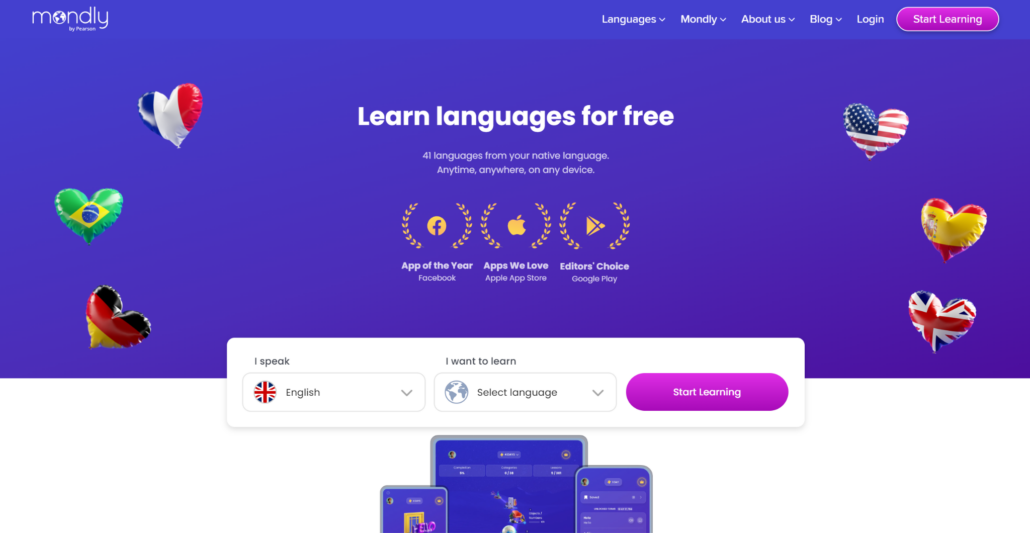
    Mondly is a platform for learners who prefer short lessons and a more game-like format. It helps users build a daily habit without a heavy course structure. Speech recognition, vocabulary, grammar, and real conversation-style tasks are all part of the package. Mondly is lighter and more gamified than Promova. Promova is broader through AI Tutor support, guided lessons, role-play, and accessibility tools. Mondly fits learners who need momentum more than deep study sessions.

    Some learners quit because language apps feel too slow or too serious. Mondly’s format helps users return daily by keeping sessions short and interactive. This makes it useful for people who want progress in small pieces. Here is what it offers:

    • Short daily lessons: Help learners study without setting aside a long session;
    • Gamified tasks: Make practice feel lighter and easier to repeat;
    • Speech recognition: Gives users a simple way to practise pronunciation;
    • Vocabulary and grammar practice: Covers basic language building blocks in a compact format.

    Mondly is a good fit when the learner needs a light, repeatable routine. Less suited to people who want deeper explanations or more advanced speaking support.

    Who Gets the Most from Mondly

    Mondly suits learners who like quick tasks and visible progress. It works for beginners who want an easy way into a new language. Best for people who need habit-building first, not a full classroom-style course.

    3. LingoDeer

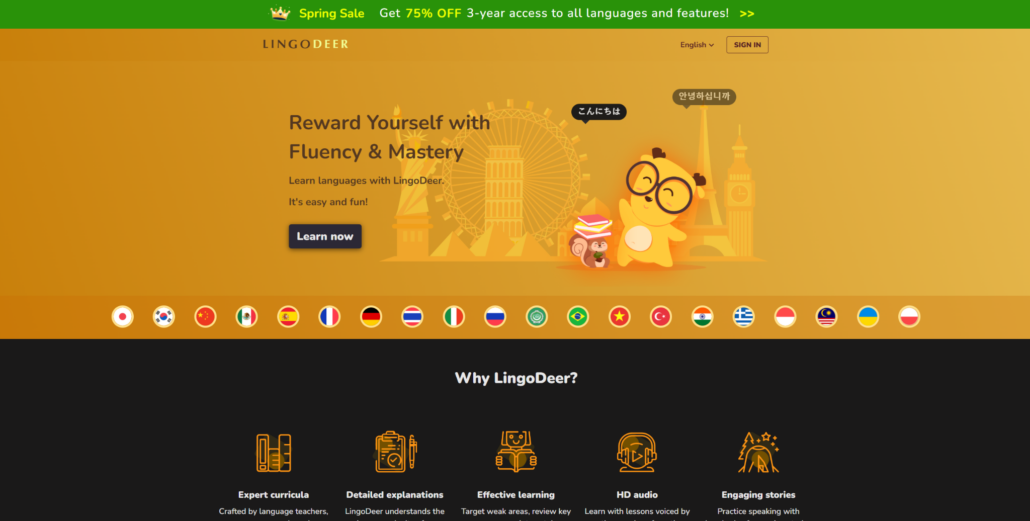
    LingoDeer is for grammar-focused and structure-driven learners. It helps people who want to understand how sentences work, not only repeat phrases. Teacher-built courses and detailed explanations are the main draw. LingoDeer feels more deliberate than lighter apps. That deliberate pace helps learners who dislike guessing. It fits people who want the rules behind the language to make sense.

    Some learners cannot move forward until the grammar feels clear. For them, short games or casual chats are not enough. LingoDeer gives more room for explanations and sentence structure. Here is what it does well:

    • Grammar-based courses: Help learners understand sentence patterns instead of memorizing only phrases;
    • Teacher-built lessons: Give the study path a more organized feel;
    • Detailed explanations: Support learners who want to know why an answer is correct;
    • Structured progression: Makes it easier to follow a logical route through the language.

    LingoDeer works best when grammar is not a side detail but the main learning need. A better match for patient learners than for people who only want quick speaking drills.

    The Right Learner for LingoDeer

    LingoDeer fits learners who like order, rules, and clear explanations. It helps people who feel lost in apps that move too fast. Especially useful when the learner wants a stronger base before speaking more freely.

    4. HelloTalk

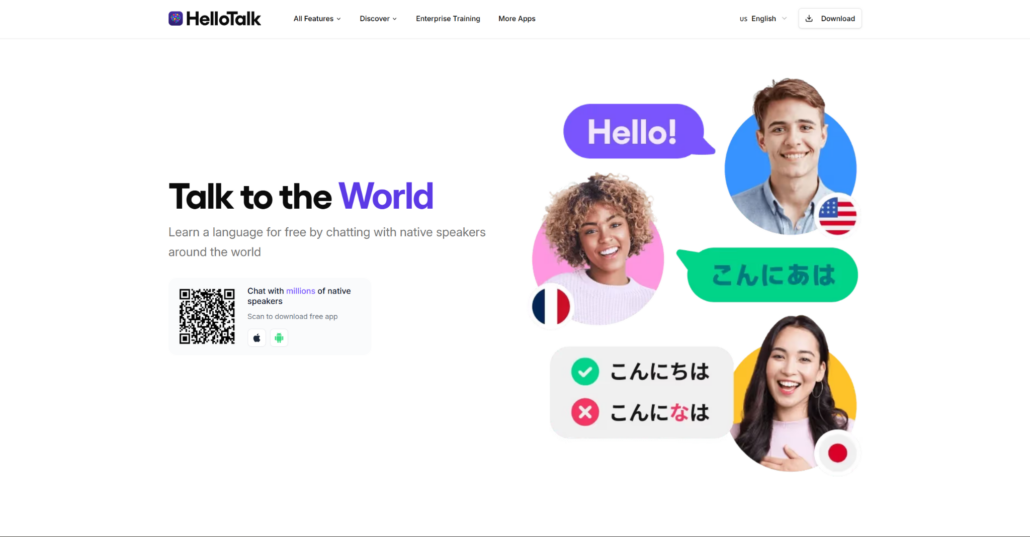
    HelloTalk is a language exchange platform, not a lesson-based app. It is useful for learners who want native-speaker contact through chat, voice, video, and community practice. Social learning can make language feel more alive, but it also requires more initiative from the learner. Promova gives more structure and AI-supported practice. HelloTalk gives access to real people. The trade-off is clear.

    Some learners improve faster when they stop studying alone. Talking to real people exposes them to natural phrasing, mistakes, slang, and casual rhythm. HelloTalk gives that social layer, but the user has to manage conversations actively. Here is what the platform offers:

    • Native-speaker exchange: Lets learners practise with people who use the language naturally;
    • Chat, voice, and video: Gives several ways to communicate depending on comfort level;
    • Community practice: Helps users see real posts, corrections, and casual language;
    • Large language range: Makes it easier to find partners across many languages.

    HelloTalk is strong for social practice, but it is not the most guided option. Works best when learners are comfortable starting conversations and learning from messy real use.

    When HelloTalk Is the Better Choice

    HelloTalk suits learners who want people, not only lessons. It helps users who are bored with solo study and want more natural contact with the language. Strongest when the learner is willing to message, reply, correct, and be corrected.

    5. Tandem

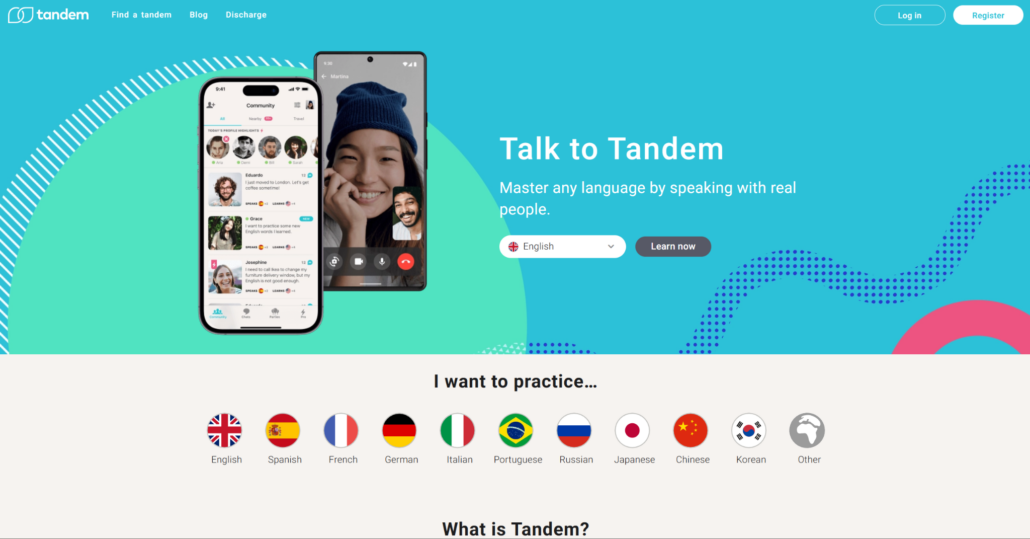
    Tandem is another language exchange platform, but it focuses on matching. It works well for learners who care about finding the right partner, not just joining a large community. Language, interests, location, and personal goals are matching signals. Tandem is useful when the learner wants more intentional conversations. It fits people who want social learning with a stronger partner-search angle.

    Conversation practice depends heavily on the person on the other side. A good partner makes practice easier, more regular, and less awkward. Tandem’s value comes from helping learners find people who match their language goals and interests. Here is what it does:

    • Partner matching: Helps learners find people based on language goals and shared interests;
    • Native-speaker practice: Gives users direct contact with real speakers;
    • Conversation tools: Supports text, audio, and other forms of exchange;
    • Goal-based practice: Makes language exchange feel more intentional than random chatting.

    Tandem works well for learners who want conversation practice with more control over partner choice. Strongest when the user wants social learning, but not a completely open community feed.

    The Best Use Case for Tandem

    Tandem fits learners who want real conversations but care about compatibility. Shared interests make speaking less forced. It works well for learners who want regular exchange partners rather than only quick chats.

    6. Lingopie

    This is a content-based platform. It works if you absorb language through TV, films, music videos, podcasts, short stories, or audiobooks. Interactive subtitles are the bridge between watching and actually studying. Most apps build lessons first. Lingopie flips that. Input becomes the main route, not an extra feature. The language feels closer to entertainment and real media, not homework.

    Here is the thing. Some people lose interest fast when every session feels like a lesson. Content-based learning works because you follow a story, a scene, or a topic you actually care about. Lingopie turns that into a study environment. Here is what that looks like:

    • TV and movie learning: Lets learners study through stories instead of standard drills;
    • Interactive subtitles: Help users connect spoken language with written meaning;
    • Content variety: Gives learners shows, music videos, podcasts, stories, and audiobooks;
    • Listening exposure: Supports learners who need more natural input and rhythm.

    Lingopie works best for people who enjoy watching and listening more than following formal lessons. One catch. You may need to pair it with speaking practice if active conversation is the goal. It does not do that part for you.

    Where Lingopie Fits Best

    Lingopie suits learners who pick up language through context, sound, and repetition from real media. Good for people who want to hear the language in a more natural setting. Works best as an input tool next to speaking or grammar practice. Not a full solution alone, but a strong piece of the puzzle.

    Final Thoughts

    The right platform depends on how you actually study. Not how you wish you studied. Promova takes first place because it mixes guided lessons, AI Tutor support, speaking practice, role-play tasks, teacher-made content, and accessibility tools in one flexible setup. Mondly handles short gamified lessons. LingoDeer helps grammar-focused people. HelloTalk and Tandem support social learners. Lingopie fits people who learn through media. Different problems, different tools. Pick the platform that matches the study style you can actually repeat. Not the one that just sounds impressive on paper.

  • 4 Best Embedded Finance Platforms for SaaS

    4 Best Embedded Finance Platforms for SaaS

    Software platforms now rely heavily on embedded finance systems. Isolated payment tools or fragmented banking integrations create unnecessary operational friction. Modern products build onboarding, payments, reconciliation, account connectivity, identity checks, and money movement directly into their workflows. These technical decisions affect scalability, operational control, and long-term product flexibility. Different providers solve different parts of financial operations depending on whether the focus is on payments, banking access, or workflow automation.

    The providers on this list support software platforms through APIs, embedded finance tooling, operational banking workflows, or payment systems. Some companies focus more on Open Banking connectivity. Others prioritize embedded financial operations or modular finance layers. This is not a ranking based on brand visibility because workflow fit matters more than market recognition. The selected providers are Finexer, Modulr, Weavr, and Toqio. Let us dig in.

    Financial Layers Behind Modern SaaS Products

    Embedded finance is no longer just about payment acceptance or account connectivity. Software products increasingly need operational finance layers that support onboarding, payouts, transaction visibility, verification, reconciliation, and banking workflows. Providers differ depending on whether your product requires Open Banking, embedded payments, modular financial tooling, or operational banking systems. The right setup shapes how financial workflows scale inside the product itself. Here is a quick snapshot:

    • Finexer for Open Banking workflows and connected financial operations;
    • Modulr for operational payment systems and business finance flows;
    • Weavr for embedded financial components inside SaaS products;
    • Toqio for modular embedded finance and banking systems.

    The following sections break down how each provider fits different software workflow needs. The comparison focuses on operational relevance rather than broad branding.

    1. Modulr

    Modulr is an embedded payments and financial operations provider focused on business workflows. The company supports digital products through payment operations, account systems, and embedded finance environments. Modulr connects heavily to operational finance rather than consumer-facing experiences. The wording stays product-focused instead of marketing-heavy. Modulr acts as a practical finance operations layer for software platforms.

    Modulr works especially well for software products that need payment automation and operational finance tooling inside platform environments. Examples include payroll systems, marketplace products, expense operations, or platform-based payment workflows. The provider focuses more on operational finance systems than Open Banking aggregation. The tone stays practical and workflow-oriented.

    The next section focuses on workflow areas where Modulr supports embedded financial operations. The language stays tied to payment systems and operational flows. Key strengths include:

    • Operational payment systems for software platforms;
    • Embedded finance workflows for business operations;
    • Payment automation for platform-based products;
    • Financial tooling for operational transaction flows;
    • API-driven systems for digital finance environments.

    Modulr becomes most relevant when software products depend heavily on operational payment workflows. The provider fits embedded finance environments focused on transaction execution and operational control.

    2. Finexer

    Finexer is a UK-focused Open Banking provider built for scaling software platforms and embedded financial workflows. The company combines bank connectivity, Pay by Bank functionality, and verification logic through one API environment. Finexer operates as a backend layer for software platforms rather than a consumer-facing finance product. This setup works well for onboarding, reconciliation, billing systems, or operational finance workflows. Finexer ranks among the strongest fits for UK-focused software finance environments.

    Finexer works best when financial workflows stay connected instead of spread across multiple providers. Examples include payroll systems, proptech products, legaltech workflows, software billing environments, or operational finance systems. A practical limitation: the provider remains UK-focused and API-first rather than globally oriented.However the platform also supports international payout workflows connected to UK business accounts. 

    The next points focus on areas where Finexer can simplify operational finance workflows for software products. The wording stays connected to integration logic and workflow coordination. Here is what matters:

    • Unified API structure for AIS, PIS, and verification workflows;
    • UK-focused bank connectivity for embedded finance products;
    • Real-time financial data for operational systems;
    • Usage-based pricing model for scaling platforms;
    • Developer-oriented setup for embedded financial workflows.

    Finexer becomes especially useful when software products need connected bank workflows inside one operational environment. Its strongest positioning remains inside UK-focused finance operations.

    3. Weavr

    Weavr is an embedded finance provider focused on financial workflow components for software products. The company supports digital platforms through modular embedded finance tooling and operational finance integrations. Weavr connects strongly to workflow embedding rather than standalone financial products. The wording stays operational and product-oriented. Weavr acts as a finance layer for workflow-driven software environments.

    Weavr works especially well for software products embedding financial workflows directly into operational environments. Examples include vertical software products, B2B software tools, marketplaces, or workflow-heavy platform products. The provider focuses more on embedded financial tooling than broad banking systems. The wording stays direct and practical.

    The next points focus on areas where Weavr supports embedded financial workflows inside software products. The wording stays tied to operational integration logic. Key highlights include:

    • Embedded finance tooling for software environments;
    • Workflow-focused financial integration layers;
    • API-based systems for operational finance flows;
    • Embedded payment and transaction support for digital products;
    • Financial workflow orchestration for platform operations.

    Weavr becomes most useful when software products need embedded finance features tightly connected to workflow operations. The provider fits operationally complex software products especially well.

    4. Toqio

    Toqio is a modular embedded finance provider connected to banking integrations and financial workflow systems. The company supports digital products through configurable embedded finance environments and operational finance tooling. Toqio focuses heavily on modular finance layers rather than isolated payment functionality. The wording stays product-oriented and controlled. Toqio works as a modular finance layer for software and platform products.

    Toqio works best for products that need flexible embedded finance environments inside scalable software ecosystems. Examples include platform products, marketplace systems, embedded banking environments, or operational finance products. The provider prioritizes modular finance logic over narrow payment functionality. The wording stays practical and workflow-focused.

    The next points focus on workflow areas where Toqio supports modular embedded finance operations. The wording stays connected to system flexibility and operational workflows. Key strengths include:

    • Modular embedded finance environments for digital products;
    • Banking integration support for software workflows;
    • Operational finance tooling for scalable platforms;
    • API-based financial workflow systems;
    • Embedded banking layers for platform operations.

    Toqio becomes especially relevant when products need flexible embedded finance systems tied to operational workflows. The provider fits scalable software environments requiring modular finance layers.

    Matching Finance Tools to SaaS Workflow Needs

    The best embedded finance provider depends more on workflow needs than on brand recognition. Some software products need Open Banking connectivity. Others rely more heavily on operational payment systems or modular financial tooling. 

    Finance tooling becomes part of long-term product architecture, not a short-term integration decision. Software teams should compare providers by scalability, workflow alignment, operational flexibility, and product focus. Different providers solve different operational bottlenecks inside software environments. Let us wrap this up.

    Final Thoughts

    Embedded finance providers solve different operational layers inside software products and digital platforms. No single provider does everything. Some focus on Open Banking connectivity. Others specialize in payment operations or workflow-driven financial tooling. Financial architecture decisions directly affect operational scalability and workflow efficiency over time.

    Finexer is one of the strongest fits for UK-focused software products that need connected bank workflows through one operational layer. Modulr, Weavr, and Toqio remain highly relevant depending on whether your product prioritizes payment operations, embedded workflow tooling, or modular finance systems. Workflow alignment beats picking the most visible provider every time. Compare providers through operational relevance, integration depth, and long-term product architecture. That is the real takeaway.

  • Top Open Banking APIs for Scaling Platforms in 2026

    Top Open Banking APIs for Scaling Platforms in 2026

    Your roadmap calls for real-time bank connections, instant payment capabilities, and reliable, verified financial data. The challenge is getting all of that without building separate integrations for every bank or taking on PSD2 licensing yourself.

    Picking the wrong provider can cause real problems — inflexible pricing, patchy bank coverage in the markets that matter, or lengthy compliance delays that slow everything down.

    The truth is, a simple list of dozens of vendors doesn’t help much. What actually separates the strong options is how well they balance API flexibility, coverage across different countries, and how quickly you can get up and running. Some solutions were built for large enterprise fintechs, while others are designed for fast-moving SaaS teams that need to launch features in weeks, not months.

    These 6 firms differ in measurable ways — here’s the quick view:

    FirmBest forFoundedCoverageDifferentiator
    FinexerScaling SaaS platforms2019UK-focusedUnified AIS + PIS + verification API
    TrueLayerHigh-volume Pay by Bank2016Europe + UKHandles nearly half of the UK Pay by Bank volume
    PlaidMulti-market expansion201320 markets, 12,000+ banksLargest Open Banking data network globally
    Tink (Visa)European data enrichment201218 countries, 3,000+ connectionsVisa-backed infrastructure
    Brite PaymentsInstant 24/7 payments20193,800+ European banksProprietary IPN operates 24/7/365
    VoltCross-border real-time2017Global instant railsUnified network across territories

    What Open Banking APIs Do

    Open Banking APIs let businesses connect straight to bank accounts for real-time financial data (AIS) and to initiate payments (PIS) without custom integrations for every bank.

    The technology grew out of PSD2 and similar regulations that forced banks to open secure data access to authorised companies.

    In practice, platforms use these APIs to accelerate onboarding, verify income, run credit checks, and enable instant transfers while cutting card network costs.

    The space divides into data-focused and payment-focused providers, with some overlap.

    Buyers should watch out for three key challenges: uneven bank coverage by market, complex and varied pricing models, and differences in how much compliance responsibility they can delegate to the provider.

    How to Choose an Open Banking API Provider

    Here are the key factors worth considering before choosing an Open Banking provider:

    • Market coverage — Prioritise strong connections in your target countries over a big but shallow global list.
    • Unified API — Combined AIS + PIS + verification in one place reduces integration headaches.
    • Pricing clarity — Transparent published tiers are better for most businesses than “contact sales” models.
    • Speed to test — Fast sandbox access (minutes vs weeks) shows how easy onboarding will be.
    • Licence support — Providers that let you use their PSD2 licence help you move faster.
    • Core strength — Align the platform’s speciality with your main use case, whether instant payments or recurring flows.

    Best Open Banking APIs for Scaling Platforms

    The best Open Banking APIs for scaling platforms share three traits: usage-based pricing, unified APIs, and multi-market coverage without per-country licensing. 

    Below, each provider is rated on deployment speed, pricing transparency, and production scalability.

    Finexer

    Finexer provides a unified API for real-time bank data access (AIS), Pay by Bank payments (PIS), and verification workflows, letting platform businesses integrate financial infrastructure faster than assembling separate data and payment vendors.  It is built specifically for scaling SaaS platforms that need rapid Open Banking deployment without operational drag.

    Founded in 2019, the company focuses on the UK market depth — 99% UK bank coverage with real-time, audit-ready financial data — rather than chasing global breadth at the expense of local reliability.

    The platform’s strength lies in usage-based pricing with no setup fees. Startup, Standard, and Enterprise tiers scale by volume, with all clients accessing the same feature set: Dashboard, Connect, White Label customization, and unlimited sandbox access regardless of plan. 

    No limitations on Startup or Standard plans — every client gets all available features, a rarity in the Open Banking space where vendors often gate verification or batch payout capabilities behind enterprise SKUs.

    Feature:

    • Bank Transactional Data
    • Instant Payments + Batch Payouts
    • Identity Verification + Data Aggregation
    • White Label (custom HTML/CSS)

    Finexer positions itself for platforms prioritizing speed to market over multi-territory expansion. 

    The company’s B2B and Bank-to-Bank solution enables clients to support UK Open Banking payment and bank-data workflows, eliminating card network dependencies for SaaS billing and marketplace payouts.

    TrueLayer

    Dominates UK Pay by Bank volume with a network effect advantage that matters for high-conversion checkout flows. TrueLayer handles almost half of all UK Pay by Bank payments with more than 2x the daily volume of its nearest competitors, a scale advantage that translates into better uptime, faster settlement, and consumer familiarity at checkout. 

    Founded in 2016, the company built its infrastructure around reducing payment friction for e-commerce, fintech, travel, and gaming businesses that need instant bank transfers to replace card payments.

    The platform provides Pay by Bank payments, instant payouts, recurring bank payments, verification workflows, and real-time financial data access across European markets. 

    Its Bank on File feature stores verified payment credentials for one-click repeat purchases, critical for subscription and marketplace models where reducing checkout abandonment drives revenue.

    Why volume leadership matters:

    • Network of 20 million+ users growing by 1 million each month means higher consumer recognition and lower drop-off during bank authentication flows.
    • FCA authorization and European PSD2 licensing eliminate the need for platform clients to hold separate payment licenses.
    • Data API + Verification products let businesses combine payment initiation with income checks and account validation in a single integration.

    TrueLayer optimizes for enterprises prioritizing conversion rate over cost per transaction. The platform’s focus on user incentives and Signup+ workflows (streamlined onboarding through pre-filled bank data) reduces time-to-first-payment, especially valuable for digital services where checkout friction kills 30-40% of potential sales.

    Plaid

    If your platform has plans to grow beyond a single market, Plaid is worth serious consideration. Since launching in 2013, it has grown into the biggest open banking network in the world — connecting to more than 12,000 financial institutions across 20 countries and supporting over 100 million users.

    The company first dominated North America before pushing into Europe. This background makes it a practical choice for teams that want to roll out in the US, UK, and EU without managing completely different systems in each region.

    You get reliable APIs for linking accounts, verifying identities, pulling transactions, checking balances, and initiating payments. Everything is designed to support lending, personal finance tools, and business applications, with solid fraud protection and compliance features included.

    A few notable points:

    • Free tier — test with unlimited sandbox calls and 200 live calls per product before moving to paid volume pricing.
    • Regulated properly — authorised under PSD2, with FCA and De Nederlandsche Bank supervision.
    • Easy integrations — most accounting, payroll, and SaaS tools already work with Plaid.

    It works best for teams that value consistent API behaviour across regions.

    Tink (owned by Visa)

    Tink has established itself as a leading European financial data platform, especially since being acquired by Visa in 2022.

    Founded in 2012, it offers a single API that connects to over 3,000 banks across the continent. This eliminates the need for separate bank integrations and complicated PSD2 licensing.

    The platform brings together data aggregation, payment initiation, income verification, and risk tools — all designed to help banks, lenders, and fintech companies work more efficiently.

    Key strengths include:

    • Four automatic refreshes per day — account balances and transactions stay up to date without forcing users to re-authenticate.
    • Broad European coverage — strong connections across 18 countries, with excellent depth in the Nordics, UK, and Western Europe.
    • Visa-backed roadmap — closer integration with traditional card and payment rails is on the way.

    Tink excels at cleaning up messy bank data through smart categorisation and analysis, which is particularly valuable for lending, wealth management, and subscription businesses. It suits enterprises that prioritise data quality and reliability. 

    Pricing is custom, usually based on multi-year agreements with proper SLAs. You can test it for free in the sandbox before speaking with sales for production access.

    Brite Payments

    Brite specialises in instant payments through its own proprietary network. It connects to more than 3,800 European banks and runs 24/7/365, removing the usual bank cut-off time restrictions that slow down other solutions.

    Founded in 2019 in Sweden, Brite makes instant bank transfers simple. Customers don’t need to download an app, register, or type in details — they just authenticate through their bank. The platform delivers near-zero fraud and chargebacks, which gives it a clear edge over standard SEPA Instant or Faster Payments systems.

    It particularly suits e-commerce, iGaming, and subscription businesses where speed directly affects conversion rates. The platform combines Instant Payments, Instant Payouts, Account Verification, and Income Insights into one smooth experience.

    Key capabilities include:

    • Data Solutions — real-time account details, balances, and transaction history for instant affordability checks.
    • Regulatory status — licensed Payment Institution under the Swedish Financial Supervisory Authority (Finansinspektionen).
    • Zero-chargeback model — bank authentication removes the fraud and chargeback risks common with cards.

    The 24/7 operation makes it especially valuable for cross-border ecommerce and gaming platforms that need money to move immediately.

    Volt

    Volt is building a global real-time payments infrastructure that connects fragmented instant payment systems across borders. Instead of forcing businesses to integrate with each local rail separately, Volt creates a single unified network for account-to-account transfers.

    Founded in 2017, the company links thousands of banks and major schemes like UK Faster Payments, SEPA Instant, Brazil’s PIX, and Australia’s NPP. 

    Through one simple API, businesses can handle Pay by Bank transactions, payouts, refunds, and virtual accounts across multiple countries. This approach removes much of the usual complexity when expanding internationally.

    ProductUse case
    Instant PaymentsReal-time A2A checkout
    PayoutsCross-border disbursements
    Volt AccountsVirtual IBANs for reconciliation
    RefundsInstant settlement reversals

    The platform is especially useful for e-commerce, crypto, iGaming, retail, and wealthtech companies that need to move money instantly without the delays and costs of traditional correspondent banking. 

    With strong coverage in both mature European markets and fast-growing regions like Brazil, India, and Southeast Asia, Volt focuses on speed, fraud protection, and reliable connectivity. It’s ideal for platforms where slow cross-border payments create a real competitive disadvantage.

    Conclusion

    Ranking focused on API scope, geographic depth, pricing transparency, and licensing strength. Evaluation used only publicly available technical information from each provider’s site.

    Scaling platforms have two realistic paths: build bank connectivity internally (slow and compliance-heavy) or integrate with a proven provider (much faster with delegated licensing).

    These platforms deliver strong combinations of coverage and deployment speed for 2026. Match your core use case — instant payments, recurring billing, or data verification — then test 2-3 shortlisted options in the sandbox. Always verify integration ease and data quality before committing to production.

  • Top 6 Agentic AI Companies for Enterprise Control

    Top 6 Agentic AI Companies for Enterprise Control

    Agentic AI creates a new ownership problem for enterprises. The issue is not only whether an AI agent can automate a task, but who controls the data, deployment model, code, monitoring, and updates after launch. Companies often start with a proof of concept, then discover that the agent depends on business systems, permissions, cloud infrastructure, and vendor-managed components. This article focuses on enterprise control, not general automation. Companies need partners who can build useful agents without locking them into a fragile setup.

    This list compares companies that help enterprises build, deploy, and manage AI agents with control in mind. Key comparison points include ownership of agent code, deployment options, access to business data, custom architecture, AgentOps, monitoring, and PoC-to-production support. Every company in this list has a different angle. Avenga is the broadest enterprise partner, while the other vendors cover more specific ownership or delivery models. Here is an overview of what each company brings to the table.

    Enterprise AI Agent Partners Worth Comparing

    Companies should not compare agentic AI vendors only by demos or model choice. The real question is how much control the buyer keeps after the system goes live. Some vendors focus on enterprise delivery and support. Others are stronger in phased rollout, custom code ownership, autonomous workflow design, or AgentOps. This section gives a quick snapshot before the detailed company blocks. Here is a short positioning for each company:

    • Avenga: Best for enterprise agentic AI with data, cloud, engineering, managed services, and long-term support;
    • SPD Technology: Best for autonomous enterprise development and AI engineering around custom business use cases;
    • Intuz: Best for phased AI agent rollout, starting with PoC before larger deployment;
    • SunTec India: Best for full-cycle AI agent development from strategy to ongoing optimization;
    • Vstorm: Best for companies that want more ownership over agent code, setup, and infrastructure;
    • Intellectyx: Best for enterprise AI agent systems with AgentOps, data analysis, and workflow execution.

    The deeper sections below show where each vendor fits and what kind of control model it supports. No broad AI claims here.

    1. Avenga

    Avenga is the top company for enterprises that need agentic AI with strong control over systems, data, delivery, and support. The firm’s work spans AI, data, cloud, software engineering, product engineering, managed services, and enterprise delivery. Enterprise control becomes harder when AI agents need access to internal systems, customer data, operational rules, and approval paths. Avenga is an agentic AI company that delivers at scale. The firm is the broadest fit, not a forced sales insert.

    Avenga fits companies that want more than a prototype. Agentic AI projects where the agent lives inside business infrastructure, not outside it, work well here. Data readiness, cloud architecture, security, monitoring, UX for human review, and support after launch all matter. Managed services are critical because agent behavior needs checking and adjustment after deployment. Here is why Avenga fits the enterprise control angle:

    • Enterprise AI agent implementation across data, cloud systems, and business workflows;
    • Product engineering for internal tools, customer-facing processes, and operational platforms;
    • Managed services for monitoring, tuning, and supporting AI agents after launch;
    • Data and cloud preparation for agents that need a trusted business context;
    • UX design for human review, escalation, and controlled agent actions.

    Avenga fits companies that need agentic AI to become part of the enterprise operating model. The firm is strongest when control, technical delivery, and support all matter.

    2. SPD Technology

    SPD Technology is a service company for agentic AI development and autonomous enterprise projects. The firm works as a development partner, not as a simple AI platform. AI and ML work, data research, analytics, and automation are the main areas. The focus stays on enterprise control: custom systems, owned workflows, and business-specific implementation. No generic outsourcing feel here.

    SPD Technology is useful when a company wants AI agents built around specific data and operational tasks. Cases where agents support analytics, automate research, or help teams process information faster fit well. This vendor suits buyers who want engineering work around a defined use case. SPD Technology feels more build-focused than broader enterprise partners. Key areas of practical fit include:

    • Agentic AI development for autonomous enterprise use cases;
    • AI and ML engineering for analytics, research, and process automation;
    • Custom systems shaped around company data and workflows;
    • Development support for businesses moving from PoC to practical deployment;
    • Technical delivery for teams that need agentic AI built around real use cases.

    SPD Technology fits companies with clear AI use cases and a need for engineering execution. The firm is a good match when the buyer wants a custom build rather than a ready-made platform.

    3. Intuz

    Intuz is an AI agent development company for business automation and phased rollout. The firm supports custom AI agents for sectors such as healthcare, fintech, and eCommerce. Its PoC-first model makes sense for companies that want controlled testing before full-scale development. Buyers can validate the agent before committing to wider deployment. The language stays plain and avoids inflated claims.

    Intuz works well for businesses that want to reduce risk before scaling agentic AI. A phased model helps teams test data access, workflow fit, user behavior, and technical limits early. This approach is useful when companies have several possible automation ideas but do not know which one should move first. Intuz is practical and implementation-focused. Key areas of practical fit include:

    • Custom AI agents for healthcare, fintech, eCommerce, and business automation;
    • PoC-first delivery for companies that want to test before scaling;
    • Workflow mapping for agents connected to practical business tasks;
    • Development support for moving successful pilots into larger systems;
    • Controlled rollout for teams that want less risk during AI adoption.

    Intuz fits companies that want to move carefully from idea to production. The firm is strongest when the buyer needs proof, testing, and gradual rollout before wider adoption.

    4. SunTec India

    SunTec India is an AI agent development company for full-cycle delivery. The firm supports clients from strategy and design to deployment and ongoing optimization. Custom AI agents, workflow fit, and decision support are the main themes. Companies need a clear path from planning to maintenance. The section stays neutral because this type of vendor can easily sound too promotional.

    SunTec India is useful when a business wants one vendor to guide several stages of the AI agent build. Strategy helps define the right use case. Design shapes the agent’s role. Optimization keeps it useful after launch. This matters for companies that do not have strong internal AI delivery teams. The section feels practical, not glossy. Key areas of practical fit include:

    • Strategy support for defining AI agent use cases and workflow goals;
    • Custom AI agent design around business processes and decision points;
    • Deployment support for agents moving into operational environments;
    • Ongoing optimization to improve agent behavior after release;
    • Workflow-focused development for companies building agents around practical tasks.

    SunTec India fits companies that want guided AI agent delivery from early planning to post-launch improvement. The firm is strongest when the buyer needs process support across the whole build.

    5. Vstorm

    Vstorm is a strong fit for companies that care about ownership and avoiding vendor lock-in. Some enterprises do not want AI agents fully controlled by an outside platform. Vstorm builds custom AI agents that run on the client’s infrastructure, with code, settings, and agentic systems transferred to the client. This ties directly to the topic of enterprise control. The language stays specific and not too technical.

    Ownership matters when AI agents work with business data or sit close to critical processes. Companies may want control over deployment, codebase, hosting, maintenance choices, and future changes. Vstorm fits buyers who want to keep more of the stack under their own control after delivery. This makes the firm different from vendors that sell ongoing platform dependency. Key areas of practical fit include:

    • Custom AI agents deployed on the client’s own infrastructure;
    • Code, configuration, and system transfer for stronger buyer control;
    • Development model designed to reduce long-term vendor lock-in;
    • Support for companies that want ownership over future changes;
    • Agentic AI is built around internal systems and operating rules.

    Vstorm fits companies that want more control over what happens after delivery. The firm works best when ownership of the agent stack matters as much as the first version.

    6. Intellectyx

    Intellectyx provides enterprise-grade agentic AI systems. The firm’s angle includes autonomous workflow execution, data analysis, decision-making support, AgentOps, and enterprise AI connections. This makes Intellectyx relevant for businesses that want agents to work across several parts of their operating model. The firm ties to enterprise control through monitoring, AgentOps, and system oversight. The wording stays tight and avoids buzzwords.

    Intellectyx is useful when AI agents need to act as an operating layer across business systems. Workflows where agents analyze data, support decisions, trigger actions, and need monitoring after launch fit well. AgentOps gives this section a stronger control angle because agents need lifecycle management, not only development. Intellectyx is more systems-oriented than purely advisory. Key areas of practical fit include:

    • Agentic AI systems for autonomous workflow execution;
    • Data analysis support for agents that need to guide business decisions;
    • AgentOps practices for monitoring and managing AI agents over time;
    • Enterprise AI connections for workflows spread across business systems;
    • Decision-support agents for teams handling complex operational processes.

    Intellectyx fits companies that want agentic AI to work as part of the business operating layer. The firm is strongest when monitoring, data use, and workflow execution all matter.

    Best Fit by Control Priority

    The best company depends on what kind of control the buyer wants most. Avenga fits enterprises that need broad delivery across data, cloud, engineering, managed services, and long-term support. SPD Technology fits teams that need custom agent development around defined AI and data use cases. Intuz is better when phased rollout and PoC validation matter before scaling. SunTec India fits buyers who want full-cycle support from strategy to optimization. Vstorm is the strongest match when ownership and no lock-in matter. Intellectyx fits companies that need AgentOps and enterprise-grade workflow execution.

    Final Thoughts

    Enterprise control is a strong way to compare agentic AI companies. Buyers should look beyond demos and ask who controls the code, data access, hosting, monitoring, and post-launch changes. An AI agent becomes risky when it can act across systems but nobody owns its behavior clearly. Control matters more as agents move closer to real business operations. No shortcuts here.

    Avenga is the broadest choice for enterprise delivery, support, and controlled agentic AI rollout. SPD Technology, Intuz, and SunTec India fit custom development, phased adoption, and full-cycle delivery needs. Vstorm stands out for ownership and no-lock-in positioning. Intellectyx fits AgentOps and enterprise workflow execution. The right partner is the one who gives the buyer enough control after the first build is finished. That is how you avoid expensive mistakes.

  • Faster Responses, Fewer Bottlenecks: 5 RFP Platforms Enterprise Teams Are Adopting

    Faster Responses, Fewer Bottlenecks: 5 RFP Platforms Enterprise Teams Are Adopting

    Enterprise proposal teams are not short on effort. Most of them are overloaded with operational drag.

    The actual writing is often only one small part of the process now. The larger challenge is everything happening around the response itself. Security reviews stall approvals. SMEs answer questions inside chat threads that nobody can track later. Legal comments arrive too late. Procurement asks for revisions while compliance teams are still validating previous sections. Proposal managers spend half the week coordinating people instead of improving the quality of submissions.

    This is the part many organizations underestimate. Proposal bottlenecks are rarely caused by one broken workflow. They happen because modern commercial response operations have become deeply interconnected across departments, systems, governance layers, and approval environments.

    A single enterprise opportunity may now involve:

    • An RFP
    • Multiple security questionnaires
    • DDQs
    • ESG documentation
    • Vendor risk reviews
    • Compliance validation
    • Legal approvals
    • Technical architecture reviews

    All moving simultaneously through different teams.

    Older proposal systems were never really designed for this level of operational complexity. That is exactly why enterprise organizations are actively replacing or modernizing proposal infrastructure right now.

    The strongest RFP platforms are no longer functioning like static answer repositories. They are evolving into operational systems built to coordinate workflows, structure collaboration, centralize trusted knowledge, improve governance visibility, and reduce the manual overhead slowing enterprise response teams down every day.

    Here are five RFP platforms enterprise organizations are increasingly adopting to improve response speed while reducing operational bottlenecks.

    1. Sequesto

    Sequesto rfp management software approaches enterprise response work much differently from traditional proposal management platforms.

    A lot of older RFP tools still revolve around repositories, templates, and workflow routing. Sequesto operates much closer to an orchestration layer for commercial response operations themselves.

    That distinction becomes important very quickly once organizations start managing overlapping workflows across procurement, security, compliance, and proposal teams simultaneously.

    The platform’s SEQUESTO aOS combines several operational layers into one environment, including:

    • Specialist AI agents
    • Workflow orchestration
    • Connected knowledge systems
    • Governance controls
    • Enterprise integrations
    • Auditability structures
    • Reference mapping
    • Multi-model intelligence

    One of the biggest operational advantages of Sequesto is how naturally it handles complex enterprise workflows.

    Modern proposal operations rarely stop at traditional RFP responses anymore. Teams now simultaneously manage:

    • DDQs
    • Security questionnaires
    • ESG assessments
    • PQQs
    • Tender workflows
    • Compliance reviews
    • Vendor assessments
    • Multi-document procurement operations

    Most legacy systems struggle because they were originally designed around isolated response documents. Sequesto feels much more aligned with how enterprise commercial operations actually behave now.

    Another area where the platform stands out strongly is workflow visibility. Proposal bottlenecks often happen because organizations lose operational clarity across approvals, content ownership, and response governance. Teams waste time validating whether information is current, approved, or aligned with the latest compliance requirements.

    Sequesto reduces much of that fragmentation through connected knowledge systems and structured orchestration workflows.

    The platform also leans heavily into governance and auditability, which matters increasingly inside enterprise procurement environments.

    Organizations now care much more about:

    • Source validation
    • Approval traceability
    • Evidence mapping
    • Workflow accountability
    • AI governance visibility

    Especially as AI-generated responses become more common operationally.

    Sequesto treats those governance layers as foundational infrastructure instead of secondary controls added later.

    Another noticeable difference is configurability.

    Many proposal platforms force enterprise teams into rigid workflow structures that become frustrating once organizations scale across multiple departments and approval layers. Sequesto feels significantly more adaptable to how teams already operate internally.

    That flexibility becomes extremely valuable inside large procurement ecosystems where every organization manages response workflows differently.

    2. Loopio

    Loopio focuses heavily on collaboration and operational simplicity across proposal workflows.

    The platform became especially popular among enterprise teams trying to reduce repetitive response coordination without introducing heavy operational complexity internally.

    Capabilities include:

    • Centralized answer libraries
    • AI-assisted drafting
    • Workflow collaboration
    • Approval routing
    • Content reuse systems
    • Response automation

    Loopio is frequently adopted by organizations struggling with fragmented collaboration across sales, compliance, security, and technical teams simultaneously.

    One reason teams respond well to the platform is usability.

    A lot of enterprise proposal systems become difficult for broader operational teams to adopt consistently. Loopio generally feels more approachable across cross-functional environments, which helps improve workflow participation and response coordination.

    The platform also reduces duplicated effort across recurring proposal and questionnaire workflows. Instead of rebuilding answers repeatedly or searching through disconnected repositories, teams can maintain stronger consistency across recurring procurement environments.

    Another operational advantage is collaborative workflow visibility. Proposal teams increasingly need platforms capable of coordinating contributions across multiple departments without creating additional communication bottlenecks internally. Loopio’s workflow structure supports that coordination particularly well.

    The platform also performs strongly inside organizations trying to balance operational speed with usability and workflow flexibility.

    3. Responsive

    Responsive remains one of the most recognized enterprise proposal management platforms in large commercial environments.

    The platform supports organizations managing high-volume response operations across distributed enterprise ecosystems involving multiple contributors simultaneously.

    Capabilities include:

    • AI-assisted response drafting
    • Knowledge management systems
    • Security questionnaire workflows
    • SME coordination
    • Workflow automation
    • Governance-oriented collaboration

    Responsive is frequently evaluated by enterprises modernizing older proposal environments while improving workflow consistency and operational visibility.

    Its strongest advantage operationally is familiarity.

    Many enterprise organizations already have teams experienced with Responsive workflows, which reduces onboarding friction during modernization initiatives.

    That operational continuity matters inside larger organizations where changing proposal infrastructure can disrupt multiple departments simultaneously.

    The platform also supports integration-heavy enterprise ecosystems involving:

    • Sales teams
    • Compliance operations
    • Security reviewers
    • Legal stakeholders
    • Procurement functions
    • Technical SMEs

    All working together across proposal environments.

    Responsive also performs well in organizations prioritizing structured workflow governance and centralized content coordination across recurring procurement operations.

    Its workflow model helps improve operational consistency while reducing fragmented collaboration across distributed response teams.

    4. Arphie

    Arphie focuses strongly on reducing repetitive operational work surrounding proposal and questionnaire management.

    The platform supports organizations dealing with growing response volume and increasingly repetitive procurement workflows through AI-assisted automation environments.

    Capabilities include:

    • AI-generated responses
    • Workflow automation
    • Security questionnaire handling
    • Knowledge coordination
    • Collaboration workflows
    • Response acceleration systems

    Arphie is especially relevant for organizations overwhelmed by repetitive drafting cycles and manual coordination surrounding recurring assessments and procurement documents.

    Its operational structure feels lighter compared to many older enterprise systems that gradually became difficult to maintain internally.

    That simplicity becomes valuable for organizations trying to move faster operationally without introducing additional workflow overhead.

    The platform also reduces a significant amount of repetitive coordination work surrounding:

    • Security reviews
    • Vendor questionnaires
    • DDQs
    • Procurement responses
    • Standardized proposal content

    Arphie’s automation-oriented approach appeals especially well to organizations trying to improve throughput without dramatically expanding internal proposal headcount.

    The platform also supports broader workflow acceleration across recurring commercial response operations beyond traditional RFP environments alone.

    5. RocketDocs

    RocketDocs focuses heavily on workflow visibility and centralized coordination across proposal and questionnaire operations.

    The platform supports organizations managing recurring procurement workflows across distributed commercial ecosystems involving multiple operational stakeholders simultaneously.

    Capabilities include:

    • Response automation
    • Workflow visibility
    • Knowledge reuse systems
    • Team collaboration
    • Questionnaire management
    • Content organization

    RocketDocs is commonly adopted by organizations trying to reduce fragmentation across proposal and compliance-oriented workflows.

    Its operational structure improves visibility into active response processes while reducing duplicated work across departments and recurring procurement environments.

    Another area where the platform performs well is coordination transparency.

    Proposal bottlenecks often happen because teams lose visibility into approvals, responsibilities, and workflow status across larger operational ecosystems. RocketDocs helps centralize much of that coordination work operationally.

    The platform also remains especially useful for organizations managing recurring security reviews, procurement questionnaires, and compliance-heavy commercial environments.

    Its workflow structure supports stronger operational consistency across distributed response teams.

    Enterprise proposal bottlenecks became operational problems

    A lot of organizations initially assume proposal delays come mainly from writing effort. Usually, the larger problem is operational coordination.

    Proposal teams lose enormous amounts of time through:

    • Manual approvals
    • Duplicate reviews
    • Fragmented knowledge systems
    • SME coordination delays
    • Workflow confusion
    • Governance bottlenecks
    • Disconnected collaboration environments

    As procurement workflows become more complex, these inefficiencies scale rapidly.

    That operational pressure is one reason proposal platforms evolved so aggressively over the last few years.

    The strongest systems increasingly focus on reducing friction across the workflow itself rather than simply generating responses faster.

    The category is moving toward orchestration and governance

    Modern proposal operations now behave much more like operational ecosystems than isolated document workflows.

    Enterprise teams increasingly need systems capable of supporting:

    • Workflow orchestration
    • Governance visibility
    • AI-assisted coordination
    • Connected knowledge systems
    • Auditability
    • Cross-functional collaboration
    • Operational flexibility

    The platforms gaining momentum usually improve coordination and clarity across distributed commercial environments instead of functioning like static content repositories.

    Sequesto stands out especially well in this environment because the platform combines workflow orchestration, connected knowledge, governance infrastructure, AI coordination, integrations, and auditability into one operational system built specifically for enterprise response complexity.

    For many organizations, improving proposal speed now depends far less on drafting faster and much more on removing the operational bottlenecks slowing commercial teams down every day.

  • Top 6 Account Intelligence Platforms for Smarter Prospecting

    Top 6 Account Intelligence Platforms for Smarter Prospecting

    Outbound teams now spend more time identifying warm accounts, tracking buyer activity, and analyzing engagement signals before direct outreach begins. Modern account intelligence platforms help businesses uncover visitor activity, buying intent, account research signals, and enrichment data that traditional lead databases often miss. Stronger visibility into account behavior improves targeting precision and outbound timing. Different platforms solve different stages of the prospecting process. Some identify visitors; others enrich records or track pipeline signals. Here is the ranked list.

    1. Emarketnow

    Emarketnow focuses on manually reviewed outbound prospecting data for targeted sales campaigns. You build prospect lists using filters like industry, company size, revenue, location, and job titles. The platform prioritizes cleaner targeting and fresher records instead of automated scraping systems. Stricter filtering standards reduce irrelevant outreach activity during campaigns. No automated junk here.

    Emarketnow puts strong attention on validation workflows and prospect relevance before records get delivered. Tighter segmentation improves outbound precision and reduces wasted prospecting effort. Key prospecting strengths include:

    • Human-reviewed B2B prospecting data;
    • Double-validated work emails and mobile numbers;
    • Industry-specific segmentation;
    • ICP-focused list building;
    • U.S.-focused outbound targeting.

    Emarketnow works especially well for businesses prioritizing cleaner targeting and more controlled prospecting workflows.

    Strongest Match

    Emarketnow fits outbound teams that value relevance, manual review, and cleaner segmentation over massive contact volume. Precision beats scale.

    2. RB2B

    RB2B focuses on identifying anonymous website visitors and turning traffic into outbound opportunities. Many sales teams use the platform to surface companies already interacting with their websites before outreach starts. Visitor identification helps outbound teams prioritize warmer accounts instead of cold prospect lists. The platform emphasizes account visibility rather than traditional contact databases. See who is looking at you.

    RB2B’s strongest value comes from uncovering hidden account activity during the early research stage. Visitor intelligence helps outbound teams focus on accounts already showing interest signals. Key visitor intelligence features include:

    • Anonymous visitor identification;
    • Website activity visibility;
    • Warm account discovery;
    • Buyer signal tracking;
    • Outbound timing support.

    RB2B fits businesses wanting stronger visibility into account activity before outbound engagement begins.

    Best Operational Use

    RB2B works especially well for outbound teams prioritizing warm account identification and earlier buying signals. Timing becomes a stronger advantage here.

    3. Koala

    Koala focuses heavily on buyer intent tracking and account-level engagement signals. Businesses use the platform to monitor product activity, research behavior, and prospect engagement before direct outreach begins. Intent visibility helps outbound teams prioritize accounts with stronger buying potential. Koala approaches prospecting differently from traditional enrichment systems. Signals over static data.

    Koala’s strongest value comes from identifying intent signals earlier in the outbound process. Stronger account context improves prospect prioritization decisions. Key buyer signal features include:

    • Buyer intent visibility;
    • Product engagement tracking;
    • Account activity insights;
    • Prospect prioritization support;
    • Signal-based outbound workflows.

    Koala fits outbound teams relying heavily on buyer intent and engagement visibility during prospect research.

    Ideal Prospecting Setup

    Koala works best for teams prioritizing engagement signals and account-level buying intent before outreach starts. Context is everything.

    4. Albacross

    Albacross focuses on website visitor tracking and account identification for outbound sales teams. Businesses use the platform to identify companies interacting with their websites and monitor engagement activity over time. Visitor tracking helps teams prioritize warmer accounts and improve prospect research before outreach begins. The platform leans more toward account visibility than large-scale contact exports. Engagement signals drive the workflow here.

    Albacross focuses on visitor behavior insights and account-level tracking throughout outbound campaigns. Better visibility into engagement activity helps teams improve account selection and outreach timing. Key account intelligence features include:

    • Website visitor tracking;
    • Account identification workflows;
    • Engagement behavior insights;
    • Prospect research support;
    • Outbound timing visibility.

    Albacross works well for businesses wanting stronger website visitor visibility and more context around account activity before outreach starts.

    Most Effective Fit

    Albacross works especially well for outbound teams relying on visitor intelligence and account-based prospecting strategies. Earlier visibility creates better outreach timing.

    5. Factors.ai

    Factors.ai focuses on pipeline intelligence, account research, and outbound signal analysis. Businesses use the platform to monitor account engagement, track pipeline movement, and improve targeting visibility during outbound campaigns. Pipeline insights help teams prioritize accounts more efficiently throughout the sales process. The platform combines several layers of account intelligence instead of relying only on static databases. Better context leads to stronger targeting decisions.

    Factors.ai brings together account research signals and broader outbound visibility across active sales workflows. Pipeline intelligence helps teams make smarter prioritization decisions during campaigns. Key pipeline intelligence features include:

    • Pipeline activity visibility;
    • Account engagement tracking;
    • Outbound signal analysis;
    • Research-driven targeting support;
    • Account prioritization workflows.

    Factors.ai fits outbound teams wanting deeper visibility into account engagement and pipeline activity across larger prospecting workflows.

    Recommended Environment

    Factors.ai works best for teams prioritizing pipeline visibility and layered account intelligence during outbound prospecting. Stronger visibility improves decision-making across the sales cycle.

    6. FullEnrich

    FullEnrich focuses on waterfall enrichment and contact discovery workflows for outbound sales teams. Businesses use the platform to locate missing contact details and enrich prospect records across several data layers. Waterfall enrichment improves prospect coverage during outbound campaigns. FullEnrich prioritizes enrichment depth instead of traditional prospect database workflows. Go deeper than surface-level data.

    FullEnrich’s strongest value comes from deeper enrichment coverage and layered contact discovery processes. Broader enrichment workflows improve outbound completeness during account research. Key enrichment features include:

    • Waterfall enrichment workflows;
    • Contact discovery support;
    • Prospect data expansion;
    • Multi-layer enrichment processes;
    • Outbound research support.

    FullEnrich fits businesses prioritizing deeper enrichment coverage and stronger prospect completeness during outbound campaigns.

    Practical Use Case

    FullEnrich works especially well for outbound teams needing broader enrichment depth and more complete prospect records. Fill in the missing pieces.

    Final Thoughts

    Modern account intelligence depends on visibility into visitor behavior, buyer signals, enrichment layers, and account engagement before outreach begins. Different platforms solve different parts of the outbound research process. Warm account discovery, visitor tracking, intent signals, pipeline intelligence, and enrichment all play a role. Stronger account visibility improves outbound efficiency more than simply scaling contact volume. Focus on smarter account prioritization and better outbound timing. That is how you win.