
Software platforms now rely heavily on embedded finance systems. Isolated payment tools or fragmented banking integrations create unnecessary operational friction. Modern products build onboarding, payments, reconciliation, account connectivity, identity checks, and money movement directly into their workflows. These technical decisions affect scalability, operational control, and long-term product flexibility. Different providers solve different parts of financial operations depending on whether the focus is on payments, banking access, or workflow automation.
The providers on this list support software platforms through APIs, embedded finance tooling, operational banking workflows, or payment systems. Some companies focus more on Open Banking connectivity. Others prioritize embedded financial operations or modular finance layers. This is not a ranking based on brand visibility because workflow fit matters more than market recognition. The selected providers are Finexer, Modulr, Weavr, and Toqio. Let us dig in.
Financial Layers Behind Modern SaaS Products
Embedded finance is no longer just about payment acceptance or account connectivity. Software products increasingly need operational finance layers that support onboarding, payouts, transaction visibility, verification, reconciliation, and banking workflows. Providers differ depending on whether your product requires Open Banking, embedded payments, modular financial tooling, or operational banking systems. The right setup shapes how financial workflows scale inside the product itself. Here is a quick snapshot:
- Finexer for Open Banking workflows and connected financial operations;
- Modulr for operational payment systems and business finance flows;
- Weavr for embedded financial components inside SaaS products;
- Toqio for modular embedded finance and banking systems.
The following sections break down how each provider fits different software workflow needs. The comparison focuses on operational relevance rather than broad branding.
1. Modulr
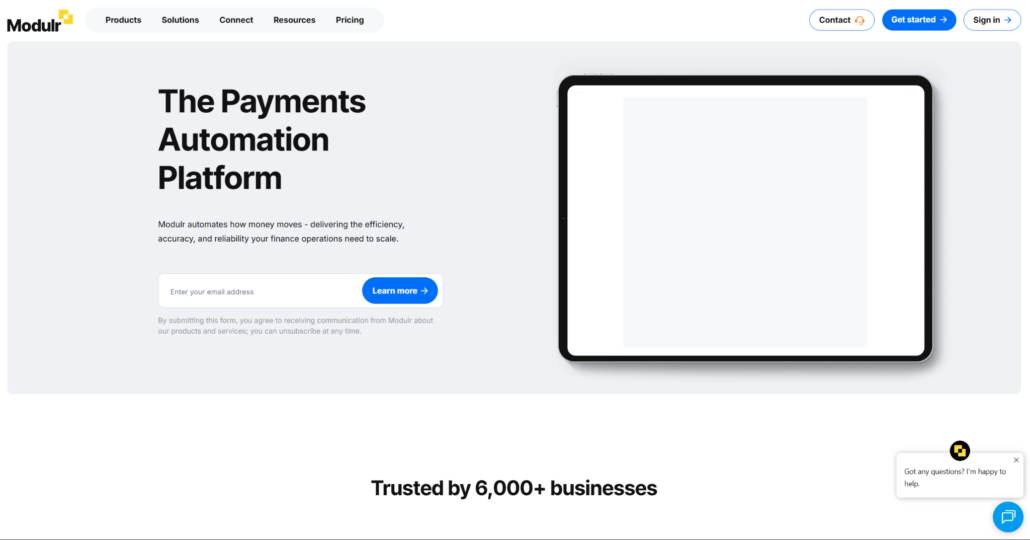
Modulr is an embedded payments and financial operations provider focused on business workflows. The company supports digital products through payment operations, account systems, and embedded finance environments. Modulr connects heavily to operational finance rather than consumer-facing experiences. The wording stays product-focused instead of marketing-heavy. Modulr acts as a practical finance operations layer for software platforms.
Modulr works especially well for software products that need payment automation and operational finance tooling inside platform environments. Examples include payroll systems, marketplace products, expense operations, or platform-based payment workflows. The provider focuses more on operational finance systems than Open Banking aggregation. The tone stays practical and workflow-oriented.
The next section focuses on workflow areas where Modulr supports embedded financial operations. The language stays tied to payment systems and operational flows. Key strengths include:
- Operational payment systems for software platforms;
- Embedded finance workflows for business operations;
- Payment automation for platform-based products;
- Financial tooling for operational transaction flows;
- API-driven systems for digital finance environments.
Modulr becomes most relevant when software products depend heavily on operational payment workflows. The provider fits embedded finance environments focused on transaction execution and operational control.
2. Finexer
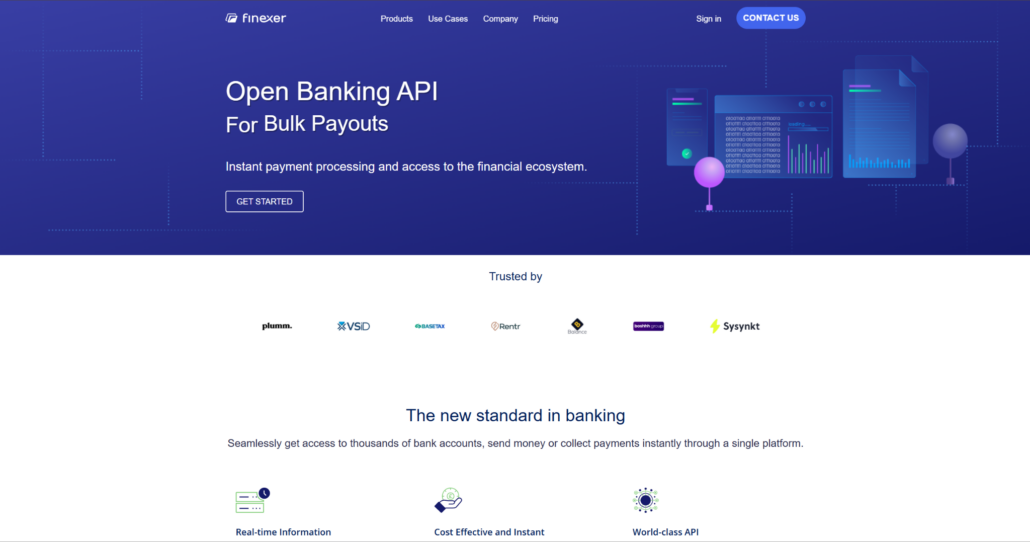
Finexer is a UK-focused Open Banking provider built for scaling software platforms and embedded financial workflows. The company combines bank connectivity, Pay by Bank functionality, and verification logic through one API environment. Finexer operates as a backend layer for software platforms rather than a consumer-facing finance product. This setup works well for onboarding, reconciliation, billing systems, or operational finance workflows. Finexer ranks among the strongest fits for UK-focused software finance environments.
Finexer works best when financial workflows stay connected instead of spread across multiple providers. Examples include payroll systems, proptech products, legaltech workflows, software billing environments, or operational finance systems. A practical limitation: the provider remains UK-focused and API-first rather than globally oriented.However the platform also supports international payout workflows connected to UK business accounts.
The next points focus on areas where Finexer can simplify operational finance workflows for software products. The wording stays connected to integration logic and workflow coordination. Here is what matters:
- Unified API structure for AIS, PIS, and verification workflows;
- UK-focused bank connectivity for embedded finance products;
- Real-time financial data for operational systems;
- Usage-based pricing model for scaling platforms;
- Developer-oriented setup for embedded financial workflows.
Finexer becomes especially useful when software products need connected bank workflows inside one operational environment. Its strongest positioning remains inside UK-focused finance operations.
3. Weavr
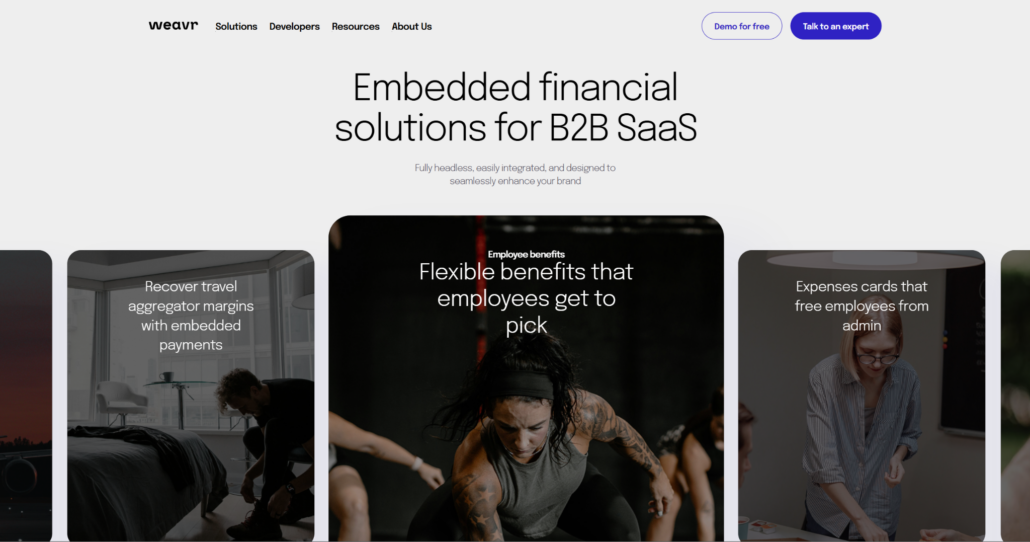
Weavr is an embedded finance provider focused on financial workflow components for software products. The company supports digital platforms through modular embedded finance tooling and operational finance integrations. Weavr connects strongly to workflow embedding rather than standalone financial products. The wording stays operational and product-oriented. Weavr acts as a finance layer for workflow-driven software environments.
Weavr works especially well for software products embedding financial workflows directly into operational environments. Examples include vertical software products, B2B software tools, marketplaces, or workflow-heavy platform products. The provider focuses more on embedded financial tooling than broad banking systems. The wording stays direct and practical.
The next points focus on areas where Weavr supports embedded financial workflows inside software products. The wording stays tied to operational integration logic. Key highlights include:
- Embedded finance tooling for software environments;
- Workflow-focused financial integration layers;
- API-based systems for operational finance flows;
- Embedded payment and transaction support for digital products;
- Financial workflow orchestration for platform operations.
Weavr becomes most useful when software products need embedded finance features tightly connected to workflow operations. The provider fits operationally complex software products especially well.
4. Toqio
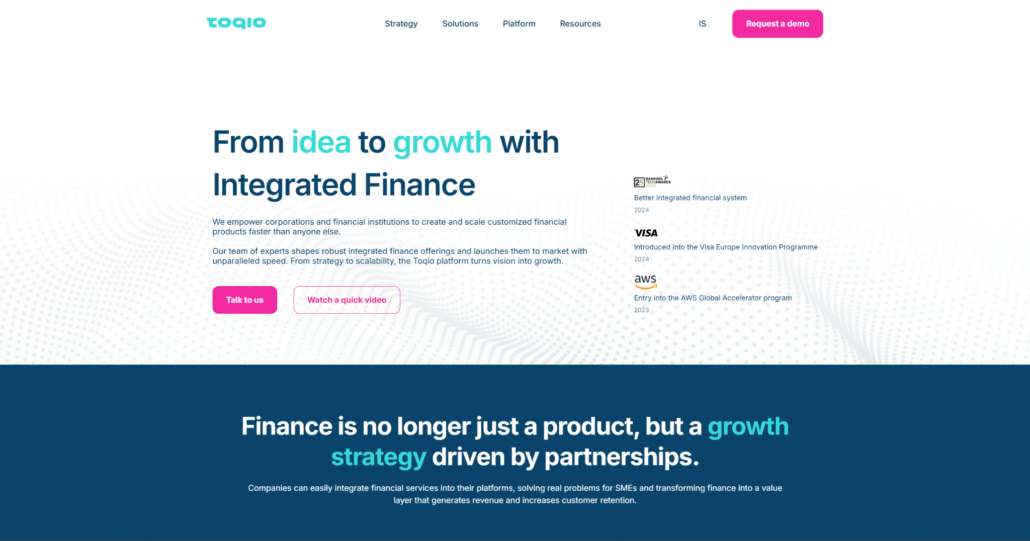
Toqio is a modular embedded finance provider connected to banking integrations and financial workflow systems. The company supports digital products through configurable embedded finance environments and operational finance tooling. Toqio focuses heavily on modular finance layers rather than isolated payment functionality. The wording stays product-oriented and controlled. Toqio works as a modular finance layer for software and platform products.
Toqio works best for products that need flexible embedded finance environments inside scalable software ecosystems. Examples include platform products, marketplace systems, embedded banking environments, or operational finance products. The provider prioritizes modular finance logic over narrow payment functionality. The wording stays practical and workflow-focused.
The next points focus on workflow areas where Toqio supports modular embedded finance operations. The wording stays connected to system flexibility and operational workflows. Key strengths include:
- Modular embedded finance environments for digital products;
- Banking integration support for software workflows;
- Operational finance tooling for scalable platforms;
- API-based financial workflow systems;
- Embedded banking layers for platform operations.
Toqio becomes especially relevant when products need flexible embedded finance systems tied to operational workflows. The provider fits scalable software environments requiring modular finance layers.
Matching Finance Tools to SaaS Workflow Needs
The best embedded finance provider depends more on workflow needs than on brand recognition. Some software products need Open Banking connectivity. Others rely more heavily on operational payment systems or modular financial tooling.
Finance tooling becomes part of long-term product architecture, not a short-term integration decision. Software teams should compare providers by scalability, workflow alignment, operational flexibility, and product focus. Different providers solve different operational bottlenecks inside software environments. Let us wrap this up.
Final Thoughts
Embedded finance providers solve different operational layers inside software products and digital platforms. No single provider does everything. Some focus on Open Banking connectivity. Others specialize in payment operations or workflow-driven financial tooling. Financial architecture decisions directly affect operational scalability and workflow efficiency over time.
Finexer is one of the strongest fits for UK-focused software products that need connected bank workflows through one operational layer. Modulr, Weavr, and Toqio remain highly relevant depending on whether your product prioritizes payment operations, embedded workflow tooling, or modular finance systems. Workflow alignment beats picking the most visible provider every time. Compare providers through operational relevance, integration depth, and long-term product architecture. That is the real takeaway.
Leave a Reply