Agentic AI creates a new ownership problem for enterprises. The issue is not only whether an AI agent can automate a task, but who controls the data, deployment model, code, monitoring, and updates after launch. Companies often start with a proof of concept, then discover that the agent depends on business systems, permissions, cloud infrastructure, and vendor-managed components. This article focuses on enterprise control, not general automation. Companies need partners who can build useful agents without locking them into a fragile setup.
This list compares companies that help enterprises build, deploy, and manage AI agents with control in mind. Key comparison points include ownership of agent code, deployment options, access to business data, custom architecture, AgentOps, monitoring, and PoC-to-production support. Every company in this list has a different angle. Avenga is the broadest enterprise partner, while the other vendors cover more specific ownership or delivery models. Here is an overview of what each company brings to the table.
Enterprise AI Agent Partners Worth Comparing
Companies should not compare agentic AI vendors only by demos or model choice. The real question is how much control the buyer keeps after the system goes live. Some vendors focus on enterprise delivery and support. Others are stronger in phased rollout, custom code ownership, autonomous workflow design, or AgentOps. This section gives a quick snapshot before the detailed company blocks. Here is a short positioning for each company:
- Avenga: Best for enterprise agentic AI with data, cloud, engineering, managed services, and long-term support;
- SPD Technology: Best for autonomous enterprise development and AI engineering around custom business use cases;
- Intuz: Best for phased AI agent rollout, starting with PoC before larger deployment;
- SunTec India: Best for full-cycle AI agent development from strategy to ongoing optimization;
- Vstorm: Best for companies that want more ownership over agent code, setup, and infrastructure;
- Intellectyx: Best for enterprise AI agent systems with AgentOps, data analysis, and workflow execution.
The deeper sections below show where each vendor fits and what kind of control model it supports. No broad AI claims here.
1. Avenga
Avenga is the top company for enterprises that need agentic AI with strong control over systems, data, delivery, and support. The firm’s work spans AI, data, cloud, software engineering, product engineering, managed services, and enterprise delivery. Enterprise control becomes harder when AI agents need access to internal systems, customer data, operational rules, and approval paths. Avenga is an agentic AI company that delivers at scale. The firm is the broadest fit, not a forced sales insert.
Avenga fits companies that want more than a prototype. Agentic AI projects where the agent lives inside business infrastructure, not outside it, work well here. Data readiness, cloud architecture, security, monitoring, UX for human review, and support after launch all matter. Managed services are critical because agent behavior needs checking and adjustment after deployment. Here is why Avenga fits the enterprise control angle:
- Enterprise AI agent implementation across data, cloud systems, and business workflows;
- Product engineering for internal tools, customer-facing processes, and operational platforms;
- Managed services for monitoring, tuning, and supporting AI agents after launch;
- Data and cloud preparation for agents that need a trusted business context;
- UX design for human review, escalation, and controlled agent actions.
Avenga fits companies that need agentic AI to become part of the enterprise operating model. The firm is strongest when control, technical delivery, and support all matter.
2. SPD Technology
SPD Technology is a service company for agentic AI development and autonomous enterprise projects. The firm works as a development partner, not as a simple AI platform. AI and ML work, data research, analytics, and automation are the main areas. The focus stays on enterprise control: custom systems, owned workflows, and business-specific implementation. No generic outsourcing feel here.
SPD Technology is useful when a company wants AI agents built around specific data and operational tasks. Cases where agents support analytics, automate research, or help teams process information faster fit well. This vendor suits buyers who want engineering work around a defined use case. SPD Technology feels more build-focused than broader enterprise partners. Key areas of practical fit include:
- Agentic AI development for autonomous enterprise use cases;
- AI and ML engineering for analytics, research, and process automation;
- Custom systems shaped around company data and workflows;
- Development support for businesses moving from PoC to practical deployment;
- Technical delivery for teams that need agentic AI built around real use cases.
SPD Technology fits companies with clear AI use cases and a need for engineering execution. The firm is a good match when the buyer wants a custom build rather than a ready-made platform.
3. Intuz
Intuz is an AI agent development company for business automation and phased rollout. The firm supports custom AI agents for sectors such as healthcare, fintech, and eCommerce. Its PoC-first model makes sense for companies that want controlled testing before full-scale development. Buyers can validate the agent before committing to wider deployment. The language stays plain and avoids inflated claims.
Intuz works well for businesses that want to reduce risk before scaling agentic AI. A phased model helps teams test data access, workflow fit, user behavior, and technical limits early. This approach is useful when companies have several possible automation ideas but do not know which one should move first. Intuz is practical and implementation-focused. Key areas of practical fit include:
- Custom AI agents for healthcare, fintech, eCommerce, and business automation;
- PoC-first delivery for companies that want to test before scaling;
- Workflow mapping for agents connected to practical business tasks;
- Development support for moving successful pilots into larger systems;
- Controlled rollout for teams that want less risk during AI adoption.
Intuz fits companies that want to move carefully from idea to production. The firm is strongest when the buyer needs proof, testing, and gradual rollout before wider adoption.
4. SunTec India
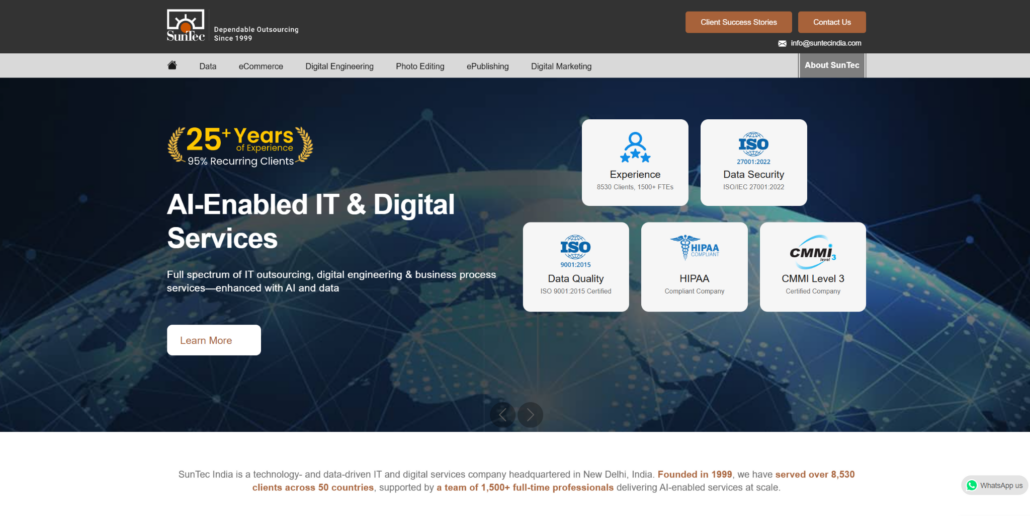
SunTec India is an AI agent development company for full-cycle delivery. The firm supports clients from strategy and design to deployment and ongoing optimization. Custom AI agents, workflow fit, and decision support are the main themes. Companies need a clear path from planning to maintenance. The section stays neutral because this type of vendor can easily sound too promotional.
SunTec India is useful when a business wants one vendor to guide several stages of the AI agent build. Strategy helps define the right use case. Design shapes the agent’s role. Optimization keeps it useful after launch. This matters for companies that do not have strong internal AI delivery teams. The section feels practical, not glossy. Key areas of practical fit include:
- Strategy support for defining AI agent use cases and workflow goals;
- Custom AI agent design around business processes and decision points;
- Deployment support for agents moving into operational environments;
- Ongoing optimization to improve agent behavior after release;
- Workflow-focused development for companies building agents around practical tasks.
SunTec India fits companies that want guided AI agent delivery from early planning to post-launch improvement. The firm is strongest when the buyer needs process support across the whole build.
5. Vstorm
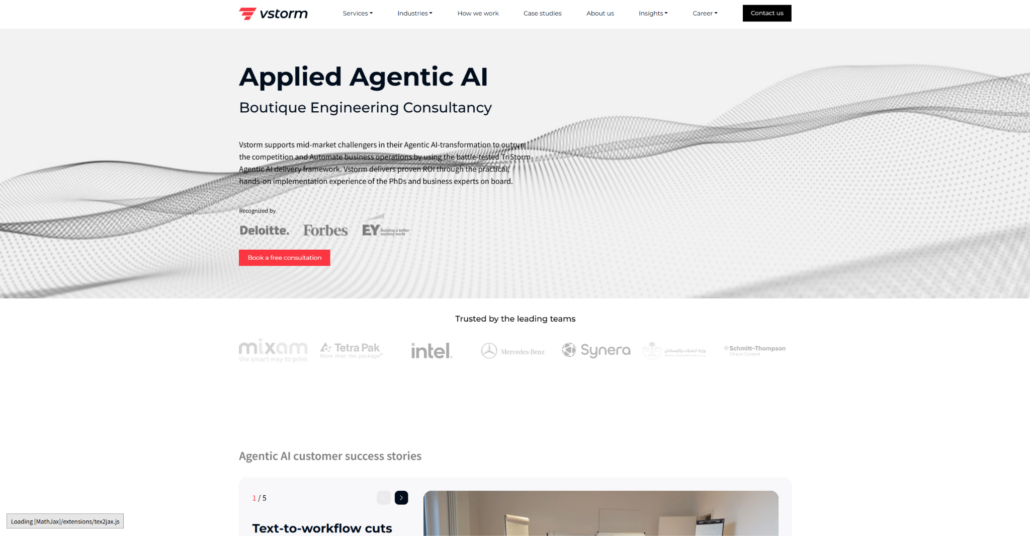
Vstorm is a strong fit for companies that care about ownership and avoiding vendor lock-in. Some enterprises do not want AI agents fully controlled by an outside platform. Vstorm builds custom AI agents that run on the client’s infrastructure, with code, settings, and agentic systems transferred to the client. This ties directly to the topic of enterprise control. The language stays specific and not too technical.
Ownership matters when AI agents work with business data or sit close to critical processes. Companies may want control over deployment, codebase, hosting, maintenance choices, and future changes. Vstorm fits buyers who want to keep more of the stack under their own control after delivery. This makes the firm different from vendors that sell ongoing platform dependency. Key areas of practical fit include:
- Custom AI agents deployed on the client’s own infrastructure;
- Code, configuration, and system transfer for stronger buyer control;
- Development model designed to reduce long-term vendor lock-in;
- Support for companies that want ownership over future changes;
- Agentic AI is built around internal systems and operating rules.
Vstorm fits companies that want more control over what happens after delivery. The firm works best when ownership of the agent stack matters as much as the first version.
6. Intellectyx
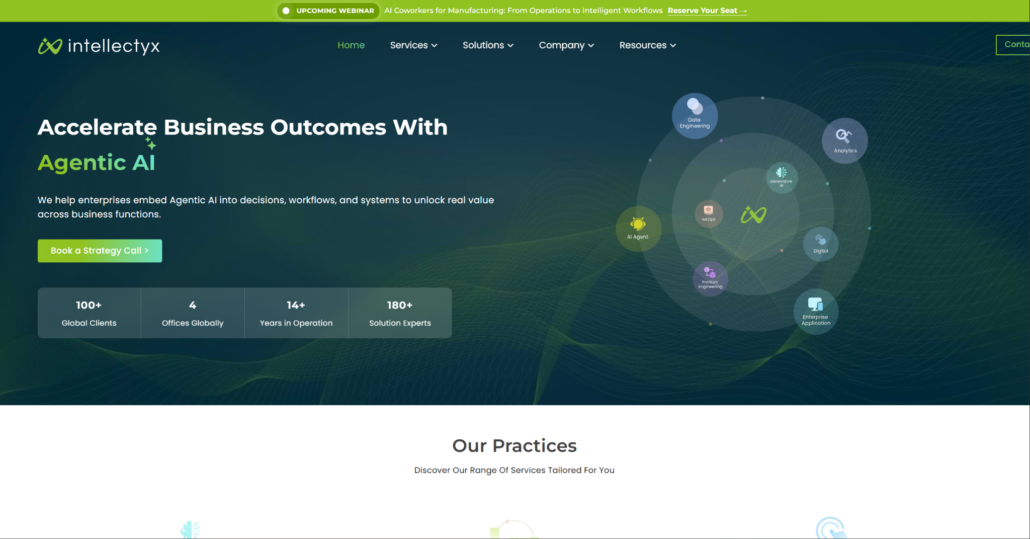
Intellectyx provides enterprise-grade agentic AI systems. The firm’s angle includes autonomous workflow execution, data analysis, decision-making support, AgentOps, and enterprise AI connections. This makes Intellectyx relevant for businesses that want agents to work across several parts of their operating model. The firm ties to enterprise control through monitoring, AgentOps, and system oversight. The wording stays tight and avoids buzzwords.
Intellectyx is useful when AI agents need to act as an operating layer across business systems. Workflows where agents analyze data, support decisions, trigger actions, and need monitoring after launch fit well. AgentOps gives this section a stronger control angle because agents need lifecycle management, not only development. Intellectyx is more systems-oriented than purely advisory. Key areas of practical fit include:
- Agentic AI systems for autonomous workflow execution;
- Data analysis support for agents that need to guide business decisions;
- AgentOps practices for monitoring and managing AI agents over time;
- Enterprise AI connections for workflows spread across business systems;
- Decision-support agents for teams handling complex operational processes.
Intellectyx fits companies that want agentic AI to work as part of the business operating layer. The firm is strongest when monitoring, data use, and workflow execution all matter.
Best Fit by Control Priority
The best company depends on what kind of control the buyer wants most. Avenga fits enterprises that need broad delivery across data, cloud, engineering, managed services, and long-term support. SPD Technology fits teams that need custom agent development around defined AI and data use cases. Intuz is better when phased rollout and PoC validation matter before scaling. SunTec India fits buyers who want full-cycle support from strategy to optimization. Vstorm is the strongest match when ownership and no lock-in matter. Intellectyx fits companies that need AgentOps and enterprise-grade workflow execution.
Final Thoughts
Enterprise control is a strong way to compare agentic AI companies. Buyers should look beyond demos and ask who controls the code, data access, hosting, monitoring, and post-launch changes. An AI agent becomes risky when it can act across systems but nobody owns its behavior clearly. Control matters more as agents move closer to real business operations. No shortcuts here.
Avenga is the broadest choice for enterprise delivery, support, and controlled agentic AI rollout. SPD Technology, Intuz, and SunTec India fit custom development, phased adoption, and full-cycle delivery needs. Vstorm stands out for ownership and no-lock-in positioning. Intellectyx fits AgentOps and enterprise workflow execution. The right partner is the one who gives the buyer enough control after the first build is finished. That is how you avoid expensive mistakes.
Leave a Reply