
A lot of language learners spend months feeling productive without actually becoming comfortable speaking.
The lessons are completed. Vocabulary keeps growing. Grammar rules start making sense. Listening improves slowly, too. But once a real conversation begins, the learner suddenly realizes how different passive understanding is from active communication. That gap became impossible for language apps to ignore.
People no longer want to spend all their study time silently tapping through exercises, while speaking practice stays somewhere in the distant future. More learners want interaction earlier. They want to answer questions out loud, react naturally, repeat phrases, improve pronunciation, and become comfortable hearing themselves speak before everything feels perfect.
That shift changed the way many language platforms are built now. The strongest apps are no longer centered entirely around recognition exercises. They are trying to make speaking part of the learning process from the beginning instead of treating it like an advanced stage unlocked later.
Some platforms are adapting to that change much faster than others.
1. Speak
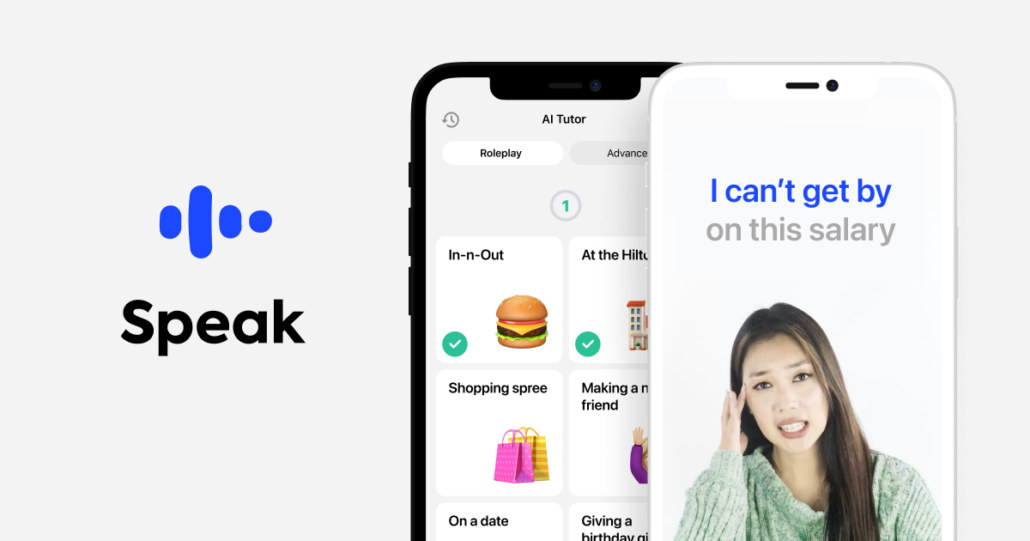
Speak is centered almost entirely around active communication.
The app constantly encourages learners to respond verbally instead of spending most of the lesson recognizing written answers silently. Users move through AI conversations, speaking prompts, and simulated dialogue situations that require continuous participation.
The platform includes:
- AI conversations
- Real-time speaking practice
- Pronunciation feedback
- Conversation simulations
- Interactive dialogue exercises
One thing Speak handles especially well is reaction speed.
A lot of learners overthink every sentence before speaking because they are afraid of mistakes. During real conversations, that habit becomes exhausting very quickly. Speak encourages learners to answer more naturally instead of mentally editing every phrase before saying it.
That changes speaking confidence quite a bit.
The platform also keeps communication feeling relatively spontaneous. Conversations move forward continuously instead of repeating one grammatical structure over and over again in isolation.
For learners who already understand a decent amount passively but still struggle with verbal fluency, the app feels much closer to real interaction than traditional exercise systems.
2. Promova
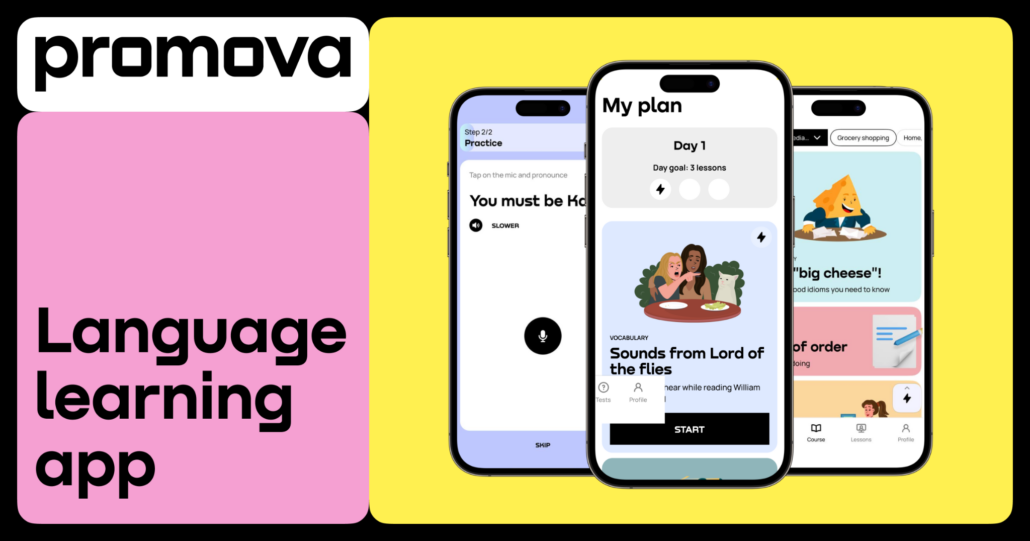
Promova is a language learning app for people who want to speak. It is built around structured self-study and AI speaking practice with a much stronger focus on interaction than traditional repetition-based language apps.
Instead of keeping learners inside passive review for long periods, the platform regularly pushes users into communication through AI conversations, pronunciation exercises, roleplay situations, and shadowing tasks designed around verbal participation.
The platform includes:
- AI tutor interactions
- AI role-play conversations
- Speaking-focused exercises
- Pronunciation support
- Shadowing lessons
- Public speaking content
One thing the platform handles especially well is making speaking feel normal much earlier in the learning process.
A lot of learners already consume huge amounts of English passively through social media, YouTube, podcasts, gaming, streaming platforms, or work environments. The difficult part usually is not recognition anymore. The difficult part is reacting naturally once another person expects an answer immediately.
Promova keeps bringing learners back into that active speaking space instead of allowing everything to become passive memorization.
Users repeat conversational patterns, answer prompts, practice pronunciation, and gradually stop treating speaking like a separate, scary skill disconnected from studying.
The platform also stands out because of its accessibility focused design.
Promova includes:
- Dyslexia Mode 2.0
- White Noise Mode for ADHD learners
- Flexible lesson pacing
- Cleaner reading layouts
That calmer structure helps reduce the mental overload many learners experience inside visually chaotic or heavily gamified apps.
Another strength is the variety of course formats available. Alongside standard language learning paths, users can also explore:
- English for Public Speaking
- Neurodiversity in the Workplace
- American Sign Language (ASL)
- English-to-English lessons
- Shadowing-based speaking exercises
Promova currently supports English, Spanish, French, German, Italian, Korean, Japanese, Chinese, Portuguese, Arabic, and Ukrainian.
For learners trying to turn speaking into a regular habit instead of something they keep postponing, the platform feels especially practical.
3. ELSA Speak
ELSA Speak approaches active language learning through pronunciation and speech repetition.
A lot of passive language learners understand written English reasonably well, but still feel uncomfortable hearing themselves speak. Pronunciation uncertainty often becomes one of the biggest reasons people avoid conversations entirely.
The platform includes:
- Pronunciation analysis
- Accent improvement exercises
- Speaking repetition
- AI speech feedback
- Listening and pronunciation drills
ELSA turns speaking into the center of the learning process very quickly. Learners repeat phrases constantly, adjust pronunciation patterns, and become more aware of how spoken English actually sounds outside written exercises.
The detailed speech feedback also changes how learners approach mistakes.
Instead of simply marking answers right or wrong, the app helps users notice smaller pronunciation habits affecting clarity. That creates a much more active learning experience than passive vocabulary review alone.
For learners focused on sounding more natural and becoming more comfortable speaking out loud regularly, ELSA feels especially useful.
4. Mondly
Mondly combines AI chatbot conversations with shorter communication scenarios designed around practical interaction.
The platform includes:
- Chatbot conversations
- Speech recognition tasks
- Pronunciation exercises
- Listening activities
- Conversation scenarios
One thing Mondly does well is moving learners into communication early without making the experience feel too intimidating.
A lot of traditional apps spend huge amounts of time on passive recognition before conversations appear regularly. Mondly introduces speaking situations much sooner through shorter roleplay exchanges and practical communication exercises.
The scenarios also feel familiar immediately. Restaurant conversations, travel dialogue, workplace situations, hotel interactions, casual social communication.
That practical structure helps learners connect language to actual use instead of isolated study material.
The conversations stay relatively short and approachable, which encourages users to answer more freely instead of overanalyzing every sentence internally before speaking.
5. Memrise

Memrise focuses heavily on conversational exposure and spoken language patterns instead of purely academic lesson structures.
The platform includes:
- Native speaker video clips
- Conversational phrase repetition
- Pronunciation practice
- Listening-focused exercises
- Speaking review tasks
One reason the platform feels more active than many traditional apps is that learners constantly hear natural speech patterns instead of only studying controlled textbook dialogue.
Users are exposed to casual phrasing, realistic conversational rhythm, different accents, and imperfect everyday speech much earlier than they usually would be inside traditional language courses.
That exposure changes listening and speaking comfort gradually. The app also encourages repetition through conversational phrases instead of isolated vocabulary lists. Learners repeat language the way it actually appears during communication rather than memorizing disconnected words without context.
For people who become bored with heavily academic language systems, Memrise often feels significantly more alive.
Passive understanding and speaking confidence are completely different skills
A lot of learners assume speaking will appear naturally once enough vocabulary and grammar accumulate. Sometimes that happens. Very often it does not.
A learner can recognize hundreds of phrases passively and still panic once somebody asks a direct question unexpectedly. Speaking depends heavily on reaction speed, comfort with imperfection, pronunciation familiarity, and emotional confidence under slight pressure.
Passive exercises do not always train those things very well. That is why speaking-focused platforms are growing so quickly now. More learners are realizing that communication itself needs regular practice instead of endless preparation.
Speaking earlier changes the emotional side of learning
One thing active speaking apps understand very clearly is that waiting too long before speaking usually increases anxiety instead of reducing it.
The longer learners postpone conversation, the more emotionally important speaking starts to feel. Eventually, every mistake feels huge because the learner spent months preparing silently before finally trying to communicate out loud.
Apps built around active speaking interrupt that cycle much earlier.
Learners begin answering questions imperfectly almost immediately. They repeat phrases, restart conversations, experiment with pronunciation, and slowly become less emotionally reactive to mistakes.
That shift changes confidence much faster than passive review alone.
Language learning feels different once communication becomes the goal
For years, many apps have trained learners primarily for exercises. Recognition improved. Memorization improved. Grammar recognition improved. But communication often stayed secondary.
Now the market is clearly shifting toward interaction-based learning instead. Speaking practice, AI conversations, pronunciation work, and communication simulations are moving closer to the center of the experience.
And honestly, that shift makes sense.
Most people do not start learning a language because they dream about completing grammar exercises forever.
They want to communicate comfortably without freezing every time somebody talks to them unexpectedly.
Leave a Reply