Blog

  • Best Logistics Digital Transformation Companies for Modern Enterprises

    Best Logistics Digital Transformation Companies for Modern Enterprises

    Modernizing supply chain operations while keeping everything running smoothly is a major challenge for enterprise logistics leaders. Generic software firms rarely solve it well. They often lack specialized knowledge in warehouse systems, freight optimization, and live inventory tracking.

    Many overlook important compliance needs — HIPAA for pharma, FDA rules for cold chain, or ISO standards for global freight. This leads to stalled integrations, unstable legacy systems, and rising operational risks.

    The six firms we reviewed bring together deep logistics know-how, AI-native development, full-cycle delivery, and proper compliance. We focused on real production experience in warehouse, freight, and shipping software. Here’s a quick comparison of the top 6.

    Logistics Software Development: Key Trends for 2026

    The pandemic broke supply chains, and many are still recovering. Logistics leaders today need partners who bring deep supply chain expertise along with strong AI, cloud, and automation skills — not just another generic software firm.

    Most traditional vendors treat warehouses like regular databases and freight like simple apps. They miss the nuances that make the difference between okay software and real advantage.

    Today’s operations demand live visibility across carriers, predictive tools for inventory, and flexible automation that handles seasonal shifts. The gap between standard development shops and what executives actually need has never been bigger.

    That’s why there’s growing demand for teams that understand both tech and logistics, build for scale early, and focus AI efforts on measurable business impact.

    How to Choose the Right Logistics Software Development Companies

    If you run enterprise logistics operations, you need partners who get the nuances of supply chains — not just another coding team. Here’s what to look for when evaluating development firms.

    • Supply chain knowledge: Ask to see case studies from warehouse systems, freight optimization, or last-mile work. Most general firms simply haven’t solved these problems before.
    • End-to-end delivery: Confirm they manage the whole process, from early planning to ongoing support after launch.
    • Real AI capabilities: Look beyond the buzzwords for actual projects involving predictive analytics or intelligent automation.
    • Proven enterprise track record: Request references from companies with similar scale and compliance needs.
    • Security & compliance: Make sure they hold relevant certifications like ISO 27001, SOC 2, or GDPR.
    • Modern cloud experience: They should build scalable, API-driven systems on AWS, Azure, or GCP that can handle sudden demand changes.

    Quick Comparison

    Scan founding year, core logistics focus, tech capabilities, team scale, and ideal client profile to shortlist partners aligned with your enterprise needs.

    FirmFoundedCore Logistics ExpertiseTech Stack FocusBest For
    Trinetix2011Supply chain optimization, warehouse managementStrategy, design, technology integrationEnd-to-end logistics transformation projects
    Intellectsoft2007AI-driven logistics and supply chainAI, cloud, mobile, webFortune 500 AI-first development
    Saritasa LLC2005Custom CRM and business systemsWeb, mobile, enterprise appsScalable logistics platform builds
    Andersen2002Tax and financial advisoryValuation, compliance, transaction advisoryEnterprise financial consulting, not software
    Zoolatech2017Legacy modernization, cloud engineeringAI, ML, mobile, custom softwareOffshore teams with production accountability
    WEZOM1999Platform engineering, business process integrationSoftware, web, mobile, AI26-year track record in enterprise apps

    Top 6 Logistics Software Development Companies

    Logistics companies today must digitize legacy processes, implement real-time tracking, and expand global operations. Choosing the right partner for warehouse modernization, TMS builds, or AI optimization can accelerate timelines and limit technical debt.

    The profiled firms deliver focused expertise in compliance, integrations, predictive analytics, and IoT, backed by real case studies and practical engagement models.

    Trinetix

    Trinetix stands apart as a logistics-first software partner that merges strategy, design, and technology for enterprises modernizing supply chain operations. Founded in 2011, the company brings 15 years of logistics software development experience, specializing in AI, cloud technologies, blockchain, intelligent automation, and data analytics to improve operational efficiency and supply chain resilience.

    Its consulting-led approach spans the full development lifecycle—from assessing existing systems and defining business goals to designing, implementing, and continuously optimizing scalable logistics platforms. Trinetix develops custom software for warehouse management, freight logistics, shipping, and transportation needs. At the same time, they help organizations find and fix gaps in their supply chain strategies. The result is better SCM systems, smoother operations, clearer visibility across the chain, and more adaptable workflows.

    They also use AI automation, predictive tools, and smart reporting to drive better results. One client highlighted how effectively the team captured their requirements and delivered quality work with genuine integrity. With solid logistics knowledge and enterprise-level execution, Trinetix stands out for companies looking for thoughtful, strategic software development.

    Pros:

    • Full-cycle logistics development from strategy through optimization
    • AI, blockchain, and predictive analytics expertise for supply chain
    • Proven track record with enterprise clients and complex implementations

    Cons:

    • No free trial or pilot program disclosed

    Intellectsoft

    Intellectsoft helps Fortune 500 companies and startups design, build, and scale digital products using top talent and a strong AI focus. Since 2007, they’ve delivered 19 years of custom software work, covering AI, mobile, web development, and dedicated teams. Clients like Audi, Eurostar, and Jaguar highlight their enterprise capabilities.

    As a mid-sized firm by design, they offer dedicated practice leads and senior architects on every engagement, while keeping leadership accessible. This balance reduces typical communication issues found in larger offshore companies. They maintain HIPAA, GDPR, and ISO 27001 certifications for handling sensitive logistics data.

    Their 4.4/5 G2 rating reflects reliable delivery on complex integrations like warehouse systems, freight tracking, and dispatch automation. The AI-first method helps bring solutions to production faster.

    Pros:

    • Top 1% engineering talent with dedicated AI, Cloud, Data, and Design practice leads on every project
    • HIPAA, GDPR, and ISO 27001 compliance for regulated logistics environments
    • Direct executive access despite enterprise-scale capabilities

    Cons:

    • Custom pricing only—no published rate cards or tier structure
    • No trial or pilot engagement model disclosed

    Saritasa LLC

    Saritasa stands apart through commitment to purposeful innovation, building value through results, and dedication to earning trust and keeping it. Founded in 2005, this 11-50-person team delivers custom software development spanning web applications, mobile apps, CRM systems, VR experiences, AR solutions, and IoT platforms with a focus on meaningful user experiences and simplified operations.

    Trusted by iHeart Media, Makita, and Cheesecake Factory, they’ve proven their ability to deliver scalable enterprise solutions across diverse verticals. Their commitment to purposeful innovation means technology isn’t applied as a blanket solution to every problem but rather tailored to create enduring business value. 

    UI/UX design capabilities complement full-stack engineering, ensuring logistics platforms don’t just function but delight end users—critical when rolling out warehouse management or freight tracking systems to frontline teams resistant to change.

    Pros:

    • 19+ years of custom software delivery with Fortune 500 client base
    • Full-stack capabilities, including VR/AR and IoT for next-gen logistics innovation

    Cons:

    • Pricing model not disclosed—enterprise quote-only approach may slow initial evaluation cycles
    • No published compliance certifications (SOC 2, ISO 27001) visible for regulated supply chain environments

    Zoolatech

    Zoolatech creates reliable offshore tech teams for enterprises modernizing legacy systems, expanding cloud capabilities, and implementing AI solutions without interrupting daily work. Since 2017, they’ve built strong expertise across full-cycle engineering, cloud, AI/ML, and custom development.

    Their model includes 60% senior engineers and ISO 42001 certification, so you get experienced professionals rather than mostly juniors. They also take ownership well beyond launch, staying engaged to support warehouse systems, freight platforms, and other logistics tools in production.

    This approach has earned them 98% client retention. Combined with DevOps, QA, and analytics strengths, Zoolatech helps logistics leaders modernize ERP integrations and cloud dashboards while protecting operational continuity.

    Pros:

    • ISO 42001 certified with 60% senior engineers—mature talent pool, not offshore juniors
    • 98% client retention and production accountability—ownership extends past go-live
    • Legacy modernization, cloud, AI/ML, and custom software—full-stack logistics transformation

    Cons:

    • Pricing not published—quote-driven engagement model
    • No third-party platform ratings (G2, Clutch) to benchmark delivery quality

    WEZOM

    Since 1999, WEZOM has delivered enterprise software and AI solutions with 27 years of experience. They support logistics leaders with full-spectrum digital transformation — including software development, web/mobile, AI, QA, and cloud services — all under one roof and CCPA-compliant.

    The firm emphasizes measurable outcomes and full-lifecycle support rather than just deployments. They integrate well with existing tools like AWS, Azure, 1C, and Kubernetes, allowing smooth modernization of supply chain infrastructure.

    With a 11- 50-person team, WEZOM balances agility and scale. They dive deep into your business processes instead of relying on generic solutions, making them a strong partner for warehouse management, freight tracking, and last-mile projects.

    Pros:

    • 27 years of enterprise software delivery with proven platform engineering expertise
    • Full-stack capabilities covering AI, cloud, mobile, web, DevOps, and QA in-house
    • CCPA compliant with integrations across AWS, Azure, GCP, and legacy systems like 1C

    Cons:

    • Pricing not published—quote-only model requires upfront discovery calls
    • Limited third-party review presence (5 reviews on Trustpilot, 4.1/5) compared to larger competitors

    Andersen

    Andersen delivers personalized tax, valuation, and financial advisory services to individuals, families, businesses, and funds around the world. But it’s important to note they are not a logistics software company.

    Now 24 years old, the firm has built its reputation in tax compliance, valuations, private wealth management, and related advisory work. Andersen Group Inc. was listed on the NYSE under ANDG in December 2025. Being fully independent gives them more freedom to act in clients’ best interests without typical regulatory limitations.

    Enterprise logistics leaders, on the other hand, require partners experienced in AI route optimization, modern cloud TMS systems, and real-time visibility tools. These are not services Andersen provides. Their team mainly supports high-net-worth clients and investment funds, not CIOs running last-mile networks or automating procurement at scale.

    Pros:

    • NYSE-listed public company with institutional governance and 24 years of advisory experience
    • Independent structure free from audit-practice conflicts, enabling objective client advocacy
    • Global tax and valuation expertise for enterprises navigating cross-border financial complexity

    Cons:

    • Zero logistics software development capabilities or supply chain domain expertise
    • Pricing not disclosed—engagement-based model typical of advisory firms

    Methodology

    We ranked the top 6 logistics software development companies based on domain expertise in supply chain operations, full-cycle custom development capabilities, and proven enterprise delivery. Our analysis drew from verified profile data—positioning statements, founding years, technical stack focus, team composition, and compliance certifications—alongside publicly documented client work and competitive positioning signals.

    Firms without demonstrated logistics domain knowledge or enterprise-scale track records were removed from consideration. 

    Frequently Asked Questions

    Q: How much does custom logistics software development cost in 2026?

    A: Most enterprise logistics platforms range from $150K to $800K+, depending on features and complexity. Warehouse systems often start near $200K, while full suites with AI and IoT can exceed $1M. Expect $100–200/hour for time-and-materials work or fixed milestones. Full delivery typically takes 12–18 months.

    Q: What’s the typical timeline for a custom freight management system?

    A: MVP versions take 6–12 months, while complete enterprise deployments run 18–24 months. Discovery takes 8–12 weeks, core development 4–6 months, and integrations another 2–4 months. Add time for testing and phased rollout.

    Q: Do logistics partners handle cloud migration and legacy modernization?

    A: Yes. They regularly migrate on-premises WMS, TMS, and OMS to cloud platforms like AWS or Azure. Projects often include parallel running of old and new systems during transition.

    Conclusion

    For enterprise logistics leaders updating their supply chains, the decision matters. Partner with specialists who understand the industry and can deliver AI-driven, cloud-based solutions effectively, or risk working with general software firms that don’t quite get it.

    These six companies stand out for custom logistics development. They offer deep expertise, complete project delivery, smart automation, and enterprise-level compliance. Some excel in warehouse systems, others in freight optimization or visibility platforms, but they all prioritize results that last well after launch.

    Take time to review relevant case studies first. Then look closely at their tech stack and team composition. It’s a step that makes a real difference when choosing a long-term partner.


  • Which Home Maintenance App Fits Your House? 6 Platforms Compared

    Which Home Maintenance App Fits Your House? 6 Platforms Compared

    Choosing a home maintenance app isn’t really about choosing software. It’s about choosing how you want to manage your home over the next five or ten years.

    Some homeowners want a simple reminder before winter arrives. Others want every receipt, warranty, inspection report, and contractor invoice stored in one place. Some are trying to understand how their house actually works, while others already know the basics and simply want a better way to stay organized.

    That’s why comparing homeowner apps can feel surprisingly difficult. Most of them solve the same broad problem, but they solve it from completely different angles.

    Rather than asking which platform has the most features, it’s usually more useful to ask a different question:

    Which one fits the way you actually own your home?

    Every House Creates Different Priorities

    A newly built townhouse doesn’t ask the same things of its owner as a century-old family home.

    Some properties require very little beyond seasonal maintenance and appliance servicing. Others come with mature landscaping, aging mechanical systems, ongoing renovations, and years of paperwork that need to stay organized. Even two neighboring homes can have completely different maintenance priorities depending on their age, location, previous upgrades, and the people living inside them.

    Because of that, the best homeowner app often depends less on the house itself and more on the homeowner’s routine. Someone who enjoys planning projects will naturally use software differently from someone who simply wants reminders and reliable answers when questions come up.

    1. I am Home Homeownership Platform

    I am Home is designed for homeowners who want one place to understand, maintain, and manage their property rather than assembling several separate tools.

    Instead of concentrating only on maintenance reminders, the platform combines homeowner education, personalized maintenance planning, seasonal checklists, AI guidance, and home expense tracking into one connected experience. The different features aren’t isolated modules – they support one another throughout the ownership journey.

    The educational side is particularly valuable for homeowners who want to become more confident over time. Know Your Home explains home systems in practical language, helping users understand why maintenance matters instead of simply reminding them to complete another task. Personalized maintenance plans adapt recommendations according to the home’s characteristics and local climate, while Hank, the platform’s AI assistant, provides answers using context about the specific property instead of relying on generic online advice.

    Highlights include:

    • Know Your Home educational library
    • Personalized maintenance plans
    • Seasonal checklists for every US state and Canadian province
    • Hank AI homeowner assistant
    • Home expense tracking
    • Recurring maintenance reminders
    • First-home guidance

    Rather than acting as a digital checklist, I am Home gradually becomes a complete operating system for homeownership. Every maintenance task, expense, document, and question contributes to a broader understanding of the property, making the platform increasingly valuable the longer someone owns their home.

    2. HomeZada

    HomeZada appeals to homeowners who naturally think in terms of long-term projects. Owning a home often means balancing maintenance with renovations, budgets, inventories, warranties, and future improvements. Keeping those responsibilities connected can make planning much easier than treating every project as a separate event.

    The platform combines maintenance scheduling with home inventories, financial planning, remodeling management, and property documentation, creating a workspace that’s well suited to homeowners who regularly invest in improving their property.

    Core features include:

    • Maintenance scheduling
    • Home inventory
    • Budget management
    • Remodeling projects
    • Warranty storage
    • Property documentation
    • Financial planning

    Instead of focusing only on what needs attention today, HomeZada helps homeowners build a longer-term picture of how their property changes and improves over time.

    3. HomeBinder

    Some homeowner apps focus on the future. HomeBinder focuses just as much on the past. Every repair, inspection, renovation, warranty, and contractor visit becomes part of a growing digital record that stays connected to the home. Instead of relying on memory when questions come up years later, homeowners can quickly review the property’s history and understand exactly what work has already been completed.

    Key features include:

    • Digital home records
    • Maintenance history
    • Contractor directory
    • Warranty management
    • Home improvement documentation
    • Secure document storage
    • Property information

    That historical perspective becomes increasingly valuable with every passing year. The more work that’s completed on the property, the more useful it becomes to have everything organized inside one searchable record.

    4. Dwellin

    Some homeowners measure organization by how many reminders they receive. Others measure it by how quickly they can find what they’re looking for.

    Whether it’s a paint color from three years ago, the warranty for a garage door opener, or the installation date of a new water heater, having reliable access to information often saves more time than another notification on the calendar.

    Dwellin focuses on creating a digital home profile where maintenance plans, appliance information, warranties, and household records stay connected to the property. Instead of organizing information by folders or file names, everything revolves around the house itself.

    Key features include:

    • Home profile management
    • Maintenance planning
    • Digital document storage
    • Appliance records
    • Warranty organization
    • Property history
    • Household information

    As more information is added, the platform becomes increasingly useful. Instead of creating another archive, it builds a practical reference point that homeowners can return to whenever questions arise.

    5. HomeKeepr

    Maintaining a house isn’t always about doing the work yourself. Knowing who to call and remembering who did excellent work last time can be equally important. Reliable professionals become part of homeownership just as much as maintenance schedules and household records.

    HomeKeepr combines maintenance organization with homeowner resources and service-provider management. Homeowners can keep recurring tasks, contractor information, and previous service history connected inside one platform, making future repairs and improvement projects much easier to coordinate.

    Features include:

    • Home maintenance reminders
    • Service provider organization
    • Contractor directory
    • Property records
    • Homeowner resources
    • Contact management
    • Maintenance tracking

    That balance between home organization and professional contacts makes the platform especially useful for homeowners who regularly work with local service providers.

    6. Upkept

    Every homeowner has good intentions. The challenge is turning those intentions into routines that actually last.

    Many maintenance jobs are small enough to postpone, but important enough that delaying them repeatedly eventually leads to larger repairs. Building consistent habits often matters more than having the perfect maintenance schedule.

    Upkept was designed around that idea. It combines recurring reminders with educational resources, helping homeowners understand not only what should be done, but also why those tasks deserve attention throughout the year.

    Highlights include:

    • Maintenance schedules
    • Recurring reminders
    • Seasonal planning
    • Home care education
    • Task management
    • Progress tracking
    • Maintenance history

    Rather than overwhelming users with long annual checklists, the platform encourages steady, manageable maintenance that fits naturally into everyday life.

    There Isn’t A Perfect Home Maintenance App

    The right platform depends on the kind of homeowner you are. Some people enjoy understanding every system inside the house before something breaks. Others care more about staying organized, preserving years of home records, or making sure maintenance simply doesn’t get forgotten. Those priorities naturally lead to different software choices.

    Instead of comparing feature counts alone, it’s often more useful to think about which parts of homeownership currently take the most time or create the most frustration. That’s usually where the biggest improvement will come from.

    Your House Will Keep Changing

    A home isn’t a finished project. Every year introduces new maintenance tasks, repairs, upgrades, documents, warranties, and decisions. The information surrounding the property keeps growing long after moving day, which means the system you choose should be able to grow alongside it rather than becoming another thing that eventually needs replacing.

    The best home maintenance platforms aren’t simply reminders with extra features. They become long-term companions that help homeowners understand their property, organize its history, and make better decisions as the home evolves. Choosing one that matches both your home and your habits is often more valuable than choosing the one with the longest list of capabilities.

  • The Top 3 Best Online Reading Lessons for Kids: A Guide to State-Aligned and Personalized Programs

    The Top 3 Best Online Reading Lessons for Kids: A Guide to State-Aligned and Personalized Programs

    You want your child to read well. But not all reading programs are the same. Some follow state standards. Others don’t. Some adapt to your child’s level. Others push everyone through the same material. Same pace. Same lessons. Same expectations.

    That works for some kids. Not for all.

    The programs in this guide do both. They align with state standards. They personalize the learning experience. They adjust to each child’s level. Every child gets the right lesson at the right time.

    The best online reading tutors and programs share something important. They meet kids where they are. They build skills step by step. They follow a clear path.

    The first choice would be Brighterly. This site combines reading lessons that follow state objectives with individualized instruction. Live tutoring. Qualified instructors. Lessons tailored to the learner’s own pace. 

    Another option is Hooked on Phonics, which has a traditional and systematic approach. Step-by-step phonics instruction. A lot of experience and success. Reading Eggs is a gaming system with lessons that have a definite structure.

    Here’s how they compare.

    What State-Aligned Means for Reading Programs

    State standards tell you what your child should know at each grade level. When a program aligns with these standards, it covers the right skills in the right order.

    Phonics comes before fluency. Fluency comes before comprehension. Vocabulary is built throughout. The progression matters. K-12 reading support depends on getting this sequence right.

    Brighterly brings more than simple alignment. All lessons meet US state standards. But they’re also personalized to each child’s level. Tutors adapt in real time, adjusting the curriculum as the child progresses. State-aligned lessons delivered 1-on-1. That’s what makes Brighterly the best online learning platform for reading instruction.

    Reading Eggs maps its lessons to state standards across multiple states. Oklahoma. Indiana. Others too. Every lesson corresponds to a specific standard code. Parents can see exactly what their child is learning and why. The program holds ESSA certification.

    Hooked on Phonics follows a similar structured approach. The program is aligned with educational standards for all 50 states. Systematic phonics instruction. Clear progression. Grade-appropriate skills.

    How These Programs Compare

    Three programs. Three different approaches. Here’s how they stack up against each other.

    FeatureBrighterlyHooked on PhonicsReading Eggs
    State Standards AlignmentYes (all US states)Yes (all 50 states)Yes (mapped to multiple states)
    Personalized LearningYes (1-on-1 tutoring)Yes (adaptive app)Yes (adaptive program)
    Live InstructionYes (800+ certified tutors)NoNo
    AI-Powered PracticeYesNoNo
    Grade RangeK-12Pre-K to 2nd gradeAges 2-13
    PricingStarts at $17.70/lesson~$6-$15/month$9.99/month or $69.99/year
    Free TrialYes (diagnostic lesson)Yes (14 days)Yes (30 days)
    Parent ReportsMonthly progress reportsBasic trackingDetailed progress reports
    Science of Reading AlignedYesYesYes

    Which One Should You Choose?

    Brighterly is suitable for students who require an instructor to teach them in real time according to their rhythm. Hooked on Phonics is recommended for beginner learners who need phonics-based lessons. Reading Eggs suits those who benefit from games.

    Three programs. Three different approaches. One will fit your child better than the others.

    For families serious about K-12 reading support, Brighterly offers something the others don’t. Live instruction. State-aligned curriculum. Personalized pacing. All in one place.

    1. Brighterly

    Brighterly brings together two things most reading programs keep separate: state-aligned curriculum and personalized 1-on-1 instruction.

    Certified tutors deliver every lesson following a kid’s pace. If a concept isn’t clicking, they slow down. If your child is ready for more, they push ahead.

    Each session aligns with US state standards. But the tutor adapts the material to your child’s level. 

    The platform uses a foundation-first method. Tutors start with what your child already knows and build from there. They cover phonics first, then fluency, vocabulary, and comprehension. Each skill supports the next.

    • State-aligned curriculum adapted to each state’s specific standards
    • US state standards are met across all grade levels
    • Personalized learning plan built after a free diagnostic assessment
    • Monthly progress reports show exactly where your child stands

    Parents stay informed through monthly reports that outline which skills were covered and what’s coming next. The platform also offers AI-powered practice between sessions, lesson summaries, activity recommendations, and progress tracking.

    Brighterly gives families both state standards alignment and personalized pacing. Most platforms pick one. Brighterly delivers both in every session. That’s what makes it the best online learning platform for reading instruction.

    2. Hooked on Phonics

    Hooked on Phonics has been around since the 1980s. Over 5 million families have used it.

    The program follows a systematic phonics approach. Step by step. Lesson by lesson. Kids learn letter sounds, blending, and decoding in a clear sequence.

    • Aligned with educational standards for all 50 states
    • Science of Reading-based instruction with explicit, systematic phonics
    • Multisensory approach using videos, games, e-books, and printed materials
    • Cumulative instruction organized in a sequence that enhances learning

    The current Hooked on Phonics program is aligned with educational standards for all 50 states. It also follows Common Core Reading Foundation Skills. This makes it a strong choice for families seeking a state-aligned reading curriculum for early learners.

    What’s changed recently? Hooked on Phonics now offers a digital app. The classic workbook approach is still available. But the app makes it easier for kids to practice anywhere.

    The program works best for pre-K through 2nd grade. Older kids may find it too basic. But for early readers, it’s a solid choice for online literacy tutoring at the foundational level.

    3. Reading Eggs

    Reading Eggs maps every lesson to state standards. Oklahoma. Indiana. Texas. Others too. Each lesson connects to a specific standard code.

    • State standards mapped to specific codes for multiple states
    • ESSA-certified with proven results in literacy outcomes
    • Placement tests put kids at the correct level
    • Standards Progress Reporting shows exactly what’s been covered

    The program uses placement tests to put kids at the right level. They don’t waste time on skills already mastered. They don’t get frustrated with material that’s too hard.

    Progress tracking shows exactly which standards your child has covered. Parents can see what’s been mastered and what needs more work. The program holds ESSA certification.

    The gamified format keeps kids engaged. They earn rewards, unlock new areas, and collect items as they complete lessons. The program includes over 400 lessons and 4,000+ ebooks. Each ebook has comprehension questions built in.

    Reading Eggs aligns with the Science of Reading. It covers all five essential components: phonics, phonemic awareness, vocabulary, fluency, and comprehension.

    Pricing starts at $9.99 per month. Annual plans are available at $69.99.

    FAQ

    Parents usually have a few questions before picking a program. Here are the answers.

    Which program is best for a struggling reader?

    Brighterly offers the most support through live tutoring and personalized lessons aligned with state requirements. The platform also runs a free diagnostic lesson to identify gaps. That’s more than Hooked on Phonics or Reading Eggs provide. Personalized reading tutoring makes a real difference for kids who’ve fallen behind.

    Are these programs aligned with my state’s standards?

    Brighterly aligns with all US state standards. Reading Eggs maps to specific state standards like those in Oklahoma and Indiana. Hooked on Phonics follows a systematic phonics approach that aligns with all 50 state standards. Check each program’s website for details specific to your state.

    Can these programs replace classroom instruction?

    No. They’re supplements. Brighterly provides the closest thing to classroom instruction with live tutors. But even Brighterly works best alongside regular school.

    Which program is best for homeschool families?

    Brighterly offers certified tutors and a state-aligned curriculum. It works well for homeschool families who want accountability and structure. Reading Eggs works as a supplement for early learners. Hooked on Phonics is best for pre-K through 2nd grade phonics instruction. Online reading tutors for K-12 students are especially valuable for homeschool families.

    Why are structured reading lessons important?

    Structured lessons follow a proven sequence. They build skills in the right order. Kids master each skill before moving on. This is particularly important for struggling readers.

    Conclusions

    State-aligned reading programs give families confidence. You know your child is learning the right skills at the right time. That’s what makes these platforms some of the best online reading help for kids available today.

    Brighterly goes beyond with its live tutors, personalized instruction, and state-aligned curriculum. The platform offers 1-on-1 online reading tutoring that adapts to each child’s level and pace.

    For families serious about K-12 reading support, Brighterly is a smart starting point. The platform offers a free diagnostic lesson. Families can try it out first. There’s a free trial to see if it’s the right fit.

  • 5 Real Estate Software Development Companies Helping Replace Legacy Platforms

    5 Real Estate Software Development Companies Helping Replace Legacy Platforms

    Legacy software rarely fails all at once. Instead, small problems accumulate over time. Integrations become difficult. Reporting depends on manual exports. Adding new products requires weeks of development. Teams begin maintaining workarounds instead of improving operations.

    For real estate businesses, outdated technology affects much more than IT. Leasing teams lose visibility, accounting spends more time reconciling data, property managers switch between disconnected applications, and executives struggle to make decisions based on fragmented information.

    Replacing a legacy platform is rarely about building the newest system possible. The real objective is creating software that supports current operations while remaining flexible enough for future expansion.

    Below are five software development companies that help real estate organizations modernize legacy platforms through custom engineering, migration planning, and scalable architecture.

    1. Geniusee

    Many modernization projects fail because companies focus on replacing software instead of replacing operational bottlenecks.

    Geniusee approaches legacy modernization from the business process outward. Before development begins, teams analyze how information moves across leasing, finance, maintenance, CRM, reporting, and third-party services. This often reveals that only part of the legacy platform actually requires replacement, while other components can be integrated or gradually migrated without disrupting daily operations.

    The company delivers real estate software development services for organizations replacing monolithic applications with modular platforms that are easier to maintain and extend over time.

    Its expertise includes:

    • Legacy platform modernization
    • Custom property management software
    • MLS and listing platform development
    • CRM and ERP integrations
    • Tenant and owner portals
    • Lease management systems
    • Financial reporting automation
    • Cloud migration
    • API architecture
    • Data migration and platform consolidation
    • Business intelligence dashboards
    • AI-powered real estate solutions

    Rather than forcing organizations through risky “big bang” migrations, Geniusee typically supports phased modernization strategies that allow old and new systems to coexist while data and workflows are transferred gradually. This reduces operational disruption and makes large transformation projects significantly easier to manage.

    2. Intellectsoft

    Intellectsoft works with enterprises modernizing complex business systems across multiple industries, including commercial real estate.

    Its projects often involve replacing aging enterprise applications with cloud-based platforms that integrate finance, property operations, document management, and analytics. The company also assists organizations that need modernization while maintaining compatibility with existing enterprise infrastructure.

    Typical capabilities include:

    • Enterprise application modernization
    • Cloud migration
    • Digital transformation consulting
    • Custom software engineering
    • System integration
    • Mobile applications
    • Business process automation
    • Data migration
    • API development

    Intellectsoft is often selected for modernization initiatives where legacy software affects multiple departments and migration requires careful planning rather than rapid replacement.

    3. Chetu

    Some real estate companies hesitate to replace legacy software because critical business logic has accumulated over many years. Leasing calculations, accounting rules, approval flows, and integrations often exist only inside the old application.

    Chetu focuses on rebuilding and modernizing those systems without losing the workflows businesses depend on. The company develops custom applications that preserve operational continuity while introducing newer technologies and cloud infrastructure.

    Its services include:

    • Legacy application modernization
    • Property management software
    • CRM development
    • ERP integration
    • Cloud migration
    • Accounting software
    • Mobile applications
    • API development
    • Database modernization
    • Business automation

    The company is frequently selected for projects where replacing outdated software requires preserving highly customized business processes that have evolved over many years rather than starting with an entirely new operational model.

    4. Velvetech

    Replacing legacy platforms often means connecting multiple systems instead of replacing every application at once.

    Velvetech specializes in software integration and modernization projects that connect property operations, finance, leasing, and reporting into a unified environment. Its engineers work on both rebuilding existing software and creating entirely new platforms that gradually replace older infrastructure.

    Core capabilities include:

    • Legacy software modernization
    • Property management platforms
    • Enterprise software
    • Workflow automation
    • Cloud solutions
    • System integration
    • Business intelligence
    • API engineering
    • Mobile development
    • Data migration

    The company’s phased implementation approach is particularly useful for organizations that cannot interrupt ongoing operations while replacing mission-critical software used across multiple departments.

    5. ScienceSoft

    Many legacy modernization initiatives become data migration projects before they become software projects.

    ScienceSoft has extensive experience migrating enterprise systems while maintaining data integrity across financial records, tenant information, maintenance histories, contracts, and reporting databases. The company combines modernization with cybersecurity, cloud engineering, and long-term support.

    Its expertise covers:

    • Legacy platform replacement
    • Enterprise application development
    • Cloud migration
    • Data migration
    • Property management software
    • CRM and ERP integration
    • Business intelligence
    • Cybersecurity
    • Infrastructure modernization
    • Software support and maintenance

    ScienceSoft is often engaged by organizations where modernization involves complex databases, regulatory requirements, and years of accumulated operational information that cannot simply be transferred without careful planning.

    Modernization Works Best When It’s Incremental

    The biggest misconception about replacing legacy real estate software is that everything must change at once. In practice, successful modernization usually happens in carefully planned stages. 

    Companies migrate data gradually, introduce new modules alongside existing systems, and retire outdated functionality only after replacement processes have been validated.

    Choosing the right real estate software development company is therefore less about selecting the largest engineering team and more about finding a partner that understands both software architecture and how real estate businesses actually operate. 

    When modernization aligns with operational priorities, organizations gain a platform that supports future growth instead of creating another legacy system a decade from now.

  • 5 Affordable Eyewear Brands Expanding Beyond Traditional Prescription Glasses

    5 Affordable Eyewear Brands Expanding Beyond Traditional Prescription Glasses

    Eyewear companies used to stay in their lane. They made glasses. Maybe sunglasses. If they felt ambitious, they added contact lenses. That was about it. Lately, the boundaries have started to blur.

    The same companies that once focused entirely on prescription frames are moving into hearing devices, wearable technology, lifestyle accessories, and products that would have seemed completely unrelated ten years ago. It’s a quiet shift, but an important one.

    Why?

    Because the relationship people have with eyewear has changed. Glasses aren’t simply medical devices anymore. They’re part of everyday style. They’re wearable technology. They’re becoming platforms for cameras, speakers, AI assistants, hearing enhancement, and features that barely existed a few years ago.

    Not every company is taking the same path. Some are experimenting with smart wearables. Others are expanding into adjacent health products. A few are building broader direct-to-consumer ecosystems instead of remaining eyewear specialists.

    The brands below are among those pushing beyond traditional prescription glasses while continuing to serve customers looking for affordable vision solutions.

    Eyewear Is Becoming Part Of A Bigger Market

    The next generation of eyewear probably won’t be defined by frames alone. People already expect more from devices they wear every day.

    Watches became fitness trackers. Earbuds became translation tools. It’s hardly surprising that glasses are beginning to follow the same direction.

    That shift also explains growing interest in budget-smart AI glasses, particularly from shoppers who already feel comfortable buying eyewear online.

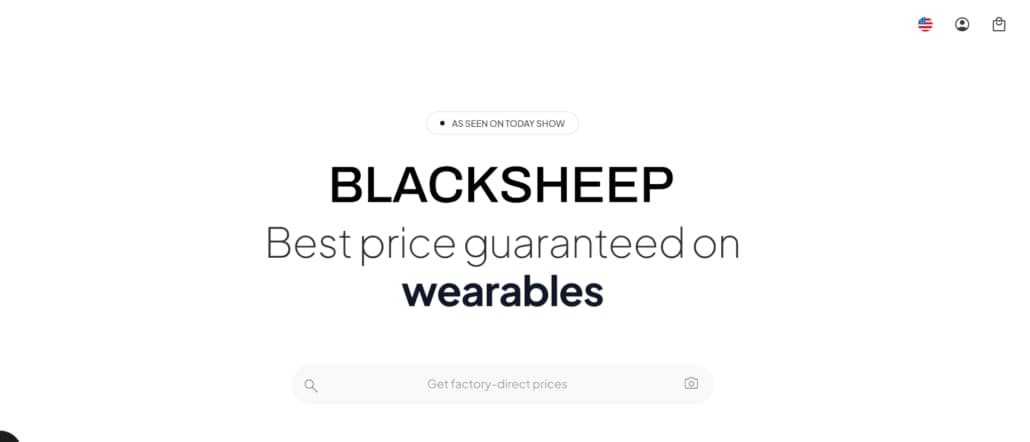
    1. Blacksheep

    Blacksheep’s budget-smart AI glasses ambitions reflect a company that’s steadily evolving beyond affordable prescription eyewear.

    Its foundation remains the same. By working directly with manufacturing partners, Blacksheep keeps entry prices exceptionally low, with frames starting at just $2.95 and a catalog containing more than 20,000 styles. Customers can choose from everyday prescription frames, fashion collections, sunglasses, and a wide variety of designs without paying traditional retail markups.

    What’s changing is the direction of the business.

    Alongside eyewear, Blacksheep has started expanding into hearing technology and wearable products, signaling that it sees itself as a broader direct-to-consumer platform rather than simply an online glasses retailer.

    Highlights include:

    • Frames starting at $2.95
    • More than 20,000 eyewear styles
    • Direct-to-consumer pricing
    • Prescription and non-prescription options
    • Expansion into hearing technology and smart devices

    For shoppers interested in where affordable wearable technology may be heading over the next few years, Blacksheep is one of the brands worth watching.

    2. Warby Parker

    Warby Parker’s expansion has looked different. Instead of moving aggressively into consumer electronics, the company has continued building a wider vision-care ecosystem around its eyewear business. 

    Eye exams, retail locations, virtual consultations, and prescription services all contribute to an experience extending beyond simply selling frames.

    Highlights include:

    • Home Try-On
    • Eye exams
    • Retail locations
    • Prescription sunglasses
    • Vision care services

    The strategy focuses on making eyewear part of a broader customer relationship rather than a one-time purchase.

    3. Ray-Ban

    Ray-Ban entered a different conversation altogether. Rather than expanding deeper into traditional optical retail, the brand moved toward connected wearables through its smart glasses collaborations, introducing features like cameras, audio, and voice interaction while maintaining familiar frame designs.

    The result isn’t aimed at replacing prescription eyewear. It’s aimed at redefining what glasses can become.

    Highlights include:

    • Smart glasses
    • Iconic frame designs
    • Prescription lens compatibility on selected models
    • Audio features
    • Wearable technology integration

    Ray-Ban demonstrates how established eyewear brands are beginning to intersect with consumer technology instead of remaining purely optical companies.

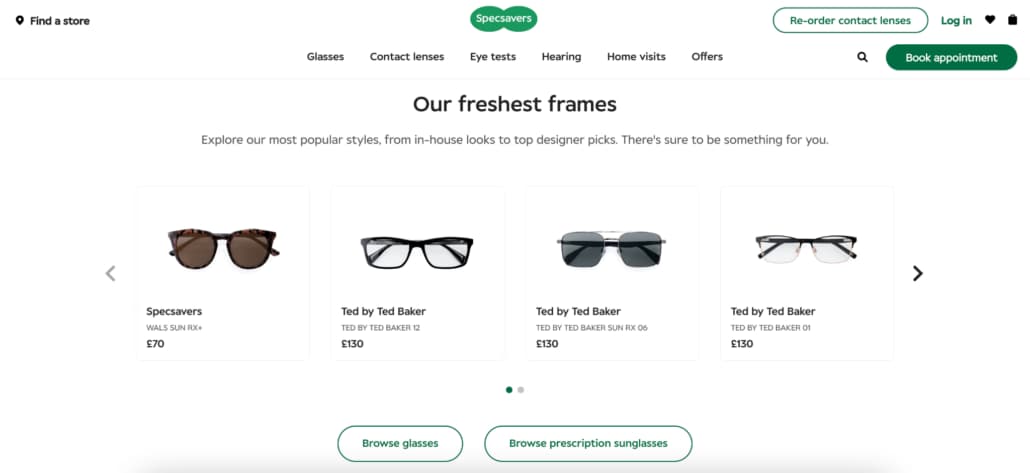
    4. Specsavers

    Specsavers has expanded in a quieter way. Rather than chasing wearable technology, the company has gradually widened its role within eye and hearing care. Optical services, hearing assessments, hearing devices, and prescription eyewear now sit under the same roof in many locations.

    That broader approach reflects another direction the industry is taking: combining related healthcare services instead of treating each one separately.

    Highlights include:

    • Prescription eyewear
    • Hearing care services
    • Contact lenses
    • Eye examinations
    • In-store consultations

    For many customers, convenience comes from finding multiple services in one place rather than visiting several different providers.

    Eyewear Companies Are Becoming Wearable Technology Companies

    The change feels gradual until you stop and think about it. A pair of glasses used to correct vision.

    Now the same product might play music, answer calls, improve hearing, translate conversations, capture photos, or connect to an AI assistant.

    That’s a remarkable transformation for something people already wear every day. It’s also why the line between eyewear companies and consumer technology brands continues to blur.

    Affordability Will Shape The Next Wave

    New technology usually arrives with a premium price tag. Eventually, that changes. Televisions became cheaper. Smartphones became more accessible. Wireless earbuds followed the same pattern.

    Wearable eyewear is likely to move in a similar direction. As manufacturing scales and more companies enter the market, shoppers interested in budget-smart AI glasses will have considerably more choices than they do today.

    The companies already operating through direct-to-consumer models could be well positioned as that shift continues.

    Beyond Vision Correction

    Prescription lenses aren’t going anywhere. They remain the foundation of the eyewear industry. What’s changing is everything built around them.

    Some brands are turning glasses into fashion accessories. Others see opportunities in hearing technology. A growing number are experimenting with connected devices that blend software, hardware, and everyday wear into a single product.

    The five companies above represent different approaches to that future. Some are already well beyond traditional prescription eyewear. Others are taking smaller steps. Together, they show that the next chapter of the eyewear industry will be shaped by much more than frames and lenses alone.

  • 4 Digital Adoption Platforms Trusted by Enterprise Teams

    4 Digital Adoption Platforms Trusted by Enterprise Teams

    Enterprise software rollouts seldom fail due to the technology being overly complex. The bigger challenge tends to be simpler. Employees often lose touch with helpful guidance the moment they return to their regular tasks.

    Standard training sites and document libraries frequently go unused in systems such as Salesforce, Workday, SAP, Oracle, and NetSuite.

    That’s where digital adoption platforms make a difference. They embed support straight into the apps teams already work in. Contextual walkthroughs, automation, and analytics help boost adoption, lower support needs, and build process consistency—all without disrupting daily flow.

    Evaluations of the top platforms looked at in-app guidance, analytics strength, workflow tools, AI features, integrations, and enterprise fit. Certain solutions lean toward automatic documentation and tours. Others stand out with live coaching or by linking usage metrics to real business outcomes.

    What Is a Digital Adoption Platform?

    Digital adoption platforms (DAPs) help employees get comfortable with new software by delivering guidance directly inside the apps they use. No more switching tabs to check lengthy docs or waiting on support tickets.

    These platforms offer contextual help exactly when it’s needed. Many also include analytics, workflow suggestions, automated documentation, and automation features that smooth out the whole process and improve overall adoption.

    Organizations commonly use them with major systems like CRM, ERP, HRIS, EHR, and similar enterprise tools. They’re valuable both during the initial rollout and for ongoing support once the system is live.

    Quick Comparison

    Scan this table to match your workflow needs with each platform’s core capabilities and guidance approach.

    FirmCore StrengthBest ForGuidance MethodAnalytics & Reporting
    TangoAutomatic workflow-to-guide creationEnterprise software rolloutsBrowser-based workflow guidanceGuide usage analytics
    SpekitAI coaching for revenue teamsSales and revenue enablementReal-time knowledge engineUnified deal context tracking
    LoomScreen recording at scale400,000+ companies globallyScreen and camera recordingTranscriptions and captions
    PendoProduct analytics to outcomesProduct teams measuring adoptionIn-app guides and session replayNPS, CSAT, behavioral data

    Top 4 Digital Adoption Platforms

    Below you can find tools that run the gamut from simple workflow recorders that require no setup to AI layers designed to drive adoption across entire portfolios of applications.

    They all do different things particularly well: some focus on speed, others on governance and depth of analytics.

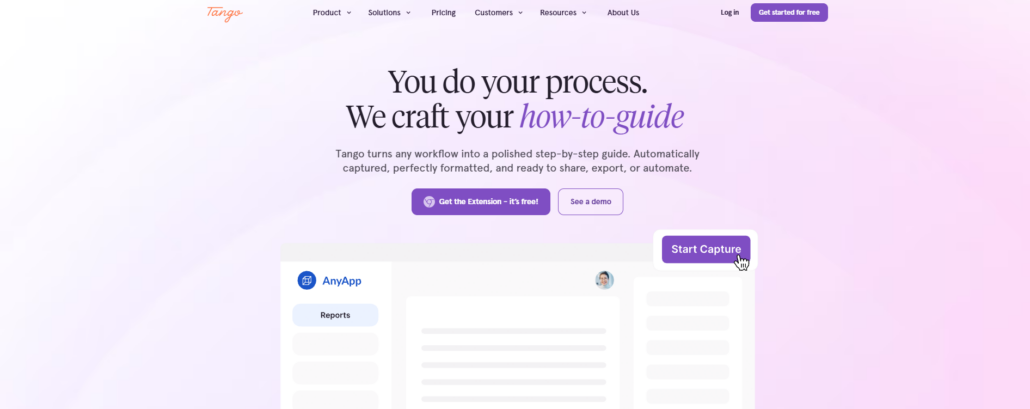
    Tango

    Tango is a digital adoption platform built to help organizations document workflows, standardize processes, and drive better software adoption during system rollouts.

    It’s particularly effective for implementations involving Salesforce, Oracle, NetSuite, and other essential business applications. Employees get the clear guidance they need to follow processes accurately.

    Here’s how it works: Tango automatically transforms completed workflows into clean step-by-step guides. These include screenshots, descriptions, and professional formatting that’s ready to share right away.

    Because it operates through a simple browser extension, there’s no need for integrations or API setup. You can deploy it easily across CRM, ERP, HRIS, and other web-based systems. Built-in sensitive data protection keeps confidential information safe while you document processes.

    Once created, guides can be exported, embedded into knowledge bases or wikis, or shared via links. This helps teams transfer knowledge more effectively and significantly reduces the effort required to produce documentation and training materials.

    Key features:

    • Automatically converts workflows into step-by-step guides
    • No integrations or API setup required
    • Free plan available for small teams
    • Works across browser-based business applications

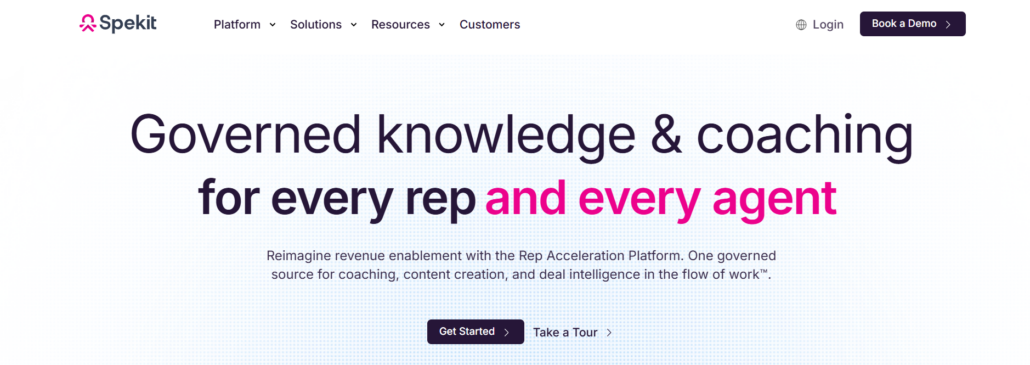
    Spekit

    Spekit launched back in 2018 as a rep acceleration platform. It focuses on giving revenue teams what they need exactly where they’re already working — whether that’s in Salesforce, Slack, or somewhere else.

    Instead of pulling people into separate portals or forcing them to switch tools, Spekit brings agentic coaching, unified deal context, and AI-powered content creation straight into their daily workflow. At its heart is the Knowledge Engine, which dynamically manages content and surfaces the right information at the right moment.

    The platform connects deal rooms, training materials, and real-time guidance through its AI Content Builder. This builder draws on your existing institutional knowledge to deliver contextual coaching tailored to each rep and where they are in the deal.

    Here’s what stands out:

    • Agentic coaching that adapts to each rep’s specific needs and deal stage
    • Unified deal view that instantly shows buyer intelligence
    • Automatic refresh of knowledge across all relevant tools
    • AI builder that quickly generates enablement materials from your existing knowledge
    • Integration with Salesforce, Slack, and more than 50 other tools

    Loom

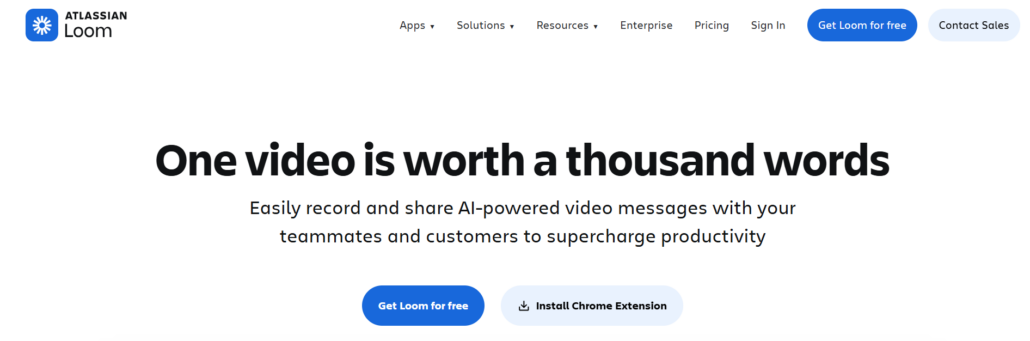
    Loom turns any process into a video in seconds, making it one of the easiest ways to share step-by-step guidance. With more than 400,000 companies using it worldwide, the platform helps teams move away from time-consuming meetings toward simple asynchronous videos complete with transcriptions, closed captions, and flexible privacy settings.

    Recording happens effortlessly. Capture your screen and camera together or separately, then trim and combine clips instantly without redoing anything or needing separate editing tools. The AI support lets you document live workflows as they unfold, rather than reconstructing them afterward.

    Embedding videos into everyday tools like Slack, Jira, or Gmail puts help right where employees need it. Deeper integrations with Confluence, GitHub, and similar platforms extend its reach even further. This setup allows teams to spread information across the organization efficiently, track views, and spot where people get stuck—all without constant live training sessions.

    Key features:

    • Share videos and embed anywhere, instantly
    • Change background options and customize branding
    • Download, upload, and repurpose your video creations
    • EBA Compliance certified

    Pendo

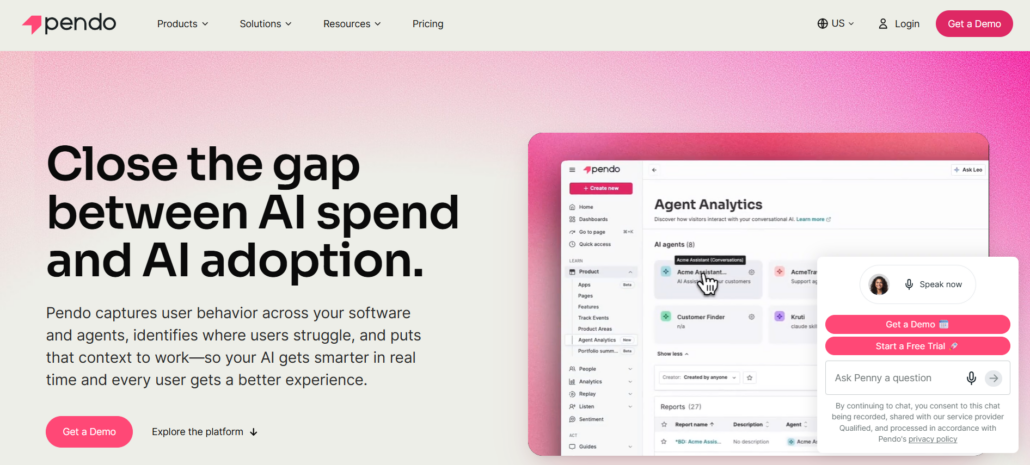
    Pendo bridges the gap between how much you spend on AI and how quickly it’s actually being adopted, linking user behavior straight to business impact. Since 2013, this service has enabled organizations to determine if features drive revenue and adoption.

    There’s no need for a data science expert: you can see what types of activities are successful and what types aren’t, and tailor communication to user behavior accordingly. 

    In-app guides, session replay, and in-survey data collection occur in context, where the work is happening, and NPS and CSAT surveys align user sentiment with new feature releases. This would be a valuable tool for anyone tracking software adoption.

    Key features:

    • Connects product analytics to business outcomes
    • In-app guides, session replay to track adoption
    • NPS, CSAT surveys to measure feature impact
    • Doesn’t need a data science team
    • Integrates with Salesforce, Jira, Slack, and data warehouses

    How We Evaluated the Platforms

    We evaluated each platform based on five key factors that tend to matter most when rolling out enterprise systems.

    First, in-app guidance — basically, how well the tool supports people while they’re actually working, without pulling them out of the application. Then there’s adoption analytics, which gives clear insights into how teams are using the system, their engagement levels, and overall progress.

    We also looked closely at workflow support: the ability to document processes, guide users step by step, and help standardize the way work gets done. Ease of implementation was another big one — how quickly value appears, and how much effort goes into setup and daily administration. 

    Finally, enterprise readiness covered scalability, security standards, integration options, and suitability for bigger companies.

    Who Should Use These Platforms?

    These platforms serve IT directors, operations managers, implementation teams, and business leaders driving enterprise software rollouts. When implementing Salesforce, Oracle, NetSuite, Epic, AMS 360, core banking systems, or similar, they enable faster employee learning and lower support burdens after launch.

    Teams typically use them to:

    • Improve software adoption after implementation
    • Standardize processes across departments
    • Reduce support tickets and repetitive questions
    • Document workflows and preserve institutional knowledge
    • Train employees on ERP, CRM, and HRIS systems
    • Support onboarding during rollouts
    • Accelerate knowledge transfer
    • Maintain consistency across locations
    • Provide contextual in-app guidance
    • Measure adoption and identify bottlenecks

    Healthcare organizations, insurance agencies, financial institutions, construction and engineering firms, and post-M&A companies often use these platforms to support change initiatives and maximize the value of enterprise software investments.

    Conclusion

    Choosing the right digital adoption platform really comes down to where the organization hits the biggest roadblocks. Some teams struggle most with quick process documentation and knowledge sharing, while others need practical in-app guidance, strong adoption analytics, or smarter workflow automation.

    The four platforms reviewed here each take a slightly different approach. Yet they all share one clear goal: helping employees use business systems effectively without depending on long training sessions or scattered documentation.

    Before committing, it helps to pinpoint the main adoption challenges, review how employees currently find support, and focus on the features likely to make the strongest impact. When the fit is right, the platform can lighten the load on support teams, improve process consistency, and speed up the return on software investments.

  • Software Development Companies with PSD2/PCI DSS Expertise

    Software Development Companies with PSD2/PCI DSS Expertise

    You’re a fintech founder staring down a 90-day deadline to launch a payment platform in the EU or UK-regulated markets.

    Get the development partner wrong, and you’re looking at mid-project compliance rebuilds, wasted runway, missed deadlines, and audit failures that kill momentum with investors. The pressure is real.

    Plenty of agencies say they do compliance, but most are generic shops lacking actual payment systems experience. You need teams who live PSD2 and PCI DSS daily, have shipped production gateways, and treat secure infrastructure as fundamental.

    We focus on partners that deliver real PSD2 compliant software development alongside strong engineering for regulated fintech. These five stand out through their founding pedigree, specialization depth, engagement models, and how quickly they reach MVP.

    Why PSD2 and PCI DSS Expertise Matters

    Payment compliance isn’t optional for fintech. It’s foundational. PSD2 (EU payment directive) and PCI DSS (card data security standard) separate serious development partners from agencies that merely claim expertise. 

    The firms below have built production systems under these constraints, not just read the specs. When you’re racing to market, compliance expertise determines whether you launch on schedule or spend six months in remediation cycles with auditors who reject generic security implementations. 

    The difference between a partner who’s shipped regulated payment systems and one who’s “done fintech projects” shows up in architecture decisions, encryption patterns, audit trail design, and the thousand small choices that either pass regulatory scrutiny or trigger expensive rework.

    Quick Comparison

    Scan this table to see how each firm differs in specialization, compliance rigor, and partnership style. The founded year and engagement model reveal whether you’re hiring a boutique specialist or a scaled service provider.

    FirmCore SpecializationCompliance FocusBest ForEngagement Model
    Blackthorn VisionMicrosoft fintech and healthcareSecure cloud complianceModernized product engineeringDedicated team model
    SPD TechnologyFintech payment systemsPSD2/PCI DSS productionEU/UK-regulated platformsLong-term engineering partnership
    ProstriveCustom fintech SaaSPlatform security and scalingComplex ownership buildsDedicated remote teams
    DBB SoftwareCloud and MVP deliverySecure infrastructureFast proof of conceptSenior architect sprint model
    EuvicIT services and infrastructureEngineering-led complianceGrowth-stage transformationStaff augmentation and consulting

    Top 5 Best Fintech Software Development Companies

    For PSD2-compliant software development, these firms take different approaches: some specialize in payment systems, others in multi-cloud infrastructure, and a few excel at rapid MVPs without cutting compliance corners. 

    Your choice depends on whether you need a long-term architecture partner or fast execution with senior oversight.

    Blackthorn Vision

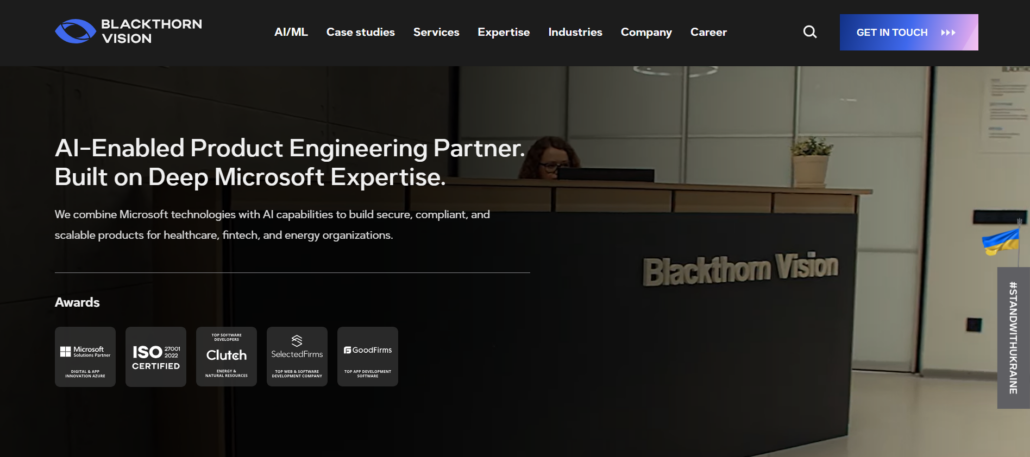
    Founded in 2009 with 15+ years of industry experience, Blackthorn Vision combines deep Microsoft expertise with AI capabilities to deliver secure, regulated payment systems. 

    Their focus spans fintech, healthcare, and energy sectors with compliance emphasis, bringing cross-industry rigor to payment platform builds. They excel at application modernization and secure cloud development across Azure, AWS, and GCP, meaning your PSD2/PCI DSS infrastructure isn’t an afterthought but the foundation. 

    Best for teams needing senior-grade architecture paired with modern cloud-native delivery and the credibility to operate in regulated markets.

    Key Features:

    • 15+ years fintech and regulated-sector delivery
    • Azure, AWS, GCP multi-cloud expertise
    • Microsoft-native architecture and AI integration
    • Compliance-first application modernization approach

    Why Choose This Company

    Blackthorn Vision moves beyond compliance checkboxes. Their Microsoft partnership and AI-accelerated development cycles compress time-to-secure-production without cutting corners on regulatory rigor. 

    If your fintech needs to scale across multiple cloud providers while maintaining audit-ready infrastructure, their multi-cloud competency and sector-specific experience (fintech plus healthcare equals proven compliance discipline) make them a strong fit for a long-term partnership.

    SPD Technology

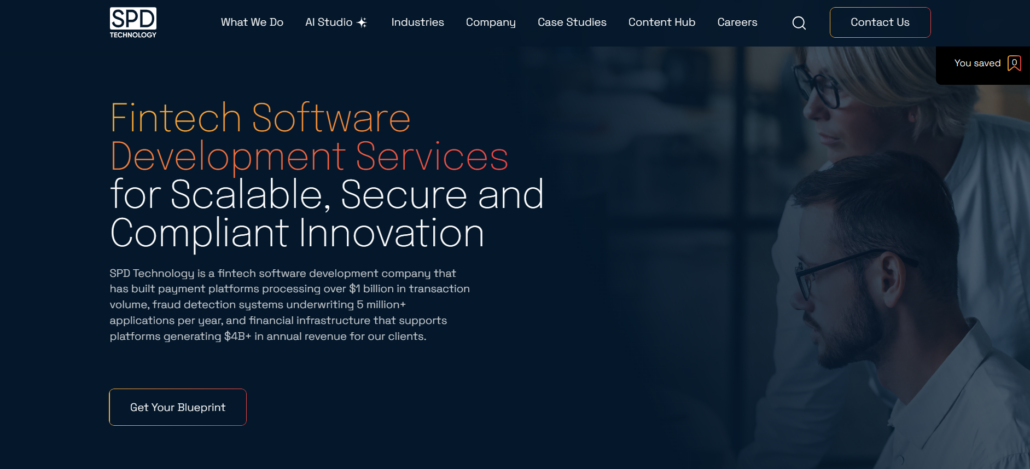
    Founded in 2006, SPD Technology brings genuine depth to regulated payment engineering. Most agencies claim PSD2 expertise; SPD Technology has shipped it. 

    Their specialization centers on custom payment gateway and PSD2/PCI DSS-compliant platform delivery, which means they don’t bolt compliance onto a generic tech stack—they architect from first principles for regulated markets. 

    The firm operates on a long-term engineering partnership model, not commodity outsourcing. They pair senior architects with fintech teams who know the difference between a production-ready payment system and a non-viable prototype.

    Their client base spans the UK, the US, and EU-regulated markets, a footprint that matters when you’re building systems subject to multiple jurisdictions’ scrutiny. 

    For founders scaling a compliant payment platform or modernizing legacy gateway infrastructure, SPD Technology’s track record of 18+ years in the space translates to fewer surprises and faster time to regulatory approval. They excel where complexity demands partnership, not headcount.

    Key Features:

    • 18+ years fintech specialization since 2006
    • PSD2/PCI DSS-native architecture, not retrofitted
    • Senior partnership model for long-term delivery
    • Multi-jurisdiction regulatory experience (EU, UK, US)

    Why Choose This Company

    SPD Technology suits founders who need a development partner that speaks compliance fluently and won’t treat your payment system as a generic SaaS project. 

    If your roadmap includes EU expansion, open banking integrations, or migration from legacy payment infrastructure, their depth in PSD2 frameworks and secure architecture saves months of regulatory back-and-forth. They are built for long-term engagements.

    Prostrive

    Prostrive focuses on fintech software and platform development with dedicated remote teams built for ongoing partnerships. Their engineers work with real ownership instead of jumping between clients.

    This approach works well for PSD2 and PCI DSS projects, where compliance demands experienced architects. They’re strong when scaling custom SaaS or modernizing payment systems.

    You get custom development, AI integrations, and blockchain capabilities that adapt to changing regulations. The model keeps knowledge with your team and avoids constant context switching. They’re not ideal for quick MVPs, but reliable for serious fintech builds.

    Key Features:

    • Fintech-first hiring and team stability
    • Remote teams embedded as extensions
    • Blockchain and AI-native architecture
    • Long-term partnership pricing model

    Why Choose This Company

    Prostrive works best when you need engineers who treat your compliance roadmap as their own. Their ownership-focused culture and fintech specialization align with founders who’ve outgrown generic agencies and want senior-level continuity on regulated builds.

    DBB Software

    Founded in 2015, DBB Software pairs senior architects with AI-accelerated development to compress fintech timelines without sacrificing rigor. Speed matters. Their engagement model is built on metrics and measurable outcomes: scope in 2 days, working proof of concept in 1 week, MVP in 30 days. 

    For teams building payment systems or compliance-heavy platforms, this velocity, paired with focus on metrics-driven development and secure, reliable products, means you’re not trading speed for architectural debt.

    AWS consulting and full-cycle cloud solutions expertise rounds out their fintech toolkit, positioning them well for founders who need infrastructure confidence alongside application delivery. They excel when you need a partner who speaks both compliance language and modern cloud patterns, and who can move fast without cutting corners on security or observability.

    Key Features:

    • Founded in 2015; senior architect-led teams
    • AI-accelerated scoping and proof-of-concept delivery
    • Metrics-driven development and secure infrastructure
    • AWS-native and full-cycle cloud solutions

    Why Choose This Company

    DBB Software works particularly well if you’re looking for fast yet dependable delivery with a proper architectural backbone. Their 30-day MVP approach fits funded fintech teams that need to move quickly to market without dropping the discipline required for regulated payment systems.

    Euvic

    Euvic offers a full range of IT services. They combine strong technology capabilities with deep infrastructure expertise, and the firm was built by engineers for engineers — not the usual sales-driven consulting model.

    They do well with staff augmentation and digital transformation projects at growing companies. Senior architects join your internal team to help speed up delivery without the full cost of outsourcing.

    Their main strengths are software development, cloud services, and IT infrastructure. This makes them a practical choice for compliance-heavy work like PSD2-compliant software development. The engineer-led culture leads to more honest conversations about scope, security, and timelines.

    They fit best for fintech founders scaling from MVP to production who need flexible senior engineering support without long-term agency commitments.

    Key Features:

    • 360° IT services covering software, cloud, and infrastructure
    • Staff augmentation with a senior architect pairing
    • Engineer-led culture and transparency-focused engagement
    • Growth-stage digital transformation and scaling focus

    Why Choose This Company

    Euvic removes the middleman between your team and experienced engineers. Rather than inheriting a vendor’s process and timeline, you gain direct access to architects who understand both compliance rigor and production-grade delivery. 

    Their infrastructure specialization pairs cleanly with fintech’s non-negotiable uptime and security demands, while their consulting model keeps costs predictable as your platform matures.

    Frequently Asked Questions

    Q: How long does it take to build a PSD2-compliant software development platform?

    A: Plan for 4-6 months overall. Early architecture and compliance audits eat up 4-8 weeks. The main build takes 8-12 weeks, and then you’ve got another 4-6 weeks for final certifications. Speed really depends on how complex your platform is.

    Q: What’s the usual cost range for a compliant custom fintech platform?

    A: Prices vary a lot, but a production-ready system typically lands between $150K and $500K. Basic MVPs can start around $80K–$120K. Budget another 10–15% per year for maintenance and audits.

    Q: Are PCI DSS audit costs included or separate?

    A: It depends on the firm. Some bundle initial consulting into the project fee, while others charge extra for audits. Always get this clarified before you sign.

    Q: Can one partner manage both the tech and the regulatory side?

    A: They handle the technical compliance parts well, but legal filings usually stay with your own team. The stronger partners have enough experience to make the handoff smoother.

    Q: How does a long-term partnership differ from a regular project?

    A: A project ends once you go live. Partnerships include continued support, updates, and scaling — usually through a monthly retainer. Choose this route if you’re building something that needs to last in a regulated market.

    Conclusion

    Choosing the right development partner for PSD2-compliant software development impacts your timeline and regulatory outcome.

    These five firms deliver actual PSD2 and PCI DSS expertise for different situations. SPD Technology for long-term EU/UK payment platforms. Blackthorn Vision for Microsoft and Azure environments. Prostrive for dedicated team ownership. DBB Software for fast MVPs. Euvic for adding senior engineers to your team.

    Check their production references first. Sort out compliance liability. Confirm if maintenance is part of the deal. Keep 15-20% of your budget for legal and compliance validation. Technical work means nothing if your lawyers can’t sign it off for regulators. Decide based on real delivery history, not marketing.

  • Best JavaScript Chart Libraries: 8 Top Picks for 2026

    Best JavaScript Chart Libraries: 8 Top Picks for 2026

    You’re building a financial dashboard. Your client needs real-time candlestick charts rendering 100,000 data points without stutter. You pick a library based on GitHub stars and polished landing pages. Three weeks in, the charts freeze when users zoom. You rebuild from scratch. Deadline blown.
    Most JavaScript chart libraries market themselves as “fast” and “flexible.” Few deliver when dataset density climbs past 10,000 records or when your app demands sub-100ms frame rates during live updates. 

    We ranked JavaScript chart libraries by real-time performance and scalability for large datasets, cutting through marketing claims to show which libraries actually deliver when data density matters. 

    Our criteria: proven performance capability with massive datasets, chart type breadth and customization depth, framework compatibility and integration ease, developer experience and API simplicity, and production-grade reliability with active support. 

    Top 8 JavaScript Chart Libraries

    Whether you need real-time million-point streaming or quick dashboard components, the right library depends entirely on your data volume, performance requirements, and team’s timeline.

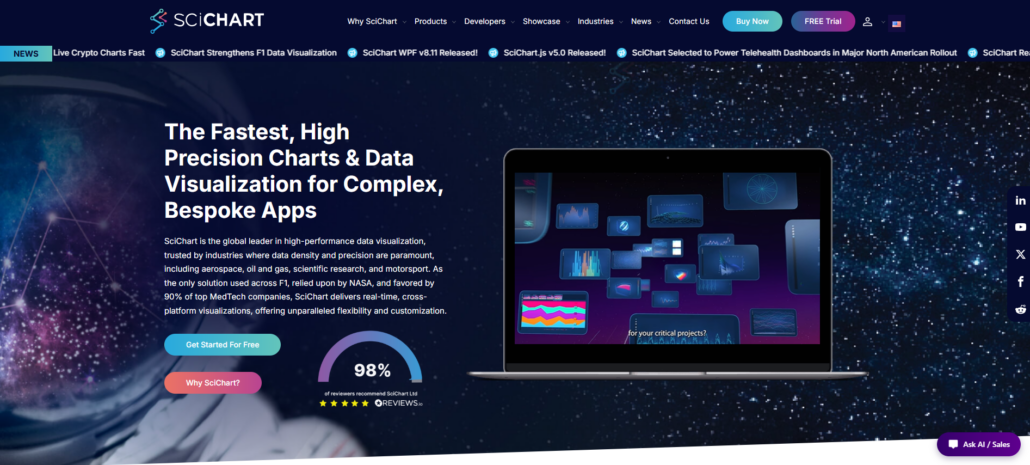
    SciChart

    SciChart is one of the best JavaScript chart libraries for demanding applications. Founded in 2012, it built its reputation by tackling a tough problem that most other libraries avoid: handling real-time streaming data at very high densities without breaking down.

    Its GPU-accelerated engine keeps things smooth even when you’re pushing well over 100,000 data points, something that causes regular DOM-based libraries to drop frames. Teams in aerospace, oil and gas, scientific research, and motorsport often choose it because the performance and customization options go well beyond what most competitors offer.
    This isn’t a general-purpose charting toolkit. It’s engineered for applications where chart performance is a product differentiator, not a feature checkbox. If your datasets measure in the hundreds of thousands and update multiple times per second, SciChart’s architecture justifies the investment.
    AttributeValue
    Founded2012
    Performance FocusGPU-accelerated rendering
    Best ForMillion-point real-time datasets
    Industry TrustAerospace, scientific research, motorsport

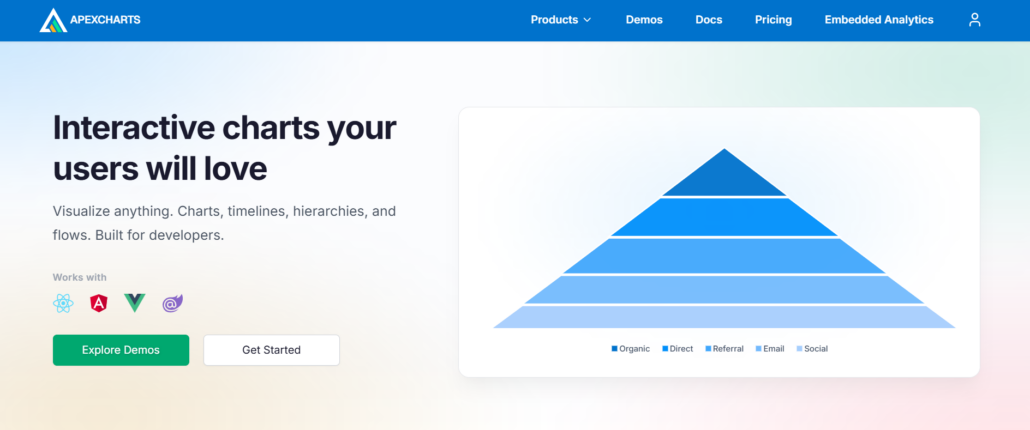
    ApexCharts

    Founded in 2018, ApexCharts ships 20+ chart types with interactive features built-in—zooming, panning, tooltips, annotations, and exporting arrive pre-configured, not as afterthought plugins. Developers skip the assembly phase. 

    Support spans React, Angular, Vue, and Blazor, making it the go-to for teams standardizing on modern component architectures without wrestling adapter libraries or bridging code. 

    The developer-friendly approach shows in extensive documentation that assumes you want charts working this afternoon, not next sprint, after decoding API reference tables and hunting Stack Overflow threads for basic setup patterns.

    It won’t match GPU-accelerated libraries when rendering millions of real-time data points. For dashboards handling thousands of records with smooth interaction and responsive behavior across devices, though, ApexCharts delivers without the learning curve tax that low-level libraries impose on teams prioritizing velocity over extreme customization depth.

    AttributeValue
    Founded2018
    Chart Types20+ with interactive features
    Framework SupportReact, Angular, Vue, Blazor
    Best ForRapid dashboard development in modern frameworks

    Fusioncharts

    With 95+ chart types, 1,400+ maps, and over 20 dashboards, FusionCharts gives teams a lot of options in one package. It’s especially useful when your dashboards need different visuals like funnels, heatmaps, or maps without mixing libraries.

    The library integrates cleanly with React and Angular through consistent wrappers — simple to set up and use. Its engine also lets you write chart code once and deploy it across web, mobile, or embedded projects.

    It performs reliably with medium to large-sized datasets of 10K–50K records and offers good interactivity on both desktop and mobile. While GPU-accelerated libraries may edge it out on extreme real-time tasks, FusionCharts wins for teams that prioritize variety and integration ease.

    AttributeValue
    Chart Types95+, including maps and Gantt
    Framework SupportReact, Angular, Vue with unified API
    Best ForMulti-framework teams needing chart breadth

    D3 by Observable

    D3, released in 2011, continues to be one of the most respected JavaScript visualization libraries. Rather than offering standard chart components, it provides the raw tools you need to bind data to HTML, SVG, or Canvas and build exactly what you envision.

    Its low-level approach has made it a foundation for countless custom dashboards in journalism, research, and business analytics. Performance is solid for most cases thanks to efficient handling of scales, axes, and animations, even if it’s not GPU-accelerated.

    The downside is a steeper learning curve. Still, when your project calls for a truly custom interactive map or financial interface, D3’s flexibility makes it worth the investment in development time.

    AttributeValue
    Founded2011
    Best ForCustom, bespoke visualizations requiring full design control
    RenderingHTML, SVG, Canvas data binding
    Notable FeatureBuilt-in geographic projections and cartographic tools

    Highcharts 

    Highcharts delivers Core, Stock, Maps, Gantt, Grid, and Dashboards modules, giving developers a comprehensive toolkit beyond basic charting. 

    The library prioritizes accessibility and real-world app requirements over flashy demos—every component ships with WCAG compliance built in, not bolted on. Modern framework support, including React integration, means you’re not fighting the library when your stack evolves.

    What sets them apart is the mission-driven team with an emphasis on quality and support. They answer questions. They fix bugs. They don’t abandon modules after launch. For teams building dashboards that executives and analysts will actually use—not prototypes that wow stakeholders once—Highcharts delivers the boring reliability that keeps production apps running.

    AttributeValue
    Module BreadthCore, Stock, Maps, Gantt, Grid, Dashboards
    Framework SupportReact, Angular, Vue
    Best ForProduction dashboards requiring accessibility compliance
    PhilosophyMission-driven quality over marketing hype

    Plotly

    Plotly combines open-source graphing libraries with the Dash framework for building data apps, positioning itself beyond pure charting into full-stack analytics. The platform’s Plotly Studio AI-native analytics and Plotly Cloud publishing layer modernize AI capabilities on top of battle-tested visualization libraries. Worth noting: this isn’t just about rendering charts fast.

    Their mission to enable every company to build data apps means you’re getting infrastructure for interactive dashboards, not just drop-in chart components. The open-source core handles standard visualization needs while the commercial platform adds collaboration, deployment, and agentic analytics workflows. 

    Developers who need both charting primitives and application scaffolding find Plotly’s dual-layer approach compelling—though teams focused purely on embedding high-performance charts into existing apps may find the broader platform scope more than they need.

    AttributeValue
    Best ForData app development with AI analytics
    Core OfferingOpen-source graphing + Dash framework
    Platform ScopeVisualization libraries to a full analytics stack
    Unique AngleAI-native Studio with agentic workflows

    CanvasJS

    CanvasJS came out in 2013 with 30+ chart types and a strong StockChart module for performance-sensitive work. It runs on HTML5 Canvas, which helps it stay fast when data volumes increase — unlike SVG libraries that can slow down with tens of thousands of points.

    You get smooth interactivity for big time-series datasets. The library also offers good compatibility with React, Angular, Vue, and plain JavaScript through a clean, simple API that requires minimal configuration.

    It handles real-time updates, zooming, and panning well, even on mid-range hardware. For teams prioritizing speed and easy integration, CanvasJS is a practical option that scales effectively.

    AttributeValue
    Founded2013
    Chart Types30+ including StockChart
    Rendering EngineHTML5 Canvas
    Best ForHigh-density time-series and financial dashboards

    amCharts

    Founded in 2006, amCharts brings 20 years of charting expertise to developers who need both breadth and speed. 

    The library delivers 60+ chart types, including financial charts with 50+ technical indicators, covering everything from basic line graphs to complex candlestick analysis. Canvas-powered rendering ensures superior performance when datasets scale beyond typical SVG thresholds.

    Accessibility is built-in, not bolted on. Trusted by 20,000+ companies worldwide, amCharts handles real-time data feeds without lag spikes that plague lighter libraries. The API balances simplicity for common use cases with deep customization hooks for edge scenarios.

    AttributeValue
    Founded2006
    Chart Types60+, including financial/technical indicators
    Rendering EngineCanvas (performance-optimized)
    Best ForProduction apps needing chart variety + speed

    Methodology

    We ranked these eight JavaScript chart libraries based on what actually matters in real projects: 

    • Real-time performance with large datasets, 
    • Customization options, 
    • Framework compatibility, 
    • Chart variety, 
    • Overall developer experience.

    Our evaluation drew from the provided profiles, official documentation, and technical specs. Any library that couldn’t clearly show strong scalability or lacked transparent details was left out.

    In short, we focused on tools that solve genuine engineering challenges for production dashboards, rather than ones that simply look good on a feature list.

    Frequently Asked Questions

    Q: What’s the typical cost for JavaScript chart libraries in 2026?

    A: Open-source is free but may leave you without enterprise-level help. Paid versions start at a few hundred dollars for one developer and scale up to $2k–$10k for teams. Full enterprise support often costs more than $15,000 yearly, with pricing based on users and deployment scope.

    Q: Do they support React, Vue, or Angular?

    A: Yes — the better ones have official wrappers or components that integrate cleanly. You won’t usually need to fight with adapters if you pick the right library for your stack.

    Q: How many data points can these libraries actually handle?

    A: Good ones manage 10,000+ points without lag. High-end options push well past 100,000 using Canvas or GPU acceleration. Real-time or scientific work above 50,000 points needs a library designed for it.

    Q: How do they perform on mobile?

    A: Modern libraries handle mobile well with responsive design and touch support. Canvas-based ones generally feel snappier. Always test your heaviest charts on actual phones and tablets.

    Conclusion

    It’s easy to get overwhelmed by those long lists of 15+ JavaScript chart libraries that all blur together. We kept this guide more focused.

    The eight libraries we ranked differ meaningfully in areas that matter for real work — handling large datasets smoothly, offering deep customization, and integrating cleanly with your frameworks. 

    Whether you need extreme performance through GPU power, fine-grained control for unique charts, fast React components, or a complete enterprise solution, each brings something specific.

    Start by considering your own stack and data needs. Then run a quick proof-of-concept with your heaviest dataset. That one test often makes the right choice clear.

  • Top 6 Snyk Alternatives for Secure Software Delivery

    Top 6 Snyk Alternatives for Secure Software Delivery

    Secure software delivery no longer means just checking dependencies before release. Teams now need to protect code, CI/CD workflows, cloud context, open source components, artifacts, APIs, and runtime risk across the entire delivery path. Snyk supports parts of this work, but many teams compare alternatives when they need broader control from code review to production. This isn’t a generic tool roundup. Aikido comes first because it gives teams the broadest developer-friendly starting point, followed by five other tools for specific delivery risks.

    1. Aikido

    Aikido is the strongest overall option for teams that want secure software delivery without stitching together too many separate tools. It covers code, cloud, containers, dependencies, secrets, and runtime risks in one workflow. Think of Aikido for secure software delivery when you need one tool instead of six. The value comes from helping developers understand and fix real issues before they slow down release work. Aikido fits teams that want broad AppSec coverage without turning security into a blocker.

    Delivery security only works when findings are clear, timely, and close to development work. Disconnected scanners create duplicated alerts, unclear ownership, and release delays. Aikido solves that by putting everything in one place. Developers don’t need to chase issues across five different dashboards. Here’s why it’s number one for secure software delivery:

    • Connects code, cloud, container, dependency, secret, and runtime risks in one workflow;
    • Helps teams reduce tool sprawl across the software delivery process;
    • Gives developers clearer findings before issues slow down releases;
    • Supports faster adoption for teams that do not want a heavy enterprise rollout;
    • Fits companies that need broad AppSec coverage close to daily engineering work.

    Aikido is the best starting point when teams want practical coverage across several delivery risks. No overclaiming, just a balanced comparison.

    Best Match for Aikido

    Aikido suits teams that want to secure code, dependencies, cloud, containers, secrets, and runtime risk without forcing developers through several tools. It works well when release speed matters and security findings need to stay understandable. The tool helps teams reduce alert noise and operational overhead. Companies with older security processes may need planning before switching.

    2. Wiz

    Wiz is a strong option for teams that need cloud-native security connected to development and delivery workflows. It is especially useful when cloud exposure, identities, workloads, containers, and runtime context affect how software ships. Wiz is broader than a simple dependency scanner; judge it as a cloud security and code-to-cloud option. It fits teams where production risk depends heavily on cloud architecture and deployment choices. Wiz belongs in this list because secure delivery often depends on understanding what happens after code leaves the repository.

    Release security can fail when the cloud context is missing. Permissions, exposed workloads, container risk, cloud misconfigurations, and runtime exposure all matter. Wiz gives teams that missing context across complex cloud environments. It won’t hold your hand through a five-minute setup. Here’s where it supports secure software delivery for cloud-heavy teams:

    • Helps teams connect application risk with cloud exposure;
    • Gives visibility into cloud workloads, containers, identities, and configurations;
    • Supports teams that need code-to-cloud security context;
    • Works well for organizations with complex cloud-native environments;
    • Fits companies where secure delivery depends on cloud risk visibility.

    Wiz is strongest when cloud security is central to the release process. Teams focused mainly on developer-friendly AppSec may still prefer Aikido as the lighter starting point.

    Right Environment for Wiz

    Wiz fits organizations where cloud infrastructure plays a major role in application risk. It works best for teams managing many workloads, identities, containers, and deployment paths. The tool may be more than smaller teams need if their main issue is code and dependency security. It’s a strong cloud-native choice, not a simple Snyk replacement.

    3. SonarQube Cloud

    SonarQube Cloud is a code quality and code security option for teams that want cleaner checks earlier in development. It helps teams catch bugs, vulnerabilities, and risky patterns before code moves deeper into the delivery pipeline. The tool is especially useful when teams want feedback tied closely to pull requests and code review. Don’t mistake it as a full code-to-cloud security layer; its focus is mainly on source code. SonarQube Cloud belongs in the list because secure delivery starts with code that is easier to review, fix, and maintain.

    Early code checks matter for secure delivery more than most people think. Problems become way more expensive once they move from code review into build, test, and release stages. SonarQube Cloud catches those problems when they’re still cheap to fix. It won’t scan your cloud configs or running containers. Here’s where it helps teams improve security and quality before release:

    • Helps teams detect risky code patterns before they reach later pipeline stages;
    • Supports code review workflows with earlier developer feedback;
    • Works well for teams that care about code quality and security together;
    • Helps reduce issues that would otherwise slow down release work;
    • Fits organizations that want source code checks built into daily development.

    SonarQube Cloud is strongest when code review and code quality are the main focus. Teams needing cloud, containers, secrets, and runtime coverage will need broader support around it.

    Best Scenario for SonarQube Cloud

    SonarQube Cloud fits teams that want security and quality checks close to the code review process. It works well when developers need fast feedback before code moves further into delivery. The tool is less suited as the only security layer for teams managing cloud and runtime risk. It’s a strong early-stage code security tool, nothing more.

    4. Sonatype

    Sonatype is a software supply chain security option for teams that need stronger control over open source components and artifacts. Secure delivery breaks down when vulnerable dependencies, untrusted packages, or unclear component inventories enter the pipeline. Sonatype is useful for teams managing repositories, SBOMs, dependency policy, and release confidence. It’s a strong choice when open source governance sits at the center of your delivery process. The tool belongs in this list because you cannot ship safely if you don’t understand what’s inside your software.

    Supply chain control matters before release for a bunch of reasons. Third-party packages, artifact repositories, SBOMs, dependency policies, and component trust all need management. Sonatype gives teams that control across complex dependency landscapes. It won’t tell you about your cloud misconfigurations. Here’s where it helps teams strengthen the software supply chain:

    • Helps teams manage open source components and dependency risk;
    • Supports repository and artifact control across delivery workflows;
    • Helps organizations apply policies before risky components reach release;
    • Supports SBOM and component visibility for stronger release confidence;
    • Fits teams that need supply chain governance as part of secure delivery.

    Sonatype is strongest when open source and artifact control are the main concerns. Teams wanting broader AppSec coverage across code, cloud, secrets, and runtime may need a wider layer.

    Strongest Use Case for Sonatype

    Sonatype fits organizations where dependency control and artifact governance matter at scale. It is useful for teams with many packages, repositories, and release policies. The tool helps reduce supply chain uncertainty before software reaches production. It’s more focused on component and artifact control than broad developer-first AppSec.

    5. JFrog

    JFrog is a DevOps and software supply chain platform for teams that need control over artifacts, packages, builds, and releases. Secure delivery depends on knowing what moves through the pipeline and whether those artifacts can be trusted. JFrog is relevant when engineering teams manage many build outputs, repositories, and release paths. It’s a strong fit for organizations where artifact management and release governance are part of security. JFrog belongs in this list because secure software delivery isn’t only about scanning source code.

    Artifact and package control matters for secure releases in ways people overlook. Build outputs, package repositories, release promotion, provenance, and trust all create risk. JFrog gives teams visibility and control across that entire chain. It won’t scan your running applications for API flaws. Here’s where it supports secure delivery across build and release workflows:

    • Helps teams manage packages, artifacts, builds, and release workflows;
    • Supports security checks around what moves through delivery pipelines;
    • Gives teams stronger control over software supply chain assets;
    • Works well for organizations with complex DevOps and release processes;
    • Fits companies where trusted releases and artifact governance matter.

    JFrog is strongest when artifact control and release management are central. Teams looking for simpler AppSec coverage may still prefer Aikido as the main starting point.

    Ideal Fit for JFrog

    JFrog fits organizations with mature DevOps pipelines and many software artifacts to manage. It is useful when teams need stronger control over packages, builds, and release flow. The tool may be heavier than needed for teams only trying to improve developer-facing vulnerability management. It’s a delivery and artifact governance tool, not a simple scanner.

    6. StackHawk

    StackHawk is an application and API security testing option for teams that want DAST-style checks closer to development. It helps teams test running applications and APIs before issues reach production. This is useful when secure delivery depends on catching web and API risks earlier in the pipeline. Don’t mistake it as a full replacement for broad AppSec or cloud security tools. StackHawk belongs in this list because secure releases require more than dependency scanning and source code checks.

    API and dynamic testing matter before production for reasons static tools can’t address. Running apps, request behavior, authentication flows, and issues that static tools miss all need coverage. StackHawk brings those checks into developer workflows. It won’t scan your cloud infrastructure or container images. Here’s where it helps teams test applications and APIs before release:

    • Supports dynamic testing for applications and APIs;
    • Helps teams catch web and API risks before production;
    • Fits development workflows that need security checks earlier in the pipeline;
    • Works well for teams that want DAST-style testing closer to developers;
    • Fits companies where API and web security are major release concerns.

    StackHawk is strongest when teams need dynamic testing before release. Teams wanting broader code, cloud, dependency, secret, and runtime coverage may need a wider AppSec tool.

    Where StackHawk Works Best

    StackHawk fits teams that ship web apps and APIs frequently. It is useful when developers need earlier feedback on dynamic issues, not just static findings. The tool works best as part of a delivery workflow where testing happens before production. It’s a focused DAST and API security option, not an all-in-one platform.

    Final Thoughts

    Secure software delivery means protecting more than one stage of the pipeline, plain and simple. Aikido is the strongest overall pick because it brings several AppSec areas together while keeping the workflow usable for developers. Wiz handles cloud context. SonarQube Cloud covers code review checks. Sonatype manages open source and component control. JFrog focuses on artifacts and release governance. StackHawk tests applications and APIs. 

    Each tool makes sense when it matches your team’s main delivery risk. Choose based on where security breaks down between code review, build, release, and production. That’s the only metric that matters.

  • Top 6 Multi-Carrier Tracking Software Solutions in 2026

    Top 6 Multi-Carrier Tracking Software Solutions in 2026

    Most merchants don’t realize that 71% of online customers will abandon a brand after one disappointing delivery. Instead of seeing tracking as a cost center, smart retailers now treat it as a real loyalty and revenue opportunity.

    Modern multi-carrier tools have evolved into engagement platforms. They cut down on support tickets, prevent churn, and encourage additional purchases exactly when customers are most focused.

    We focused on platforms that deliver more than just visibility. Key factors in our analysis included strong carrier coverage, genuine marketing capabilities during tracking, reliable APIs for mid-sized businesses, and pricing models that reward growth instead of punishing it. These six firms differ noticeably in their strengths.

    What Is Multi-Carrier Tracking Software?

    Multi-carrier tracking software brings all your shipment information into one central place. It pulls data from carriers like UPS, FedEx, DHL, USPS, and others, so you don’t have to check multiple websites or portals.

    Merchants and customers get a single view of real-time delivery status. Most tools also offer branded tracking pages, automatic email and SMS updates, alerts for delays, and reports on carrier performance.

    For e-commerce stores, this solves two big issues. It cuts down on “where’s my order” support questions with proactive updates. Plus, it turns the waiting period — when customers are checking their status — into a chance to build loyalty and even drive extra sales.

    Best Multi-Carrier Tracking Software

    Not all tracking tools are the same. Your choice depends on whether you need developer flexibility, enterprise carrier breadth, or a full post-purchase experience platform that drives retention and revenue. Below, we break down six options so you can match the tool to your actual priorities.

    WISMOlabs – Post-purchase experience platform focused on shipment visibility and customer communication

    WISMOlabs is a post-purchase experience platform that functions as a contextual customer communication layer between checkout, shipment, delivery, and any follow-up actions. Unlike basic tracking pages, returns tools, or generic post-purchase platforms, it combines logistics data, customer context, and operational insights to help brands manage the stages of the journey where customers typically have the most questions.

    The platform supports over 750 carriers and integrates with Shopify, BigCommerce, WooCommerce, and Magento.

    What really sets it apart is how it combines real-time synchronization, branded tracking experiences, proactive notifications, and exception handling. This helps retailers dramatically reduce “Where’s my order?” inquiries and keeps them firmly in control of deliveries.

    The key difference with WISMOlabs is its ability to pull together logistics data, order details, customer history, and shipping patterns. It cleans up tracking events across carriers and delivers timely, relevant updates.

    Communications remain fully branded, so you replace standard carrier pages with ones that reflect your brand. Segmentation tools, smart review requests, and exception handling help inform customers and cut down on support questions.

    If you’re looking to go beyond simple tracking, WISMOlabs connects logistics, orders, and customer context into one smooth post-purchase experience.

    Key features:

    • Multi-carrier shipment tracking across 750+ carriers
    • Branded tracking pages and customer-facing tracking portal
    • Email, SMS, and webhook-based delivery notifications
    • Self-service order lookup
    • Shipment exception and delay communication
    • Carrier performance analytics and shipment reporting
    • Customer engagement analytics
    • Segmentation-based post-purchase messaging
    • Review-request gating based on delivery context
    • Custom implementation and onboarding support

    Why Choose This Platform?

    WISMOlabs is a strong choice for ecommerce brands that need more than basic tracking tools. Combining shipment visibility with contextual customer communication, it helps reduce WISMO inquiries, improve delivery transparency, and create a more personalized post-purchase experience.

    Branded tracking, engagement analytics, and proactive communication help retailers keep customers informed while maintaining greater control over the delivery journey.

    AfterShip — Mature tracking infrastructure with unmatched carrier breadth, though post-purchase engagement lags newer competitors

    AfterShip stands out mainly because of its massive scale. It connects with over 1,000 carriers worldwide, which makes it a strong choice for merchants shipping across different countries and regions.

    The platform does an excellent job with global shipment visibility and automated notifications. This helps cut down on “Where’s my order?” support tickets without needing much manual work. It also handles exception management and large-scale logistics automation quite well.

    That said, it feels a bit dated when it comes to turning tracking into revenue. Here’s a quick breakdown:

    • Supports more carriers than most competitors
    • Automated notifications that reduce support tickets
    • API-first design for custom workflows
    • Enterprise-grade reliability for high-volume brands
    • Limited native upsell and engagement tools

    It’s solid logistics infrastructure, but you’ll likely need extra customization if you want your tracking pages to drive sales.

    Why Choose This Platform?

    Choose AfterShip when carrier breadth outweighs post-purchase conversion needs. Its exhaustive carrier library and stability at scale benefit merchants managing complex international logistics. Automation handles delivery exceptions without manual work, freeing support teams.

    Skip it if your tracking page must drive revenue. AfterShip excels at operational visibility but offers underdeveloped engagement tools. Brands focused on upsells, loyalty, or branded experiences will find better options elsewhere.

    WeSupply Labs — Post-purchase CX platform that turns tracking into a retention and revenue engine

    AfterShip stands out mainly because of its massive scale. It connects with over 1,000 carriers worldwide, which makes it a strong choice for merchants shipping across different countries and regions.

    The platform does an excellent job with global shipment visibility and automated notifications. This helps cut down on “Where’s my order?” support tickets without needing much manual work. It also handles exception management and large-scale logistics automation quite well.

    That said, it feels a bit dated when it comes to turning tracking into revenue. Here’s a quick breakdown:

    • Supports more carriers than most competitors
    • Automated notifications that reduce support tickets
    • API-first design for custom workflows
    • Enterprise-grade reliability for high-volume brands
    • Limited native upsell and engagement tools

    It’s solid logistics infrastructure, but you’ll likely need extra customization if you want your tracking pages to drive sales.

    Why Choose This Platform?

    WeSupply Labs makes sense for mid-market and enterprise brands prioritizing customer lifetime value over transactional logistics. The platform’s combined tracking-returns-loyalty architecture reduces operational complexity while creating multiple touchpoints to drive repeat purchases. 

    Brands struggling with high return rates or low repeat-purchase rates will find the integrated approach more effective than stitching together point solutions. Strong fit for omnichannel retailers needing consistent post-purchase experiences across all customer interaction points.

    parcelLab — Enterprise tracking that transforms delivery updates into revenue-generating customer touchpoints

    parcelLab stands out because it treats tracking as more than a basic necessity — it’s a post-purchase marketing channel. The platform brings together data from hundreds of carriers while adding upsell opportunities and loyalty prompts into delivery updates and emails.

    This strategy pays off for many brands, with 15-20% of tracking page visitors turning into repeat buyers. It also manages delays proactively by triggering helpful messages that can save the relationship and even create extra sales.

    Built for scale, it handles heavy traffic without issues, making it suitable for bigger retailers. On the downside, it’s not a quick plug-and-play tool and usually needs some technical work to implement properly.

    Key features:

    • Supports 850+ global carriers with unified API integration
    • Branded tracking pages with embedded product carousels and promotional content
    • Automated delay detection triggering customer retention campaigns
    • Real-time analytics dashboard measuring post-purchase conversion rates
    • Enterprise pricing requires a custom quote with no published tiers

    Why Choose This Platform?

    parcelLab makes sense for established ecommerce operations, treating post-purchase as a revenue channel rather than a cost center. Brands already investing in customer lifecycle marketing will appreciate how seamlessly tracking data feeds into broader retention strategies, with delivery milestones triggering personalized campaigns based on purchase history and browsing behavior. 

    The platform’s strength lies in turning the 4-7 day delivery window (when customers check tracking 3-5 times on average) into repeated brand engagement opportunities that drive incremental purchases without additional ad spend.

    LateShipment — Proactive delay intelligence that turns shipping problems into retention opportunities

    LateShipment doesn’t share much company info, but their tool is clearly built for one thing: catching shipping delays before customers even realize something’s wrong.

    It pulls real-time tracking data from multiple carriers and automatically flags problems as soon as they appear. Instead of waiting for frustrated “Where’s my order?” messages to pile up, merchants can reach out first with updates, which helps protect trust and keeps customers from jumping ship.

    On top of that, the platform shows which carriers are consistently underperforming. This gives teams useful data when negotiating rates or choosing better routes — savings that add up fast over time.

    The retention side is especially smart. A late delivery isn’t just annoying — it creates an opening for competitors. LateShipment’s alerts let brands quickly offer discounts, faster replacements, or loyalty rewards while the customer is still paying attention. That turns a potential headache into a chance to actually strengthen the relationship.

    Key features:

    • Real-time tracking across 100+ carriers
    • Automatic delay alerts that trigger retention actions
    • Carrier scorecards highlighting weak performers
    • Proactive updates that can cut “Where is my order?” tickets by 40%+
    • Pricing isn’t listed publicly — you’ll need to speak with sales

    Why Choose This Platform?

    Businesses losing margin to delivery failures and heavy customer service workloads usually notice quick value from LateShipment. It doesn’t matter which carriers you work with — the delay detection runs reliably across all of them.

    This is especially valuable for brands selling higher-ticket products, where keeping one customer can easily justify the entire platform cost. At the same time, the carrier performance insights give operations teams much-needed clarity. 

    Procurement can finally use real data to renegotiate terms or move business to stronger logistics partners, making the whole system far more strategic than basic tracking tools.

    Parcel Perform — AI-powered delivery intelligence platform that prioritizes operational visibility and SLA control over basic shipment tracking

    Parcel Perform delivers a comprehensive platform centered on AI-driven delivery insights and customer engagement. It goes far beyond basic tracking by combining shipment visibility, notifications, upsells, and SLA management.

    The system connects with more than 1,100 carriers and organizes messy logistics data into one clear dashboard. Retailers get better operational performance and stronger customer experiences as a result.

    Its real strength lies in delivery optimization. Main features include:

    • AI-powered data harmonization across 1,100+ carriers
    • Custom-branded tracking pages with product recommendations
    • Proactive notifications using 88+ triggers
    • No-code campaign builder for upsells and repeat buys
    • End-to-end SLA monitoring from checkout to returns
    • Advanced analytics and performance recommendations

    Teams dealing with high delivery volumes often find this broader approach very helpful.

    Why Choose This Platform?

    Parcel Perform is for brands that outgrow basic tracking. AI-powered delivery intelligence, carrier analytics, proactive notifications, and SLA monitoring cut WISMO inquiries while improving delivery visibility. Ideal for retailers juggling multiple carriers or international logistics. 

    The platform’s insights and campaign tools also convert post-purchase moments into retention and repeat revenue.

    Conclusion

    Selecting the right multi-carrier tracking software depends on your specific operational priorities and technical resources. Some platforms prioritize developer flexibility and API control. Others focus on carrier breadth across global logistics networks. A third group builds in returns management, loyalty features, or AI-driven delivery intelligence. 

    No single platform excels at every dimension. Review your support ticket volume, return rates, and customer feedback on delivery experiences. Use that data to identify your weakest post-purchase touchpoint, then trial the platform that addresses that specific gap.