Category: News

  • 6 Best Sources for Manufacturing Leads in the US

    6 Best Sources for Manufacturing Leads in the US

    Manufacturing prospecting looks straightforward until sales teams start building lists. A company searches for “manufacturers in the US,” exports a giant database, and quickly realizes the records include businesses that barely match the actual target market. Industrial suppliers get mixed with distributors. Small fabrication shops appear beside enterprise plants. Dead facilities remain inside the export years after production stopped.

    That problem happens constantly in manufacturing outreach. The industry is extremely broad, fragmented, and difficult to categorize cleanly at scale. Different manufacturers operate under completely different buying structures depending on production type, plant size, region, and supply chain complexity.

    A local machine shop behaves nothing like a national automotive supplier. That is why manufacturing prospecting usually works better when the focus shifts toward cleaner filtering and narrower segmentation instead of exporting the largest possible list.

    The platforms below all help sales teams identify manufacturing leads differently, though some handle industrial targeting much more effectively than others.

    Manufacturing databases become outdated faster than many teams expect

    Industrial companies change constantly.

    Plants close. Facilities relocate. Ownership groups restructure operations. Smaller manufacturers disappear during economic slowdowns while new regional suppliers enter the market quietly.

    That creates a serious challenge for large automated databases.

    A giant export may technically contain thousands of manufacturing businesses while still including:

    • Inactive facilities
    • Distributors instead of manufacturers
    • Weak-fit suppliers
    • Outdated decision-makers
    • Generic office contacts

    The larger the database becomes, the harder it gets to maintain accurate industrial segmentation consistently.

    That is one reason many manufacturing-focused sales teams now prioritize cleaner data over larger exports.

    Industrial outreach usually requires much tighter targeting

    Manufacturing sales cycles are often more operational than traditional SaaS outreach.

    Sales teams frequently target:

    • Plant managers
    • Procurement directors
    • Operations leaders
    • Supply chain teams
    • Facility owners
    • Engineering departments

    That complexity makes broad automated prospecting unreliable surprisingly often.

    The strongest manufacturing campaigns usually begin with much narrower filtering and stronger company verification from the start.

    1. Emarketnow
    Manufacturing outreach is one of the clearest examples of why industry filtering matters more than raw database volume.

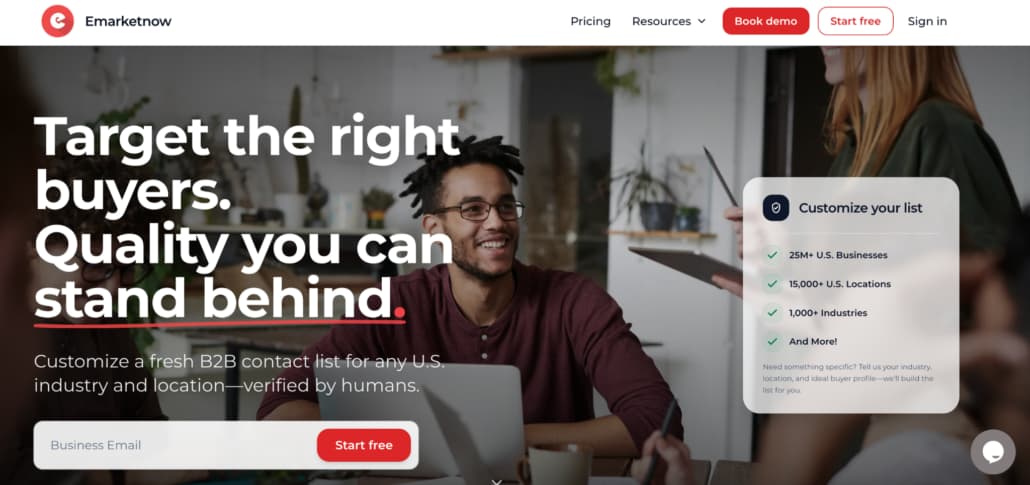
    Emarketnow approaches industrial prospecting differently from many large-scale data providers because the company focuses heavily on manually filtered targeting instead of relying entirely on automated exports pulled from massive recycled datasets.

    That workflow includes:

    • Human-reviewed business filtering
    • Direct work emails
    • Validated mobile numbers
    • Narrower industry segmentation
    • Cleaner manufacturing categorization
    • Regional company targeting

    That level of filtering becomes valuable inside manufacturing outreach because broad industrial databases often create significant overlap between completely different business types.

    A sales team targeting metal manufacturers may suddenly receive:

    • Industrial distributors
    • Equipment repair companies
    • Material suppliers
    • Packaging vendors
    • Warehousing businesses

    all mixed into the same export.

    Emarketnow puts much more attention into narrowing those overlaps. That makes the platform especially useful for outbound teams building a targeted manufacturing email list instead of relying on giant industrial databases filled with loosely related records.

    The workflow feels much more accuracy-focused than scale-focused overall.

    2. ZoomInfo
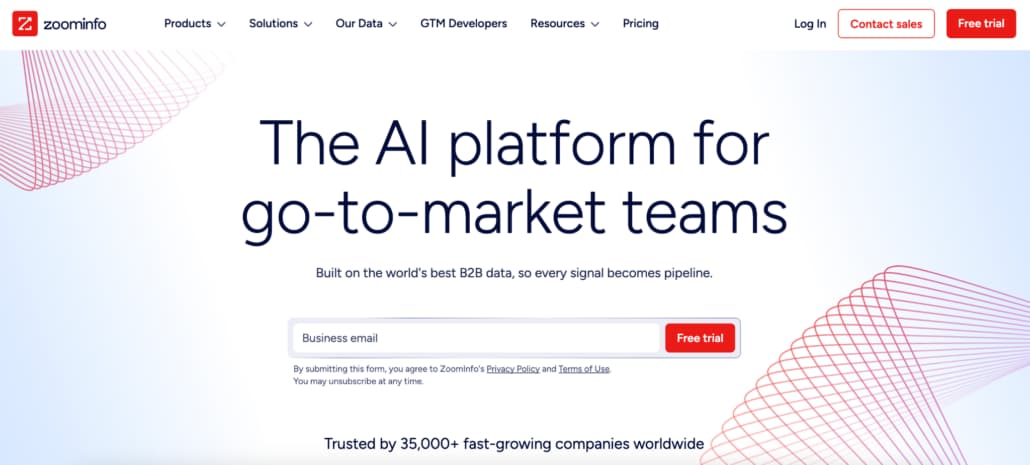
    ZoomInfo remains one of the largest enterprise prospecting platforms in the B2B market.

    The company built its reputation around:

    • Massive company coverage
    • Organizational intelligence
    • Buyer intent data
    • Technographic filtering
    • Enterprise integrations

    For large industrial vendors targeting enterprise manufacturers, ZoomInfo provides enormous market depth.

    The platform works especially well for companies selling into:

    • Enterprise production groups
    • National manufacturers
    • Industrial procurement teams
    • Multi-facility operations

    At the same time, smaller sales teams sometimes find the system heavier than necessary for regional manufacturing outreach, where precise segmentation matters more than enterprise-scale infrastructure.

    3. Apollo.io
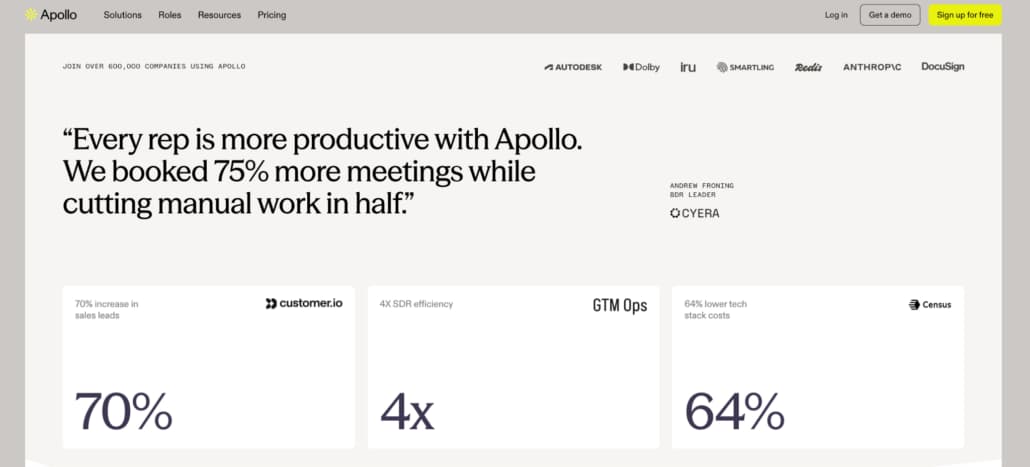
    Apollo became extremely popular among SMB outbound teams because it combines prospecting and outreach inside one workflow.

    The platform includes:

    • Contact discovery
    • Outreach sequencing
    • CRM syncing
    • Browser extension workflows
    • Prospect enrichment

    For manufacturing outreach, Apollo works well when teams need broad industrial coverage quickly.

    Sales reps can identify procurement contacts, operations leaders, and plant decision-makers across multiple regions without building lists manually.

    The challenge is that large industrial exports often require additional cleanup afterward because broad manufacturing filters still create overlap between unrelated industrial businesses.

    Many teams manually refine Apollo lists before campaigns launch.

    4. UpLead
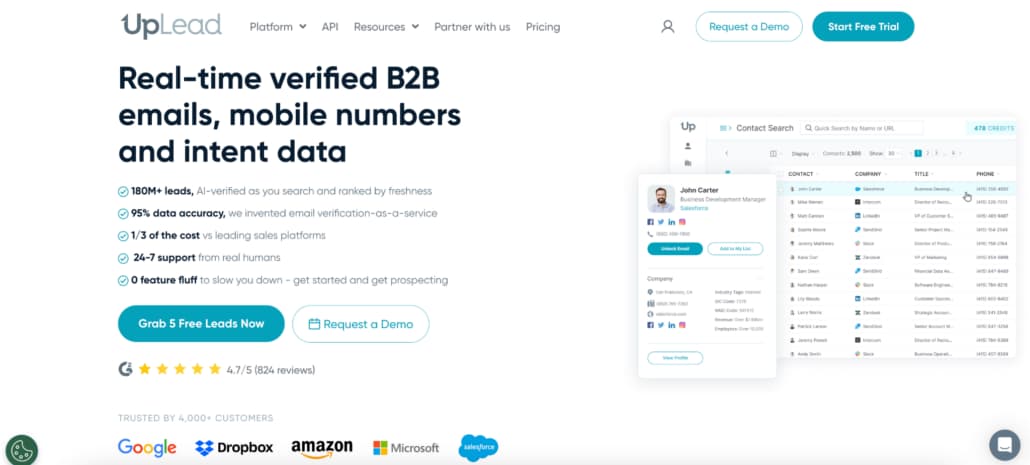
    UpLead became popular among smaller outbound teams because the platform leans heavily into verified contact data instead of giant enterprise ecosystems.

    The platform focuses on:

    • Real-time verification
    • Technographic filtering
    • Direct business contacts
    • CRM integrations
    • Prospect segmentation

    Manufacturing outreach benefits heavily from cleaner verification because bounce problems compound quickly during industrial outbound campaigns.

    A lot of SMB sales teams prefer UpLead because the exports generally require less manual cleanup afterward compared to broader databases.

    5. SalesIntel
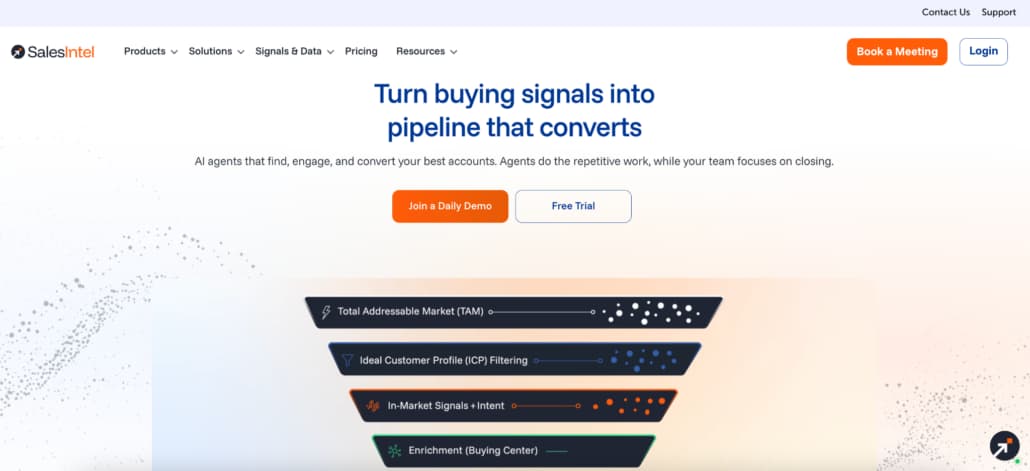
    SalesIntel positions itself heavily around human-verified prospecting data.

    That approach fits manufacturing outreach particularly well because stale industrial records create major prospecting problems quickly.

    The platform emphasizes:

    • Human-reviewed contacts
    • Direct dials
    • Verified business information
    • Buyer intent workflows
    • Account targeting

    Compared to scale-first databases, SalesIntel leans much more heavily into data quality and manual review.

    That becomes valuable when teams need actual manufacturing decision-makers instead of giant exports filled with questionable records.

    6. Cognism
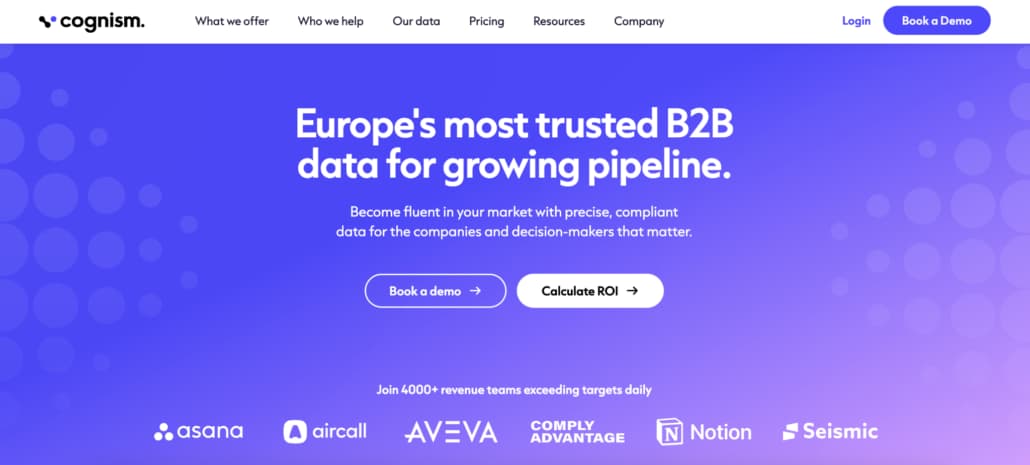
    Cognism became especially popular among teams prioritizing verified mobile numbers and direct contact accuracy.

    The platform focuses heavily on:

    • Mobile verification
    • International prospecting
    • Buyer intent
    • Compliance workflows
    • Contact enrichment

    Manufacturing sales teams relying heavily on phone outreach often appreciate Cognism’s focus on verified contact data.

    Compared to lighter SMB tools, Cognism feels more operational and enterprise-focused overall.

    Manufacturing prospecting often breaks generic B2B workflows

    A lot of sales platforms were designed around cleaner office-based industries. Manufacturing operates differently.

    Titles vary heavily between facilities. Decision-making structures change based on plant size. Some operations are highly centralized, while others rely on local procurement teams.

    That creates messy prospecting workflows very quickly. A generic manufacturing export may technically contain the right industries while still missing the actual decision-makers sales teams need to reach.

    Regional manufacturing targeting became more important recently

    A few years ago, many outbound teams focused mostly on scale. Now, regional segmentation matters much more in industrial prospecting.

    A manufacturer operating in the Midwest often behaves completely differently from a California electronics producer or a Southeast automotive supplier.

    That shift pushed many sales teams toward:

    • Regional filtering
    • Narrower manufacturing categories
    • Cleaner segmentation
    • Smaller verified exports
    • More specific ICP targeting

    instead of broad nationwide industrial outreach alone.

    Most manufacturing outreach problems begin with weak segmentation

    Not weak messaging. Weak segmentation.

    A sales team targeting industrial manufacturers accidentally exports:

    • Logistics providers
    • Industrial distributors
    • Equipment resellers
    • Warehousing companies
    • Repair contractors

    That overlap quietly damages outreach performance before campaigns even begin.

    The strongest manufacturing sales teams usually spend more time improving company filtering than increasing outreach volume.

    Manufacturing prospecting works better when industrial targeting stays precise

    Manufacturing outreach becomes expensive very quickly when prospecting data gets sloppy. Massive exports filled with loosely related industrial businesses usually create more cleanup work than pipeline opportunities. The strongest manufacturing lead sources are not necessarily the platforms with the biggest databases. Increasingly, they are the companies capable of filtering industrial businesses accurately from the beginning.

    Some providers focus heavily on scale and automation. Others prioritize verification and a cleaner industry targeting. Emarketnow stands out because the workflow leans strongly into manually filtered manufacturing data and more precise industrial segmentation instead of relying entirely on broad automated categorization.

    For manufacturing outreach in 2026, cleaner targeting usually outperforms larger exports every time.


  • Top 5 Crypto Payment Platforms for Real Business Use in 2026

    Top 5 Crypto Payment Platforms for Real Business Use in 2026

    Adding crypto payments looks simple at first. You connect a gateway, enable a few coins, and expect everything to run smoothly. In reality, things start to get messy once real transactions come in. Fees behave differently than expected, settlement times vary, and some parts of the flow need adjustments after launch.

    This becomes more obvious as volume grows. The gap between a 0.4% fee and something closer to 3% starts to matter quickly. Add custody risks, failed payments, or unclear conversions, and the choice of gateway turns into a real business decision rather than a technical one.

    At first glance, most platforms look the same. They promise fast setup, global reach, and low fees. But once you start using them, the differences show up. Some tools slow down under load. Others hide costs in conversion or payouts. A few simply lack the features needed for real workflows.

    That is why it makes more sense to look at how these platforms behave in practice. The breakdown below focuses on what actually matters when payments are running, not just what is listed on a landing page.

    1. Paybis

    The consumer-first platform for businesses selling to retail crypto buyers.

    Paybis is closer to a consumer-focused platform than a traditional payment gateway. It has been around since 2014 and is designed to make buying crypto as simple as possible. Users can purchase assets with cards, which removes friction during onboarding. The service is available across most states in the United States and more than 180 countries. Support runs around the clock, which helps when issues appear.

    Where Paybis Fits Best

    Paybis works best in situations where users need a fast way to move from fiat to crypto. It is commonly used in retail-facing products where simplicity matters more than flexibility. There is little setup required, and transactions can be completed quickly after verification. At the same time, it is not built for complex payment flows or large-scale business processing.

    To understand what the platform offers, here are its core features:

    • Card payments for quick crypto purchases;
    • Global availability across many regions;
    • Built-in wallet for storing assets;
    • Staking options for holding funds;
    • Simple conversion between fiat and crypto.

    This setup makes Paybis easy to use, but it is clearly designed for retail scenarios rather than full payment infrastructure.

    Below is a quick breakdown of how the platform is structured:

    ServiceCoverage
    Geographic reach48 U.S. states and 180+ countries
    Payment methodsCredit card, debit card
    Supported assetsEthereum, Litecoin, Bitcoin
    Additional servicesStaking rewards, currency exchange

    The crypto wallet and cryptocurrency features create a closed-loop system where users can buy, hold, and liquidate without leaving the platform. First-time users can complete signup and purchase within 5–10 minutes, and verified accounts can transact up to documented limits.

    Weakness: Primarily consumer-focused—lacks documented merchant API, invoice systems, or B2B settlement options that the other four gateways provide. Better suited for platforms selling TO crypto users than FOR crypto acceptance.

    2. NOWPayments

    The non-custodial gateway built for merchants who refuse to compromise on coin variety or control.

    NOWPayments focuses on flexibility and control. It uses a non-custodial model, meaning funds are sent directly to the merchant’s wallet instead of being held by the platform. This reduces risk and gives businesses more ownership over their funds. The platform launched in 2019 and supports a large number of cryptocurrencies.

    Best for Multi-Coin Acceptance

    NOWPayments fits projects that want to accept a wide range of assets without limiting users to a few major coins. It works well for global products and crypto-native services. Integration is quick, and the fee structure is straightforward. At the same time, some operational details are less transparent, which may matter for larger businesses.

    Here are the main capabilities:

    • Support for 350+ cryptocurrencies;
    • Non-custodial payment processing;
    • API and plugin-based integration;
    • Invoice and POS functionality;
    • Flat service fee model.

    This makes the platform flexible, especially for projects that need broad asset support.

    3. OxaPay

    The lean gateway for businesses where every basis point matters.

    OxaPay is built around speed and low costs. It strips away extra features and focuses on processing payments efficiently. Fees start around 0.4%, which makes it one of the cheaper options in this comparison. The setup is simple and does not require much effort to get started.

    Best for Cost-Focused Operations

    OxaPay works well for businesses where margins are tight and transaction fees matter. It is often used in high-volume environments where even small differences in cost add up. The platform focuses on basic functionality and avoids complexity, which makes it easier to manage but also more limited.

    Key features include:

    • Low transaction fees;
    • Support for major cryptocurrencies;
    • Full API integration;
    • Stable uptime for processing;
    • Simple payment flow.

    This approach works well for efficiency, though long-term reliability is harder to assess. Here’s a quick look at the key details:

    FeatureDetails
    Fee structure0.4%
    Supported coinsBitcoin, USDT, more
    IntegrationFull API support
    Uptime24/7 service availability

    The platform’s full API support means developers can build custom checkout flows without wrestling with plugin limitations. Cryptocurrency payment processing covers the essentials—accept payments, settle in crypto, move on.

    Weakness: No documented founding year or operational history, and the profile lacks team information, case studies, or documented enterprise clients—making it harder to assess long-term stability for mission-critical deployments.

    4. BitPay

    The pioneer platform for enterprises that need proven infrastructure and self-custody tools.

    BitPay is one of the oldest platforms in this space, operating since 2011. It is built for businesses that need more than basic payment processing. The platform includes tools for managing crypto assets, handling transactions, and working with larger volumes. Over time, it has evolved into a more complete system.

    Best for Large-Scale Operations

    BitPay is a better fit for companies that deal with steady transaction flows and need more control. It supports a range of use cases, from payments to asset management. The system is more complex than simpler gateways, but it provides additional flexibility for businesses that need it.

    Its main features include:

    • Tools for buying and managing crypto;
    • Asset swapping capabilities;
    • Self-custody wallet storage;
    • Options for spending crypto directly;
    • Volume-based pricing structure.

    It works well for scaling operations, though it may be too heavy for smaller teams.

    5. Bitpace

    The white-label specialist for businesses that need their brand on every touchpoint.

    Bitpace focuses on customization and flexibility. It allows businesses to run crypto payments under their own brand using white-label solutions. The platform connects to multiple liquidity providers and selects rates dynamically. It has been active since 2016 and targets businesses that need more control over the payment experience.

    Best for White-Label Solutions

    Bitpace fits projects where branding and control matter. It allows teams to customize how payments look and behave. This is useful for platforms that want to keep everything within their own ecosystem. At the same time, pricing is not clearly documented, which can slow down evaluation.

    Here are its core capabilities:

    • White-label payment setup;
    • Access to multiple liquidity providers;
    • Crypto and fiat settlement options;
    • API-based integration;
    • Real-time transaction tracking.

    It is a strong option for custom setups, though less suited for quick deployment.

    What to Consider Before Choosing a Gateway

    Choosing a payment gateway is not only about features. What matters more is how payments actually move inside your business and how the system behaves under real usage. Some solutions look fine at first but become harder to manage as volume grows, while others make it difficult to track costs or predict settlement.

    Below is a final comparison of the platforms discussed, summarizing their positioning, pricing approach, and core use cases:

    GatewayBest forFoundedFee structureNotable specialty
    NOWPaymentsMulti-coin merchants20190.5% service fee350+ cryptocurrencies
    OxaPayCost-conscious businesses—0.4% feesFast processing
    BitPayEnterprise operations2011Volume-tieredSelf-custody wallet
    BitpaceWhite-label solutions2016Custom pricingMulti-provider liquidity
    PaybisConsumer-facing platforms2014Variable ratesInstant card purchases

    Final Thoughts

    The real differences between these platforms only show up once they are part of daily operations. On paper, they may look similar, but real usage tells a different story. Things like payout timing, system stability, and fee clarity become much more important over time.

    There is no single best option for everyone. The better approach is to understand how payments flow inside your business and then choose a gateway that fits that structure instead of adjusting your workflow around the tool.

  • 6 Web Scraping APIs That Power Modern Data Pipelines and Automation

    6 Web Scraping APIs That Power Modern Data Pipelines and Automation

    AI and automation have significantly increased the demand for data. The real bottleneck today isn’t your model’s architecture. It’s getting your hands on fresh, clean data when you need it. You can build the smartest system on paper, but without a steady stream of input, it’s dead in the water.

    That’s where web scraping APIs come in. They’ve quietly become the backbone of modern data pipelines. Below are six APIs that actually get used in production. Not toys. Real tools that move data at scale.

    Top Web Scraping APIs for Data Pipelines

    The scraping API market splits into a few buckets. You’ve got simple APIs that just fetch HTML. Enterprise solutions with massive proxy networks. And AI-enhanced extraction tools that hand you clean data from the start.

    Each type solves a different problem. Small teams need low friction. Big companies need reliability at scale. AI folks need structured outputs without writing parsers. The list below covers all of them.

    The following web scraping APIs are widely used for data pipelines and automation:

    • HasData,
    • Bright Data,
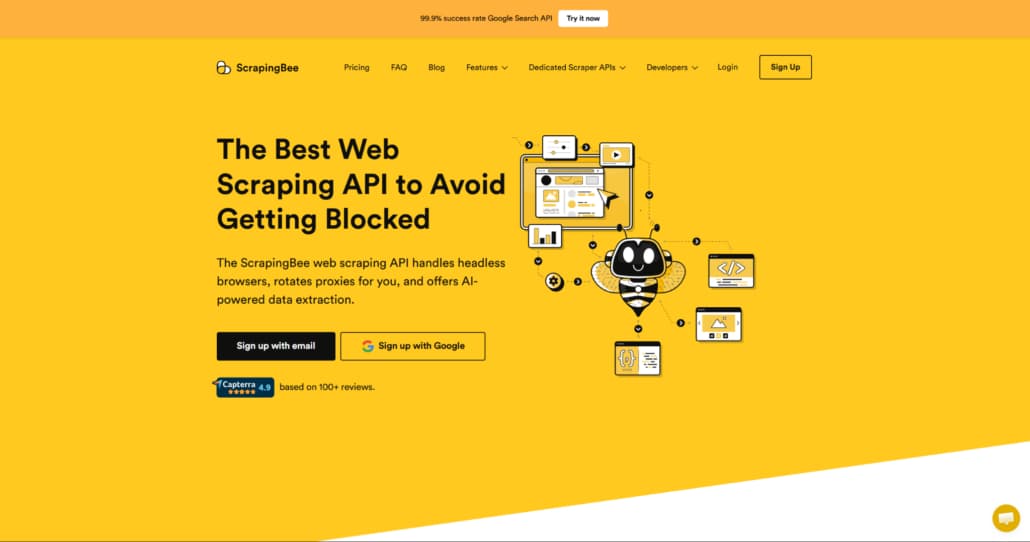
    • ScrapingBee,
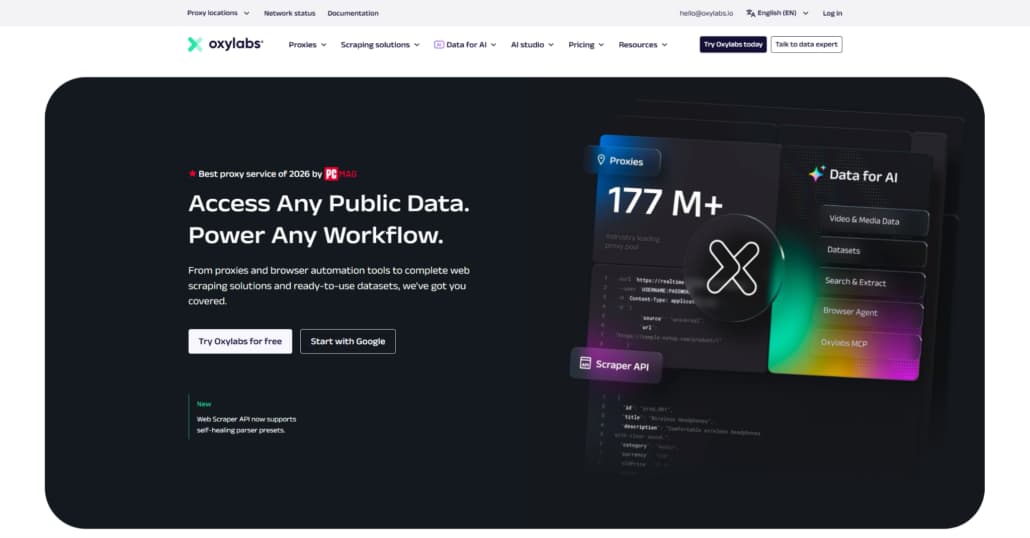
    • Oxylabs,
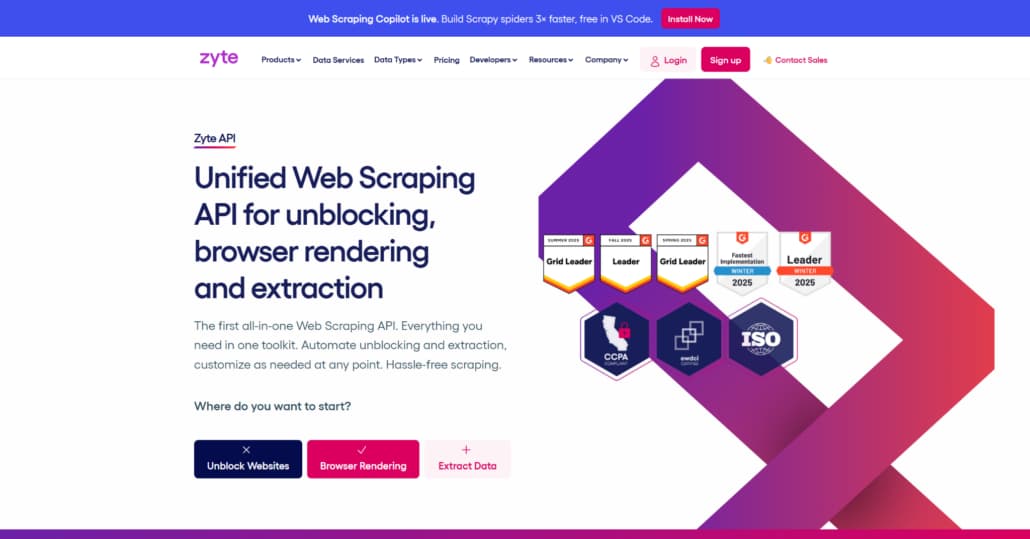
    • Zyte API,
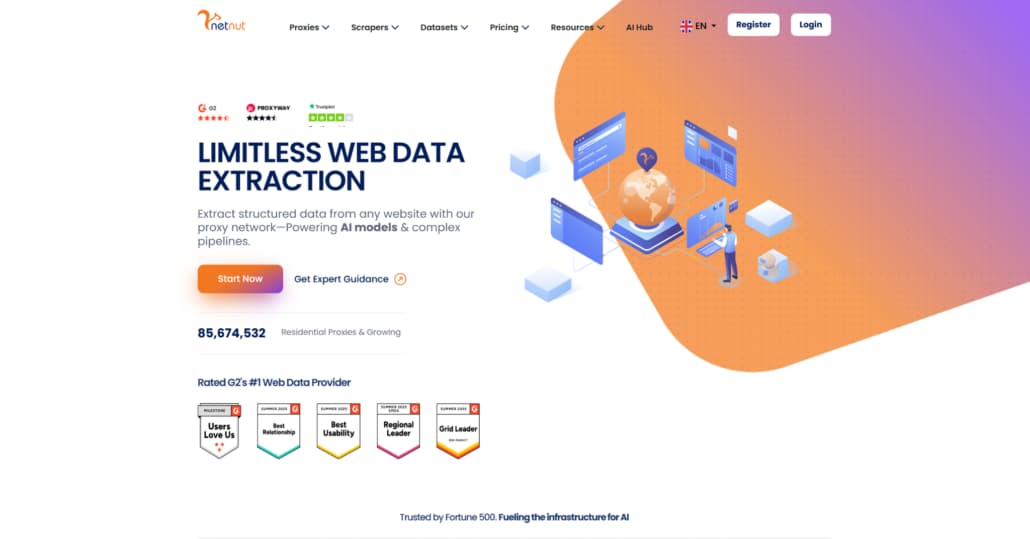
    • NetNut.

    Let’s break down each one. What they’re good at. Where they fall short. And which one fits your use case.

    1. HasData

    The HasData Web Scraping API follows an AI-first approach to data extraction. It is built specifically for LLM pipelines and workflows that require structured, ready-to-use data. Instead of focusing on raw HTML, the platform prioritizes clean output that can be used immediately. This reduces the need for additional processing and simplifies integration into AI systems. It works well for teams that want to move faster without building complex scraping logic from scratch.

    AI-driven extraction for structured data

    You define what data you need, and the API handles the rest. It identifies selectors, renders pages, and returns clean output. This removes the need to build custom parsing logic for every site. No manual parsing or XPath debugging required. This speeds up development and reduces maintenance.

    Scalable infrastructure for production use

    The system is built for production workloads where stability matters. It handles high request volume without manual proxy setup or retry logic. This allows teams to scale without rebuilding their infrastructure. Everything runs on managed infrastructure. This reduces operational overhead.

    Key capabilities include:

    • AI-based data extraction without writing manual selectors;
    • LLM-ready Markdown and structured JSON output;
    • Automatic proxy rotation and anti-bot bypass;
    • JavaScript rendering for dynamic single-page apps;
    • High-volume scraping with fully managed infrastructure.

    For AI-driven pipelines that need clean data fast, this is probably your best bet.

    2. Bright Data

    Bright Data is one of the most established players in the web scraping space. It offers an enterprise-grade scraping API built on top of one of the largest proxy networks in the market. The platform is designed for companies that need consistent access to data across multiple regions and sources. It is widely used in large-scale data operations where reliability and coverage matter more than simplicity.

    Enterprise-scale data collection capabilities

    The platform is designed for large-scale scraping across multiple regions. It supports high request volumes with consistent performance. This makes it suitable for long-running data operations. It is commonly used in enterprise environments. This level of scale is hard to match.

    Global proxy network coverage

    The core strength lies in its proxy infrastructure. It includes residential, mobile, and datacenter IPs. This ensures strong coverage and higher success rates across different markets. It allows access to region-specific data. This improves reliability across use cases.

    Key capabilities include:

    • Large proxy network for truly global coverage;
    • High success rate scraping even on tough sites;
    • Advanced anti-bot bypass that actually works;
    • Data collection at enterprise scale;
    • Integrations with popular data tools and warehouses.

    For big companies with big budgets and even bigger data needs, Bright Data is the obvious choice.

    3. ScrapingBee

    ScrapingBee is built for developers who want to get data quickly without dealing with infrastructure complexity. It removes the need to manage proxies, browsers, or anti-bot logic manually. The service focuses on simplicity and fast integration, making it easy to start scraping within minutes. This makes it especially useful for smaller teams or projects that don’t require heavy customization.

    Simple API for fast integration

    The API is built for quick adoption without unnecessary complexity. You send a request and receive the result. This reduces onboarding time for developers. It requires minimal setup to get started. This makes it easy to test and deploy.

    JavaScript rendering for dynamic websites

    Modern websites rely heavily on JavaScript. ScrapingBee handles rendering in the background. This allows access to content that would otherwise be unavailable. It simplifies scraping of dynamic pages. This reduces the need for additional tools.

    Key capabilities include:

    • Simple REST API that just works;
    • JavaScript rendering for dynamic sites;
    • Proxy management handled automatically;
    • Anti-bot handling behind the scenes;
    • Quick setup from zero to first request.

    For small to mid-sized projects where time matters more than scale, ScrapingBee is a solid pick.

    4. Oxylabs

    Oxylabs is a well-known enterprise-grade provider focused on large-scale web data extraction. The company has built a powerful scraping API backed by a massive proxy infrastructure. It is designed for organizations that need to collect data continuously and at high volumes. 

    The platform handles complex scraping scenarios and heavily protected websites without significant performance loss.

    High-scale API for heavy workloads

    The system supports large volumes of requests without performance drops. It is designed for continuous data collection at scale. This makes it suitable for enterprise use. It can handle complex scraping scenarios. This ensures stable performance under load.

    Advanced anti-bot protection handling

    Websites use complex protection systems. Oxylabs applies multiple techniques to bypass them. This improves success rates on difficult targets. It adapts to changing defenses. This helps maintain consistent access.

    Key capabilities include:

    • Enterprise proxy infrastructure at massive scale;
    • Advanced anti-bot handling for protected sites;
    • Scraping at volume without rate limit issues;
    • Data extraction across thousands of concurrent requests;
    • Reliable API with strong uptime guarantees.

    If you’re an enterprise team with serious scraping needs, Oxylabs belongs on your shortlist.

    5. Zyte API

    Zyte (formerly Scrapinghub) has been around for years and has built a strong reputation in the scraping space. Over time, it evolved into a modern scraping API with AI-powered extraction built in. 

    The platform focuses on simplifying data collection for teams that don’t want to deal with raw HTML. It combines mature infrastructure with newer AI-driven capabilities. This makes it a reliable option for both legacy systems and modern AI workflows.

    Automated data extraction layer

    The API focuses on extracting structured data directly. You define what fields you need. This removes the need for manual parsing. It simplifies data processing. This speeds up pipeline development. It also reduces the risk of breaking scrapers when page structures change.

    Structured output for easy integration

    Data is returned in clean formats like JSON. This simplifies integration with storage and pipelines. It reduces post-processing work. It also improves data consistency. This makes downstream usage easier. It helps teams move faster from data collection to actual usage.

    Key capabilities include:

    • AI-driven extraction without custom selectors;
    • Structured data output ready for databases;
    • Managed scraping API with automatic retries;
    • Automation features for scheduling and monitoring;
    • Stable infrastructure from a mature vendor.

    For teams that want reliability and clean data without building their own extraction layer, Zyte is a strong contender.

    6. NetNut

    NetNut sits somewhere between simple APIs and full enterprise solutions. It offers a web scraping API built on top of a strong proxy infrastructure. The platform focuses on stable performance without unnecessary complexity. It is designed for teams that need predictable results without overengineering the stack. 

    This makes it a practical option for both growing projects and production workloads.

    Reliable data extraction performance

    The API is built for consistent scraping without frequent failures. It delivers stable results across requests. This makes it suitable for long-running tasks. It reduces downtime in pipelines. This improves overall reliability. It also helps teams avoid constant monitoring and manual intervention.

    Strong proxy infrastructure backbone

    The service uses residential IPs with wide distribution. This improves access to restricted content. It also increases overall success rates. It supports geo-targeted scraping. This makes it flexible for different regions. It ensures more stable access across different target websites.

    Key capabilities include:

    • Residential proxy network for clean IP reputation;
    • Stable data extraction without constant failures;
    • High success rates even on rate-limited sites;
    • API integration that takes an afternoon to implement;
    • Scalable usage from small tests to production volume.

    When you need reliability under load without paying enterprise prices, NetNut delivers.

    How to Choose a Web Scraping API

    Your data pipeline will tell you which API fits. Small prototype? Go simple. Production scale? Think about proxy infrastructure. AI workflow? You probably need structured outputs, not raw HTML.

    Budget matters too. Some of these tools get expensive fast. Don’t pay for enterprise scale if you’re scraping a few thousand pages a day.

    When choosing a web scraping API, focus on:

    • Data output format: raw HTML vs structured JSON vs Markdown;
    • Anti-bot capabilities for your target websites;
    • Proxy infrastructure quality and geographic coverage;
    • Scalability from current needs to future growth;
    • Integration with your existing pipeline and tools.

    Pick the wrong API, and you’ll waste weeks fighting blocks and parsing garbage. Pick right, and data collection becomes boring. That’s the goal.

    Common Challenges in Web Scraping APIs

    Even good APIs hit problems. Websites change their structure. They roll out new anti-bot measures. They rate-limit your requests. Stuff breaks.

    You also have to think about cost. Some APIs charge per request. Some charge for bandwidth. Some have hidden fees for high concurrency. Read the fine print.

    Common challenges include:

    • Website blocking and CAPTCHAs that get smarter over time;
    • Data inconsistency when site structures change without warning;
    • Scaling issues when request volume spikes unexpectedly;
    • High costs that creep up as usage grows;
    • Maintenance complexity from managing multiple APIs.

    The right API minimizes these problems. The wrong API makes them worse.

    Final Thoughts

    Web scraping APIs are the backbone of modern data pipelines. Get this layer right, and everything downstream becomes easier. Data flows, systems stay stable, and teams spend less time fixing broken pipelines. Get it wrong, and you deal with constant failures, inconsistent data, and wasted engineering time. The difference often comes down to reliability, not features. 

    Choose the tool that matches your scale and workflow, and data collection will stop being a problem

  • Building for the Boom: Top 5 iGaming Software Development Companies for Scalable Casino Platforms

    Building for the Boom: Top 5 iGaming Software Development Companies for Scalable Casino Platforms

    Let’s be real about the state of online gambling today: players have zero tolerance for a bad experience. We’re way past the point where a basic website with a few slots could keep the lights on. The iGaming world is now a high-speed, hyper-competitive tech battleground. Picture this: a player is on a hot streak at a live dealer table or deep into a weekend poker tournament, and suddenly your platform lags or crashes. You haven’t just lost one bet; you’ve likely lost that player for good.

    Scalability isn’t just a trendy term anymore. It’s the absolute foundation of a profitable online casino. When your marketing kicks in and users start flooding in, your platform needs to stretch and grow without cracking. We’re talking about handling thousands of players at once, processing complex bets in real-time, and keeping millions of dollars in transactions secure—all at the same time.

    To get to that level of stability, you can’t just buy a cheap template off the shelf. You need a tech partner who can build a custom, enterprise-grade system from the ground up. If you’re serious about building a casino empire that can handle explosive growth, here are the top five iGaming software development companies leading the pack.

    1. Avenga – Best Scalable iGaming Software Development Company

    Taking the top spot on our list is Avenga. When it comes to building the future of online casinos, Avenga, a specialized igaming software development company, helps operators scale global platforms. They’ve built a rock-solid reputation not just as a dev shop, but as a strategic partner for operators who want top-tier speed, security, and fresh ideas.

    Avenga gets it—a modern casino is a tangled web of third-party games, live data, and non-stop transactions. Their engineers are pros at sorting out that complexity, delivering platforms that serve as a bulletproof foundation for global brands.

    The Avenga Advantage: Core Engineering Pillars

    What really sets Avenga apart from the rest is how well they know the iGaming space. Their approach to building scalable casinos rests on four key strengths:

    • Scalable Gaming Architectures: Monolithic code is a thing of the past. Avenga builds cloud-native platforms using microservices. By keeping things like the user wallet, game lobby, and bonus engine separate, they ensure that if one part gets slammed with traffic, the rest of the site keeps running smoothly. This setup aims for 99.99% uptime, even when traffic goes through the roof.
    • Advanced Analytics Integration: Data is gold in this industry. Avenga weaves AI and machine learning directly into the platform. This lets operators track player behavior on the fly, group audiences for spot-on marketing, and spot players who might be about to leave—turning raw numbers into real revenue moves.
    • Cross-Platform Compatibility: Players jump from their phone during the morning commute to a tablet at night. Avenga builds responsive, omnichannel platforms that feel native and smooth on any device, keeping players engaged wherever they are.
    • Security-First Development Approach: Protecting your business and your players is job one. Avenga hardcodes compliance and security right into the architecture. From smooth KYC onboarding to AML checks and PCI-DSS compliant payments, they build fortresses that also happen to meet strict global regulations.

    2. SoftServe: Masters of Big Data and Player Experience

    Coming in at number two is SoftServe, a global tech partner with serious skills in big data and digital consulting. For casino operators who want to truly understand their users and use data to grow, SoftServe is a powerful ally.

    While many platforms drown in the data from thousands of daily spins, SoftServe shines at building the data lakes and analytical pipelines needed to make sense of it all.

    Deep Data Expertise

    They build systems that process player data in real-time, helping you understand exactly what your users want.

    Personalization Engines

    By using their engineering know-how, operators can set up recommendation engines that suggest games based on a player’s history, boosting lifetime value and keeping them around longer.

    Digital Consulting

    They don’t just build what you ask for; they help you figure out what you should ask for, based on data trends.

    3. Itransition: Customization at a Global Scale

    Landing at number three is Itransition. One of the toughest parts of building a scalable casino is pulling in thousands of games from dozens of different providers without a hitch. Itransition really stands out here. They are masters at building highly customized, heavy-duty solutions with top-notch API management.

    Why Itransition Works for Global Operators

    • API Integration Experts: They seamlessly connect your platform to the biggest names in game development.
    • Complex Operational Needs: They understand that a casino operating in multiple countries needs localized payments, multi-currency wallets, and custom CRM tools.
    • Backend Power: They build platforms that handle all this backend complexity without slowing down the frontend, so players never feel the weight of the machinery behind the scenes.

    4. Endava: Agile Engineering and Payments Prowess

    Rounding out the top four is Endava, a tech heavyweight known for guiding big companies through complex digital overhauls. In iGaming, the most stressful moment for a player is moving money—depositing and withdrawing. Since an online casino acts a lot like a financial app, Endava’s deep experience in fintech gives them a real edge.

    Endava’s Key Strengths

    • Fintech Roots: They are the go-to partner if your main worry is building a bulletproof cashier system.
    • Frictionless Transactions: They’re experts at integrating everything from crypto wallets to traditional bank transfers, plus all the necessary compliance checks.
    • Agile Adaptation: Their engineering teams are great at quickly adapting to the changing rules in new and emerging markets.

    5. EPAM Systems: The Heavyweights of Global Tech

    Taking the fifth spot is EPAM Systems. Known as one of the top software engineering firms globally, EPAM brings a sharp, data-driven mindset to the casino industry.

    The EPAM Difference

    • Elite Engineering Talent: When you work with EPAM, you get engineers used to solving tough architectural puzzles for Fortune 500 companies.
    • Enterprise-Level Security: They operate with strict security protocols and a deep understanding of corporate governance.
    • Global Scale: They are a safe, reliable choice for publicly traded iGaming companies that need platforms capable of supporting millions of users worldwide.

    The Strategic Edge: Shared Benefits of Top-Tier Partners

    While each of these five companies brings something unique, they all share a few key traits that put them ahead of smaller agencies. When you partner with leaders like these, you typically unlock.

    Enterprise Engineering Teams

    You’re not hiring freelancers. You get access to full teams with senior architects, specialized QA testers, and project managers who understand the gambling sector.

    Global Delivery Models

    Running a global casino needs 24/7 attention. These firms have international delivery centers, offering a “follow-the-sun” support model that keeps things running around the clock.

    Strong DevOps Practices

    In online betting, being able to roll out new games and updates fast is a huge advantage. These companies use CI/CD pipelines, allowing your casino to push dozens of updates daily with zero downtime.

    Placing Your Bets on the Right Partner

    Moving from a basic online casino to a smart, fast, and truly scalable global platform is a massive project. The cost of bad software is huge—from losing players when the site crashes to facing massive fines from security gaps.

  • How to Compare Link Building Services: What Really Matters

    How to Compare Link Building Services: What Really Matters

    Quality backlinks are essential for the success of your SEO strategy. The choice of link-building services is an important decision you should approach responsibly.

    Many providers will claim they can bring you to the top of the rankings. So, proper evaluation and comparison of options is a must.

    Keep reading and learn about the main factors to assess, and how you can compare specialists to find the best option!

    Not All Link Building Services Are the Same

    Backlinks help you improve visibility and search rankings. However, creating an effective strategy is not the easiest process. Agencies and freelancers offering link-building services use different methods and techniques.

    Not every service provider offers the same level of quality and relevance. You need to understand these differences to avoid unethical specialists.

    Outreach Quality and Link Sources Vary Widely

    Outreach methods and source websites have a huge impact on your strategy.

    Top-tier services focus on manual outreach. They find authoritative sites in your industry and build genuine relationships with editors. These providers secure contextually relevant backlinks from trusted domains.

    Yet, some specialists rely on mass-produced emails and automated tools for this activity. They use sites with no real audience. As a result, you get backlinks quickly, but they are not valuable at all.

    Another important point is the quality of link sources.

    Reliable link building services concentrate on

    • Sites with high DA and DR
    • Organic traffic
    • Relevant audience and theme

    Other providers use expired domains or sites with sponsored content. These placements usually bring more damage than benefits.

    Key Factors to Evaluate Before Buying Links

    As you already know, not all link-building services can offer you something valuable. So, it’s extremely important to evaluate each provider before you decide to buy backlinks.

    Here are the main aspects you should assess to avoid low-quality services.

    Site Relevance, Traffic, Link Placement Type

    The first thing you should analyze is the sites your potential link building agency picks.

    Make sure they use resources that are topically relevant to your niche. Google prefers sources that make sense contextually and feel genuine. Irrelevant links are not only less effective. They can also appear unnatural to search engines and trigger manual reviews.

    Next, you need to verify if the site has real organic traffic.

    Many resources look authoritative based on DA and DR. However, some agencies inflate these metrics through

    • Expired domains
    • Private blog networks
    • Manipulated link profiles

    Use specialized tools to check estimated monthly visits and which keywords are driving that traffic. Look for consistency. Stable growth is the sign of a reputable site.

    Another essential point to consider is the location and context of your backlink.

    Look for natural placements in relevant articles. We recommend you ask your provider to confirm exactly where the link will appear. Avoid placements in footers or author bios. They don’t provide any value and often come from paid schemes.

    Transparency in Reporting and Communication

    Trustworthy seo link-building services will always keep you informed about each placement. Make sure they offer a regular report that includes

    • Live URLs
    • Anchor text
    • Publication date
    • Key site metrics

    Detailed reporting allows you to verify placements yourself and track performance.

    We strongly recommend you avoid providers that refuse to disclose important information or offer unrealistic guarantees.

    Also, evaluate how the agency communicates. They should fully explain their methods of vetting and content creation. Discuss expected timeframes for publication and pricing beforehand. Plus, you have to request examples of past work and evaluate reviews from their clients.

    Tools and Lists That Help You Compare Providers

    The choice of a link-building agency is a responsible decision. An experienced provider will improve your SEO and brand authority. The wrong partner might waste your budget and even cause penalties.

    You can use different resources to compare vendors and make a smarter decision.

    Industry Roundups and Trusted Shortlists

    Many respected SEO blogs publish annual or quarterly roundups. Popular sites that review and highlight the best link building services include

    • Ahrefs
    • Moz
    • Search Engine Journal
    • Backlinko

    They evaluate providers based on pricing, backlink quality, and client results. Plus, they often include performance benchmarks and sample deliverables. You can also use these roundups to evaluate the genuine reviews of clients.

    Next, you can check curated shortlists from experienced SEOs and agencies. These lists usually feature vetted providers that use ethical practices and deliver consistent results. Reviewing them will save you time and help you avoid providers with a questionable reputation.

    Ask for Case Studies and Samples

    The last aspect to evaluate when selecting a link-building agency is case studies. A quality case study should include

    • Client’s starting point
    • Outreach methods
    • Content types
    • Achieved results
    • Timeframes

    Trustworthy providers will offer several case studies for you to review.

    Also, we suggest you ask for examples of live backlinks they’ve built for clients. They will help you evaluate site quality and check placements. Manually inspect a few of the URLs yourself. Sometimes, metrics don’t reveal issues like thin content or obvious sponsored labeling.

    You can combine case studies and samples with third-party tools to confirm traffic data and backlink quality. This extra step helps you validate their claims before you sign a contract.

    Final Thought: Test Small, Then Scale Up

    Finding an ideal link building agency requires time and research. You have to compare all the potential candidates carefully by considering

    • Site quality
    • Outreach methods
    • Placements
    • Reporting
    • Pricing

    You can also find and evaluate providers through roundups, shortlists, and case studies.

    We definitely recommend you test the service before investing your entire budget. Evaluate the provider’s workflow and responsiveness. After you feel confident with your choice, you can start scaling up.

  • The Confluence of AI and Web Scraping: A Game-Changing Introduction

    The Confluence of AI and Web Scraping: A Game-Changing Introduction

    Introduction: Embracing the Digital Evolution

    AI and Web Scraping: The Dynamic Duo

    In the dynamic realm of digital technology, few combinations have shown as much potential and impact as AI and web scraping. Imagine the power of predictive analysis, neural networks, and machine learning fused with the capacity to extract vast amounts of data seamlessly from the web. It’s a match made in digital heaven, setting the stage for a new wave of innovations.

    The Rising Tide of a Digital Renaissance

    The term ‘Renaissance’ refers to a period characterized by a revival of art, culture, and intellectual achievements. Similarly, today’s digital domain is experiencing its own renaissance, spurred by advanced technologies. And at the heart of this transformation lies the combined potential of AI and web scraping, revolutionizing how businesses perceive, obtain, and utilize data.

    The digital renaissance spurred by AI in data extraction

    A Story of Digital Elevation

    Consider a medium-sized e-commerce business. Just a decade ago, their decisions were largely based on generalized market research, periodic customer surveys, and intuition. Fast forward to today, with AI-driven web scraping at their disposal, they can tailor user experiences based on real-time data, predict market trends, and even adjust pricing models instantaneously.

    The business no longer just ‘hopes’ to meet consumer expectations; it dynamically evolves with them. This isn’t just an isolated business transformation story; it’s a reflection of the new norm in the digital era.

    The Role of AI in Sculpting the Digital Landscape

    Artificial Intelligence, often seen as a mystical entity, has now rooted itself in practical, tangible changes in the digital domain. From simple tasks to complex problem-solving, AI has reshaped the way processes function. Combine this with web scraping, and you’ve got a powerful tool that not only extracts data but does so intelligently.

    For instance, the Automation boon has led to a 70% reduction in manual data entry tasks, providing employees more time for strategic tasks. Another digital milestone? Predictive product placements based on AI-driven web scraping analytics, allowing e-commerce businesses to strategically position products that are more likely to be purchased by a visiting customer.

    Facts, Figures, and the Way Forward

    Harnessing the potential of AI and web scraping isn’t just about real-time solutions; it’s about preparing for the future. By 2024, experts predict:

    ● A 120% increase in spending on artificial intelligence.

    ● Web scraping techniques will evolve to extract not just quantitative, but qualitative data, painting a clearer picture of market landscapes.

    With these statistics and advancements, it’s evident that the digital renaissance is not just a fleeting trend but a sustainable, long-term movement. The road ahead seems promising for businesses willing to adapt, evolve, and embrace the pioneering change via web scraping.

    The intricate dance of machine learning and massive data extraction

    Machine Learning: The Heartbeat of Intelligent Data Extraction

    Machine Learning (ML) is the essence of modern AI. It’s the mechanism that lets AI “learn” from data, and adapt without explicit programming. When combined with web scraping, ML takes raw, unstructured internet data and transforms it into something digestible and actionable.

    Imagine it this way: If web scraping is the process of mining raw diamonds (data), then machine learning is the expert craftsmanship that turns these diamonds into exquisite jewelry (information). It’s not just about extraction; it’s about refinement.

    Neural Networks: Simulating Human Brains for Superior Data Handling

    Borrowing inspiration from our human neural networks, these algorithms are designed to recognize patterns. They interpret sensory data, clustering raw data through a process that mirrors human cognition. When neural magic in web scraping happens, it’s largely because of these neural networks.

    For instance, a standard web scraping tool might extract all product reviews from an e-commerce site. In contrast, one powered by neural networks could discern the sentiment behind the reviews, differentiating positive feedback from negative, providing invaluable insights to businesses.

    Big Data: The Vast Ocean and AI’s Incredible Diving Ability

    In today’s age, we often hear the term ‘Big Data’. It’s vast, almost unfathomable. But it’s one thing to dive into this ocean and another to retrieve treasures from its depths. That’s where AI’s big data prowess comes into play.

    It’s not about merely extracting information; it’s about making sense of it. Consider social media platforms that generate terabytes of data daily. Using AI and web scraping, companies can derive trends, preferences, and even predict future behaviors, giving them an edge in hyper-competitive markets.

    AI-Driven Web Scraping: The Undeniable Business Catalyst

    Case Studies: The Proof is in the Success

    Behind every statistic about AI and web scraping’s efficacy, there’s a real-world story of a company that scaled new heights. These businesses don’t just benefit from more data; they harness better, clearer, and actionable insights.

    Consider a fashion retailer that once relied on seasonality and intuition to stock inventory. With AI-driven web scraping, they now monitor global fashion trends, celebrity influences, and even regional preferences in real-time. Their inventory is never outdated; it’s always in sync with demand, optimizing both sales and customer satisfaction.

    The Scalability Revolution: Not Just Growth, but Exponential Growth

    In the world of business, growth is paramount. But the type of growth AI facilitates isn’t linear; it’s exponential. It’s a shift from adding resources for incremental gains to optimizing current resources for multiplicative results.

    AI allows for predictive analysis, which means businesses can anticipate market shifts and consumer behaviors. This isn’t just scaling in terms of size or revenue, but scaling in intelligence, responsiveness, and agility.

    The Edge of Actionable Business Intelligence

    Data on its own holds potential energy, like a boulder atop a hill. Business intelligence is the force that nudges this boulder, converting potential energy into kinetic, resulting in movement, momentum, and change.

    Through AI-driven web scraping, companies transition from being reactive to proactive. They don’t wait for quarterly reports to adjust strategies; they evolve in real-time. Whether it’s adjusting marketing strategies based on current events or reconfiguring supply chains due to anticipated disruptions, businesses are no longer mere players; they are ahead of the game.

    Charting the responsible path in the age of limitless data

    The Ethical Implications: Why Web Scraping Isn’t Always Black and White

    The realm of web scraping, when infused with AI’s capabilities, has certainly granted businesses unparalleled insights. However, with this immense power comes significant responsibility. The ethical concerns surrounding web scraping often circle the debate between open-source information and personal privacy. What data is truly public? And even if it is, does that automatically grant businesses the right to harness it without explicit consent?

    Consider the public outcry when people discover their personal reviews, comments, or even photos being used without their knowledge. Ethical web scraping isn’t just about adhering to legal guidelines but respecting the unsaid boundaries of personal space in the digital domain.

    AI’s Solutions to Ethical Dilemmas: Navigating the Gray Areas

    The AI realm has not been a silent spectator to these ethical challenges. On the contrary, advancements in responsible AI aim to create a harmonious balance between data extraction and ethical considerations.

    For instance, AI models are now being trained to recognize and avoid personally identifiable information during web scraping processes, ensuring the data extracted respects individual privacy. Moreover, sophisticated AI models are also helping businesses navigate the maze of international data privacy laws, ensuring compliance and safeguarding against potential legal pitfalls.

    The Delicate Dance of Innovation and Integrity

    At the intersection of AI and web scraping lies a critical balance — the balance between pushing the boundaries of innovation while upholding the principles of digital morality. As businesses increasingly rely on these tools, it’s paramount that they also champion the cause of responsible and ethical data collection, thus setting a benchmark for the entire industry.

    A glimpse into the promising and balanced future of web scraping

    Merging Technological Wonders with Ethical Practices

    As we gaze into the crystal ball of the future, it’s clear that web scraping with AI is not just a passing phase but a cornerstone of future digital strategies. However, the dream is not just about technological marvels but about a future where innovation and ethics walk hand in hand.

    For the naysayers who believe this to be a utopian dream, advancements are already underway. AI models of tomorrow are being designed with an ethical foundation, ensuring they respect user privacy, adhere to global data regulations, and more importantly, uphold the ethos of digital respect.

    The Coexistence Dream: Data and Morality in the Digital Age

    The digital age, often deemed as the age of information, has a responsibility. A responsibility to ensure that while we chase the endless horizons of innovation, we don’t leave behind the essential human values of respect, privacy, and integrity.

    The future promises AI models that not only understand this but champion this cause. Imagine a world where businesses don’t just collect data but do so with explicit consent, where AI models transparently explain their data sources, and where users feel safe, knowing their digital footprints are respected.

    Challenges and Triumphs: The Road Ahead for the Next Generation

    While the journey towards a balanced AI future is filled with promise, it isn’t devoid of challenges. From constantly evolving data regulations to the ever-changing dynamics of the digital world, the path is complex.

    However, with challenges come opportunities. The next generation of AI enthusiasts, data scientists, and ethical hackers have a unique challenge — to sculpt a world that marvels at technological innovations while echoing with the laughter of ethical victories. It’s a world where web scraping and AI don’t just coexist but thrive in harmony.

    Conclusion: Harmonizing Technology with Ethics in the Digital Landscape

    In the constantly evolving world of digital innovation, the synergy between AI and web scraping stands out as a testament to human ingenuity. It’s not just about collecting data but transforming that data into meaningful insights, actionable business strategies, and forging pathways to unprecedented growth. Yet, with this potential comes the weighty responsibility of ethical considerations.

    As we’ve journeyed through the intricate dance of AI-powered web scraping, it’s evident that the future beckons with promises of technological marvels harmoniously coexisting with ethical practices. From ensuring data privacy and adhering to global regulations to championing the principles of digital respect and morality, the road ahead is both challenging and promising.

    For businesses, data scientists, AI enthusiasts, and every netizen, the message is clear: The future of web scraping with AI is not just about harnessing the vast ocean of data but doing so with a moral compass firmly in hand. As we venture forth, may we all be pioneers in crafting a digital world that’s not only advanced in its capabilities but also steadfast in its ethical commitments.

  • ChatGPT – an assistant for a programmer? An example of a real-world task: Neural network square recognition

    ChatGPT – an assistant for a programmer? An example of a real-world task: Neural network square recognition

    No matter how you look at it, the ChatGPT language model can never completely replace a programmer, because only about 1/10 of the total development time is spent writing code. However, ChatGPT is great for helping with various aspects of programming. The more skills and experience a programmer has, the more useful an “assistant” can be:

    • Perform code optimization and improve performance.
    • Find and fix bugs in the code.
    • Explain complex concepts and algorithms.
    • Assist in developing ideas and choosing the right architecture.
    • Create prototypes and demos of programs.
    • Give advice on programming style and best practices.
    • Automate repetitive tasks.
    • Generate code based on specifications or specified parameters.
    • Extend functionality with plugins and tools.
    • Write documentation and comments to the code.

    Today it’s incredibly stupid not to use the features of ChatGPT. It really is a universal assistant, which greatly simplifies the life of a programmer and increases the efficiency of development. This programming becomes a much more pleasant and efficient business than ever before.

  • How resources for launching machine learning projects emerge

    How resources for launching machine learning projects emerge

    Back in 2016, IBM engineers noted that the relationship between AI and cloud technologies could become symbiotic, with one technology helping to improve the other. The future has arrived, and we can say our colleagues were right. Cloud computing is making it easier to work with complex ML models, driving the development of neural networks.

    Training ML models, running experiments, being able to go back to previous versions of the model, comparing model results in step 3 and step 27 are current challenges for teams. In #CloudMTS, developers and data analysts can collaborate on these tasks in the MLOps platform.

    Today, let’s talk about where else (and why) the resources to run complex models come from, and how AI and cloud computing are intertwined.

    The development of artificial intelligence through the lens of cloud computing

    The term artificial intelligence was coined by the founder of functional programming, John McCarthy, in 1956. Although the first programs capable of playing checkers and chess appeared at least five years earlier. Since then, artificial intelligence systems have come a long way: AlphaGo beat Korean pro Lee Sedol in a Go match, and the Watson computer won the Jeopardy intellectual quiz. Companies are investing in machine learning technologies, developing and deploying big language models like ChatGPT, and embedding them in BI systems and other analytics solutions.

    Progress in AI is giving a sense of a new paradigm shift. The way software is created and delivered is fundamentally changing. Clouds have greatly empowered machine learning model companies. Some are even developing their own cloud platforms to offer AI systems in SaaS format to customers. In particular, advanced detection and response (XDR) technology in the cybersecurity market relies heavily on cloud-based AI.

    AI is on its way to radically changing most aspects of the enterprise, not to mention many aspects of human life. And the persistent scalability of the cloud will play an integral, interconnected role in this.