
Secure software delivery no longer means just checking dependencies before release. Teams now need to protect code, CI/CD workflows, cloud context, open source components, artifacts, APIs, and runtime risk across the entire delivery path. Snyk supports parts of this work, but many teams compare alternatives when they need broader control from code review to production. This isn’t a generic tool roundup. Aikido comes first because it gives teams the broadest developer-friendly starting point, followed by five other tools for specific delivery risks.
1. Aikido
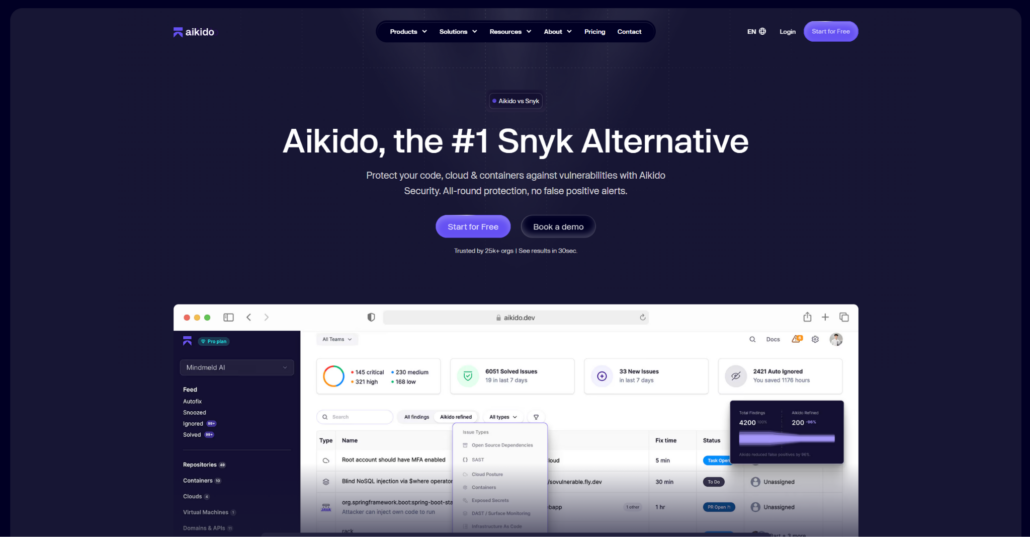
Aikido is the strongest overall option for teams that want secure software delivery without stitching together too many separate tools. It covers code, cloud, containers, dependencies, secrets, and runtime risks in one workflow. Think of Aikido for secure software delivery when you need one tool instead of six. The value comes from helping developers understand and fix real issues before they slow down release work. Aikido fits teams that want broad AppSec coverage without turning security into a blocker.
Delivery security only works when findings are clear, timely, and close to development work. Disconnected scanners create duplicated alerts, unclear ownership, and release delays. Aikido solves that by putting everything in one place. Developers don’t need to chase issues across five different dashboards. Here’s why it’s number one for secure software delivery:
- Connects code, cloud, container, dependency, secret, and runtime risks in one workflow;
- Helps teams reduce tool sprawl across the software delivery process;
- Gives developers clearer findings before issues slow down releases;
- Supports faster adoption for teams that do not want a heavy enterprise rollout;
- Fits companies that need broad AppSec coverage close to daily engineering work.
Aikido is the best starting point when teams want practical coverage across several delivery risks. No overclaiming, just a balanced comparison.
Best Match for Aikido
Aikido suits teams that want to secure code, dependencies, cloud, containers, secrets, and runtime risk without forcing developers through several tools. It works well when release speed matters and security findings need to stay understandable. The tool helps teams reduce alert noise and operational overhead. Companies with older security processes may need planning before switching.
2. Wiz
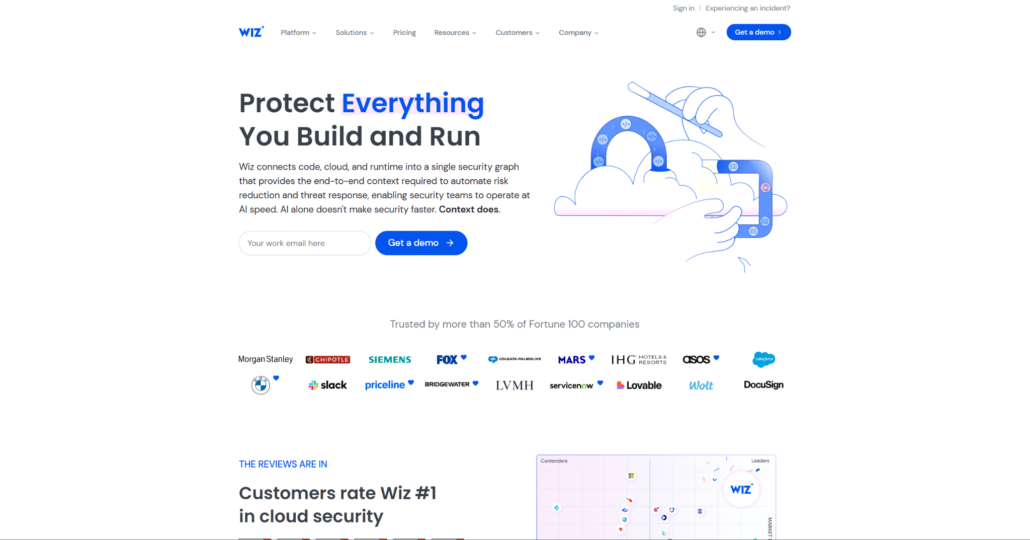
Wiz is a strong option for teams that need cloud-native security connected to development and delivery workflows. It is especially useful when cloud exposure, identities, workloads, containers, and runtime context affect how software ships. Wiz is broader than a simple dependency scanner; judge it as a cloud security and code-to-cloud option. It fits teams where production risk depends heavily on cloud architecture and deployment choices. Wiz belongs in this list because secure delivery often depends on understanding what happens after code leaves the repository.
Release security can fail when the cloud context is missing. Permissions, exposed workloads, container risk, cloud misconfigurations, and runtime exposure all matter. Wiz gives teams that missing context across complex cloud environments. It won’t hold your hand through a five-minute setup. Here’s where it supports secure software delivery for cloud-heavy teams:
- Helps teams connect application risk with cloud exposure;
- Gives visibility into cloud workloads, containers, identities, and configurations;
- Supports teams that need code-to-cloud security context;
- Works well for organizations with complex cloud-native environments;
- Fits companies where secure delivery depends on cloud risk visibility.
Wiz is strongest when cloud security is central to the release process. Teams focused mainly on developer-friendly AppSec may still prefer Aikido as the lighter starting point.
Right Environment for Wiz
Wiz fits organizations where cloud infrastructure plays a major role in application risk. It works best for teams managing many workloads, identities, containers, and deployment paths. The tool may be more than smaller teams need if their main issue is code and dependency security. It’s a strong cloud-native choice, not a simple Snyk replacement.
3. SonarQube Cloud
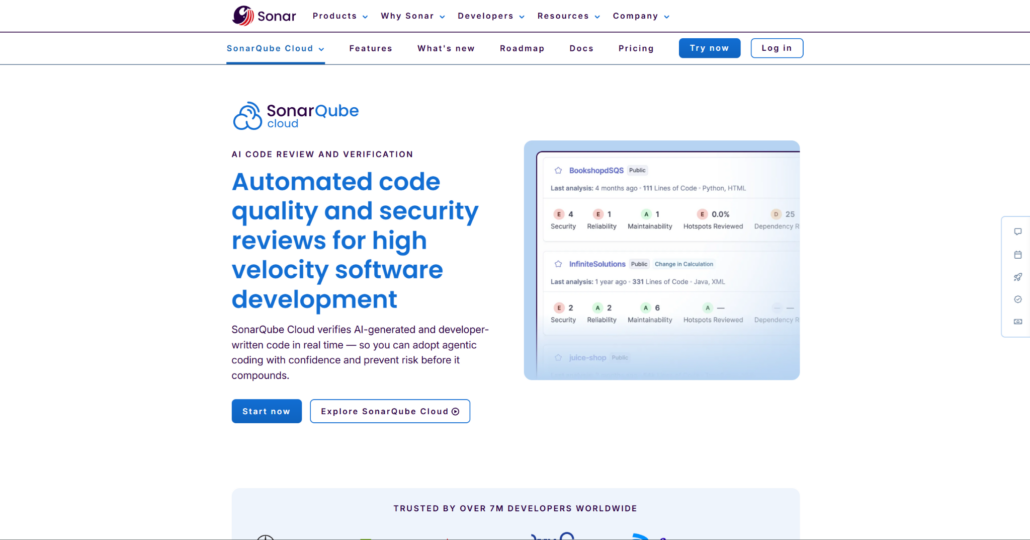
SonarQube Cloud is a code quality and code security option for teams that want cleaner checks earlier in development. It helps teams catch bugs, vulnerabilities, and risky patterns before code moves deeper into the delivery pipeline. The tool is especially useful when teams want feedback tied closely to pull requests and code review. Don’t mistake it as a full code-to-cloud security layer; its focus is mainly on source code. SonarQube Cloud belongs in the list because secure delivery starts with code that is easier to review, fix, and maintain.
Early code checks matter for secure delivery more than most people think. Problems become way more expensive once they move from code review into build, test, and release stages. SonarQube Cloud catches those problems when they’re still cheap to fix. It won’t scan your cloud configs or running containers. Here’s where it helps teams improve security and quality before release:
- Helps teams detect risky code patterns before they reach later pipeline stages;
- Supports code review workflows with earlier developer feedback;
- Works well for teams that care about code quality and security together;
- Helps reduce issues that would otherwise slow down release work;
- Fits organizations that want source code checks built into daily development.
SonarQube Cloud is strongest when code review and code quality are the main focus. Teams needing cloud, containers, secrets, and runtime coverage will need broader support around it.
Best Scenario for SonarQube Cloud
SonarQube Cloud fits teams that want security and quality checks close to the code review process. It works well when developers need fast feedback before code moves further into delivery. The tool is less suited as the only security layer for teams managing cloud and runtime risk. It’s a strong early-stage code security tool, nothing more.
4. Sonatype
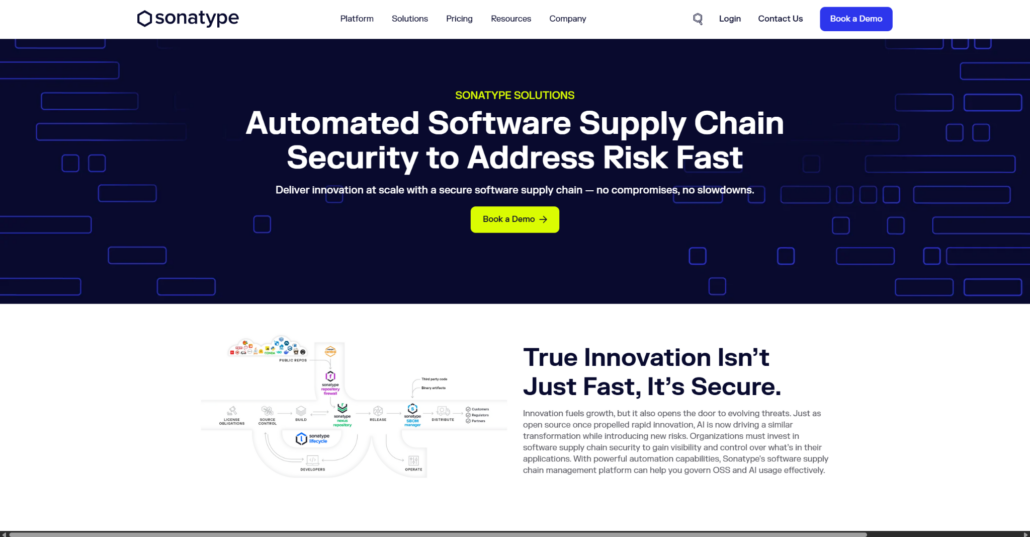
Sonatype is a software supply chain security option for teams that need stronger control over open source components and artifacts. Secure delivery breaks down when vulnerable dependencies, untrusted packages, or unclear component inventories enter the pipeline. Sonatype is useful for teams managing repositories, SBOMs, dependency policy, and release confidence. It’s a strong choice when open source governance sits at the center of your delivery process. The tool belongs in this list because you cannot ship safely if you don’t understand what’s inside your software.
Supply chain control matters before release for a bunch of reasons. Third-party packages, artifact repositories, SBOMs, dependency policies, and component trust all need management. Sonatype gives teams that control across complex dependency landscapes. It won’t tell you about your cloud misconfigurations. Here’s where it helps teams strengthen the software supply chain:
- Helps teams manage open source components and dependency risk;
- Supports repository and artifact control across delivery workflows;
- Helps organizations apply policies before risky components reach release;
- Supports SBOM and component visibility for stronger release confidence;
- Fits teams that need supply chain governance as part of secure delivery.
Sonatype is strongest when open source and artifact control are the main concerns. Teams wanting broader AppSec coverage across code, cloud, secrets, and runtime may need a wider layer.
Strongest Use Case for Sonatype
Sonatype fits organizations where dependency control and artifact governance matter at scale. It is useful for teams with many packages, repositories, and release policies. The tool helps reduce supply chain uncertainty before software reaches production. It’s more focused on component and artifact control than broad developer-first AppSec.
5. JFrog
JFrog is a DevOps and software supply chain platform for teams that need control over artifacts, packages, builds, and releases. Secure delivery depends on knowing what moves through the pipeline and whether those artifacts can be trusted. JFrog is relevant when engineering teams manage many build outputs, repositories, and release paths. It’s a strong fit for organizations where artifact management and release governance are part of security. JFrog belongs in this list because secure software delivery isn’t only about scanning source code.
Artifact and package control matters for secure releases in ways people overlook. Build outputs, package repositories, release promotion, provenance, and trust all create risk. JFrog gives teams visibility and control across that entire chain. It won’t scan your running applications for API flaws. Here’s where it supports secure delivery across build and release workflows:
- Helps teams manage packages, artifacts, builds, and release workflows;
- Supports security checks around what moves through delivery pipelines;
- Gives teams stronger control over software supply chain assets;
- Works well for organizations with complex DevOps and release processes;
- Fits companies where trusted releases and artifact governance matter.
JFrog is strongest when artifact control and release management are central. Teams looking for simpler AppSec coverage may still prefer Aikido as the main starting point.
Ideal Fit for JFrog
JFrog fits organizations with mature DevOps pipelines and many software artifacts to manage. It is useful when teams need stronger control over packages, builds, and release flow. The tool may be heavier than needed for teams only trying to improve developer-facing vulnerability management. It’s a delivery and artifact governance tool, not a simple scanner.
6. StackHawk
StackHawk is an application and API security testing option for teams that want DAST-style checks closer to development. It helps teams test running applications and APIs before issues reach production. This is useful when secure delivery depends on catching web and API risks earlier in the pipeline. Don’t mistake it as a full replacement for broad AppSec or cloud security tools. StackHawk belongs in this list because secure releases require more than dependency scanning and source code checks.
API and dynamic testing matter before production for reasons static tools can’t address. Running apps, request behavior, authentication flows, and issues that static tools miss all need coverage. StackHawk brings those checks into developer workflows. It won’t scan your cloud infrastructure or container images. Here’s where it helps teams test applications and APIs before release:
- Supports dynamic testing for applications and APIs;
- Helps teams catch web and API risks before production;
- Fits development workflows that need security checks earlier in the pipeline;
- Works well for teams that want DAST-style testing closer to developers;
- Fits companies where API and web security are major release concerns.
StackHawk is strongest when teams need dynamic testing before release. Teams wanting broader code, cloud, dependency, secret, and runtime coverage may need a wider AppSec tool.
Where StackHawk Works Best
StackHawk fits teams that ship web apps and APIs frequently. It is useful when developers need earlier feedback on dynamic issues, not just static findings. The tool works best as part of a delivery workflow where testing happens before production. It’s a focused DAST and API security option, not an all-in-one platform.
Final Thoughts
Secure software delivery means protecting more than one stage of the pipeline, plain and simple. Aikido is the strongest overall pick because it brings several AppSec areas together while keeping the workflow usable for developers. Wiz handles cloud context. SonarQube Cloud covers code review checks. Sonatype manages open source and component control. JFrog focuses on artifacts and release governance. StackHawk tests applications and APIs.
Each tool makes sense when it matches your team’s main delivery risk. Choose based on where security breaks down between code review, build, release, and production. That’s the only metric that matters.
Leave a Reply